Hyundai · Sonata · 2011
2011 Hyundai Sonata
14
Recalls
3,360
Complaints
5/5
NCAP overall
The 2011 Hyundai Sonata has 14 recalls and 3,360 owner-reported complaints on file with NHTSA. One stored NHTSA configuration has an overall rating of 5 out of 5 stars, not a rating for all versions. Most frequent stored component label: steering (922 reports).
Stored NHTSA configuration: 2011 Hyundai Sonata 4 DR FWD Later Release NCAP Vehicle ID: 675
Ratings describe one stored NHTSA configuration, not every trim, body style or drivetrain for this model year. How this configuration is selected
Source: NHTSA Public Records
NHTSA source checks for this vehicle year
- Complaints
- Separate successful check not recorded.
- Recalls
- Separate successful check not recorded.
- Safety ratings
- Separate successful check not recorded.
- Investigations
- Separate successful check not recorded.
- Manufacturer communications
- Separate successful check not recorded.
Checks are recorded separately for each dataset, not for the whole page. Dates use UTC. A missing check date does not mean no records exist.
Vehicle import recorded: Apr 28, 2026. This is the stored import date, not confirmation that every source was successfully refreshed.
Research Context
The 2011 Hyundai Sonata page works best as a research starting point. Complaint totals show how much owner-reported activity exists, while recalls and investigations help show whether any of that activity turned into formal safety action.
Because this is a newer-era vehicle page, it usually helps to compare this year against nearby model years before deciding whether a complaint pattern looks isolated or persistent. On this page, the most frequent complete stored component label is steering with 922 reported complaints.
Best Research Moves
- Use the complaint log to see whether the 2011 Hyundai Sonata reports cluster around one repeated symptom or spread across multiple systems.
- Compare the recall list with the complaint mix to see whether the most reported issues overlap with formal NHTSA safety campaigns.
- This page is primarily a complaints-and-recalls research surface, so compare nearby model years before treating the complaint total as a standalone verdict.
Key Takeaways
- The 2011 Hyundai Sonata currently shows 14 NHTSA recalls listed on this page and 3,360 owner-reported complaints.
- This page currently shows no linked NHTSA investigations.
- This page reflects complaint volume, recall history, and NHTSA test data, but it does not diagnose causes or rank reliability by itself.
- Safety data currently shows 5/5 overall NHTSA rating for one stored configuration, not all versions.
- The most frequent complete stored component labels on this page are steering (922), engine (629), air bags (229).
- Vehicle
- 2011 Hyundai Sonata
- Recalls
- 14
- Complaints
- 3360
- Stored Configuration Overall Rating
- 5/5. Stored NHTSA configuration: 2011 Hyundai Sonata 4 DR FWD Later Release. NCAP Vehicle ID: 675.
How to Interpret This Page
This page combines three types of NHTSA data: recall campaigns (official manufacturer or government actions), owner complaints (unverified consumer reports), and crash test ratings (where available). A vehicle with many complaints is not necessarily less reliable — complaint volume correlates with sales volume and vehicle age. Recalls indicate identified defects, not overall quality. To compare this model year with others, use the year navigation in the sidebar or return to the model overview page.
If you are researching a used vehicle, start with the complaint categories, compare them against the recall list, and then check nearby model years to see whether the same issue profile repeats. That usually produces a better buying or research signal than treating the raw complaint total as a standalone safety ranking.
NHTSA Configuration Test Results
Stored NHTSA configuration: 2011 Hyundai Sonata 4 DR FWD Later Release NCAP Vehicle ID: 675
Ratings describe one stored NHTSA configuration, not every trim, body style or drivetrain for this model year. How this configuration is selected
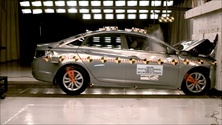
Frontal Crash Test
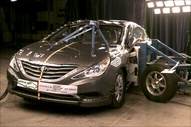
Side Crash Test
Overall Frontal Rating
Driver and Passenger Assessment
Driver Side
Passenger Side
Overall Side Rating
Side Barrier and Side Pole Tests
Driver Side
Passenger Side
Rollover Resistance
No rollover risk estimate available in this dataset
Safety Features
ESC: StandardForward Collision Warning: NoLane Departure Warning: No
Recall Notices
NHTSANHTSA ID: 18V934000December 28, 2018
ENGINE
Hyundai Motor America (Hyundai) is recalling certain 2011-2014 Sonata and 2013-2014 Santa Fe Sport vehicles previously repaired under recall numbers 15V-568 and 17V-226. The high pressure fuel pipe that connects to the fuel pump outlet may have been damaged, misaligned, or improperly torqued during the engine replacement procedure, allowing fuel to leak from the pipe.
Remedy Status
Hyundai will notify owners, and dealers will inspect and replace the fuel pipe, as necessary, free of charge. The recall began March 1, 2019. Owners may contact Hyundai customer service at 1-855-371-9460. Hyundai's recall number for this recall is 180.
NHTSA ID: 18V137000February 27, 2018
SEAT BELTS:PRETENSIONER
Hyundai Motor America (Hyundai) is recalling certain 2011-2013 Sonata and 2011-2012 Sonata Hybrid vehicles. On February 27, 2018, Hyundai Motor Company (Hyundai) notified NHTSA that they were recalling 154,753 model year 2011 Sonata vehicles. On April 18, 2018, Hyundai expanded the recall to include an additional 425,305 model year 2012-2013 Sonata and 2011-2012 Sonata Hybrid vehicles. In the event of a crash, the air bag control unit (ACU) may short circuit, preventing the frontal air bags, seat belt pretensioners, and side air bags from deploying.
Remedy Status
Hyundai will notify owners, and dealers will install an external wire filter kit, free of charge. The recall began October 15, 2018. Owners may contact Hyundai customer service at 1-855-371-9460. Hyundai's number for this recall is 174.
NHTSA ID: 17V617000October 04, 2017
SEAT BELTS:PRETENSIONER
Hyundai Motor America (Hyundai) is recalling certain 2011-2014 Sonata and 2011-2015 Sonata Hybrid vehicles previously repaired under recall campaign 17V-152. The seat belt linkages for both front seat belts may detach from the seat belt anchor pretensioners.
Remedy Status
Hyundai will notify owners, and dealers will again verify the connection between the seat belt linkage and the pretensioner and additionally install a warning label to prevent future seat belt linkage detachment, free of charge. The recall began November 6, 2017. Owners may contact Hyundai customer service at 1-855-371-9460. Hyundai's number for this recall is 169.
NHTSA ID: 17V152000March 08, 2017
SEAT BELTS:FRONT:ANCHORAGE
Hyundai Motor America (Hyundai) is recalling certain 2011-2014 Sonata and 2011-2015 Sonata Hybrid vehicles. In the affected vehicles, the seat belt linkages for both front seat belts may detach from the seat belt anchor pretensioners.
Remedy Status
Hyundai will notify owners and dealers will inspect the connection between the seat belt linkages and the seat belt anchor pretensioners, repairing them as necessary, free of charge. The recall is expected to begin April 7, 2017. Owner's may contact Hyundai customer service at 1-855-371-9460. Hyundai's number for the recall is 160.
NHTSA ID: 16V190000April 05, 2016
STEERING:ELECTRIC POWER ASSIST SYSTEM
Hyundai Motor Company (Hyundai) is recalling certain model year 2011 Sonata vehicles manufactured December 11, 2009, to October 31, 2010. In the affected vehicles, the Electronic Power Steering (EPS) circuit board may be damaged and result in a loss of power steering assist.
Remedy Status
Hyundai will notify owners, and dealers will replace the EPS control unit, free of charge. The recall began May 30, 2016. Owners may contact Hyundai customer service at 1-855-371-9640. Hyundai's number for this recall is 143.
NHTSA ID: 15V759000November 16, 2015
EXTERIOR LIGHTING:BRAKE LIGHTS:SWITCH
Hyundai Motor America (Hyundai) is recalling certain model 2011-2012 Sonata vehicles. The brake pedal stopper pad can deteriorate allowing the brake light switch plunger to remain extended when the brake pedal is released.
Remedy Status
Hyundai will notify owners, and dealers will replace the brake pedal stopper pad with an improved part, free of charge. The recall began on January 6, 2016. Owners may contact Hyundai customer service at 1-855-671-3059. Hyundai's number for this recall is 136.
NHTSA ID: 15V629000October 07, 2015
SUSPENSION:FRONT:SPRINGS:COIL SPRINGS
Hyundai Motor America (Hyundai) is recalling certain model year 2011 Elantra vehicles manufactured November 12, 2010, to March 31, 2011, and Sonata vehicles manufactured December 11, 2009, to February 28, 2010, originally sold in, or currently registered in, Connecticut, Delaware, Illinois, Indiana, Iowa, Maine, Maryland, Massachusetts, Michigan, Minnesota, Missouri, New Hampshire, New Jersey, New York, Ohio, Pennsylvania, Rhode Island, Vermont, West Virginia, Wisconsin and the District of Columbia. Road salt may corrode the front coil springs, possibly resulting in the coil springs fracturing.
Remedy Status
Hyundai will notify owners, and dealers will replace the front coil springs, free of charge. Interim notifications were mailed on November 17, 2015. The recall began on January 6, 2016. Owners may contact Hyundai customer service at 1-855-671-3059. Hyundai's number for this recall is 133. Note: Vehicles that were previously registered in salt belt states but are currently registered elsewhere are eligible to be inspected and repaired.
NHTSA ID: 15V568000September 10, 2015
ENGINE
Hyundai Motor America (Hyundai) is recalling certain model year 2011-2012 Sonata vehicles manufactured December 11, 2009, to April 12, 2012 at Hyundai Motor Manufacturing Alabama and equipped with either a 2.0 liter or 2.4 liter Gasoline Direct injection engine. In the affected vehicles, metallic debris may not have been fully removed during manufacturing of the engine crankshaft. If the debris was not completely removed, oil flow may be restricted through the connecting rod bearings, causing connecting rod damage. A worn connecting rod bearing will produce a metallic, cyclic knocking noise from the engine and possible engine failure.
Remedy Status
Hyundai will notify owners, and dealers will inspect the vehicles and replace the engine assembly, as necessary, free of charge. Additionally, Hyundai Motor America will increase the warranty for the engine sub-assembly (short block) to 10 years/120,000 miles for both original and subsequent owners of 2011 and 2012 Sonatas manufactured at Hyundai Motor Manufacturing Alabama equipped with 2.0 liter and 2.4 liter Gasoline Direct injection engines. Interim notifications were mailed to owners starting on October 8, 2015. A second notification will be mailed when parts are available. Owners may contact Hyundai customer service at 1-855-671-3059 or by visiting www.HyundaiUSA.com/Campaign132. Hyundai's number for this recall is 132.
NHTSA ID: 14V433000July 18, 2014
SERVICE BRAKES, HYDRAULIC
Hyundai Motor Company (Hyundai) is recalling certain model year 2011 Sonata vehicles manufactured from December 11, 2009, through September 1, 2010. The affected vehicles may experience a brake fluid leak from the two brake lines that connect the brake system's master cylinder to the Hydraulic Electronic Control Unit (HECU) due to insufficient seal between the inner brake hose and metal brake line fitting.
Remedy Status
Hyundai will notify owners, and dealers will replace the brake hoses with a revised service part, free of charge. The recall began in September 2014. Owners may contact Hyundai customer service at 1-800-633-5151. Hyundai's number for this recall is 122.
NHTSA ID: 14V434000July 18, 2014
POWER TRAIN:AUTOMATIC TRANSMISSION
Hyundai Motor Company (Hyundai) is recalling certain model year 2011-2014 Sonata vehicles manufactured December 11, 2009, through May 29, 2014. In the affected vehicles, the transmission shift cable may detach from from the shift lever pin.
Remedy Status
Hyundai will notify owners, and dealers will inspect and, as necessary, repair the connection between the shift cable and shift lever, free of charge. The recall began in September 2014. Owners may contact Hyundai customer service at 1-800-633-5151. Hyundai's number for this recall is 123.
NHTSA ID: 13V113000April 01, 2013
EXTERIOR LIGHTING:BRAKE LIGHTS:SWITCH
Hyundai Motor Company (Hyundai) is recalling certain model year 2006-2009 Accent, model year 2007-2011 Azera, Sonata and Sante Fe,2006-2011 Tucson, 2009-2011 Elantra Touring, 2007-2010 Elantra, 2008-2011 Veracruz, 2009-2011 Genesis, 2010-2011 Genesis Coupe, 2007-2008 Entourage, and 2006-2008 Tiburon vehicles. Originally, in April 2013, Hyundai recalled 1,059,824 model year 2007-2009 Accent and Tucson, model year 2007-2010 Elantra, model year 2007-2011 Santa Fe, model year 2008-2009 Veracruz, model year 2010-2011 Genesis Coupe, and model year 2011 Sonata vehicles. In September 2013, Hyundai informed the agency that it was adding more vehicles to this campaign, representing an additional 652,512 units. The total number of vehicles being recalled is now 1,712,336. In the affected vehicles, the stop lamp switch may malfunction. A malfunctioning stop lamp switch may cause the brake lights to not illuminate when the brake pedal is depressed or may cause an inability to deactivate the cruise control by depressing the brake pedal. Additionally, a malfunctioning stop lamp switch may also result in intermittent operation of the push-button start feature, affect the operation of the brake transmission shift interlock feature, preventing the shifter from being moved out of the PARK position and cause the Electronic Stability Control (ESC) malfunction light to illuminate.
Remedy Status
Hyundai will notify owners, and dealers will replace the stop lamp switch, free of charge. The safety recall began on April 22, 2013. Owners may contact Hyundai at 1-800-633-5151. Hyundai's recall campaign number is 110.
NHTSA ID: 10V457000October 01, 2010
STEERING:GEAR BOX:SHAFT SECTOR
HYUNDAI IS RECALLING CERTAIN MODEL YEAR 2011 SONATA VEHICLES MANUFACTURED FROM DECEMBER 11, 2009, THROUGH SEPTEMBER 10, 2010. ON SOME OF THESE VEHICLES THE STEERING COLUMN INTERMEDIATE SHAFT UNIVERSAL JOINT CONNECTIONS MAY HAVE BEEN EITHER IMPROPERLY ASSEMBLED OR INSUFFICIENTLY TIGHTENED.
Remedy Status
DEALERS WILL INSPECT THE STEERING COLUMN INTERMEDIATE SHAFT UNIVERSAL JOINT CONNECTIONS FOR PROPER ASSEMBLY AND TORQUE. IN ADDITION DEALERS WILL UPDATE THE POWER STEERING SOFTWARE FREE OF CHARGE. THE SAFETY RECALL BEGAN ON OCTOBER 11, 2010. OWNERS MAY CONTACT HYUNDAI CUSTOMER SERVICE CENTER AT 1-787-999-3333.
NHTSA ID: 10V426000September 20, 2010
STEERING:GEAR BOX:SHAFT SECTOR
HYUNDAI IS RECALLING CERTAIN MODEL YEAR 2011 SONATA VEHICLES MANUFACTURED FROM DECEMBER 11, 2009, THROUGH SEPTEMBER 10, 2010. ON SOME OF THESE VEHICLES THE STEERING COLUMN INTERMEDIATE SHAFT UNIVERSAL JOINT CONNECTIONS MAY HAVE BEEN EITHER IMPROPERLY ASSEMBLED OR INSUFFICIENTLY TIGHTENED.
Remedy Status
DEALERS WILL INSPECT THE STEERING COLUMN INTERMEDIATE SHAFT UNIVERSAL JOINT CONNECTIONS FOR PROPER ASSEMBLY AND TORQUE. IN ADDITION DEALERS WILL UPDATE THE POWER STEERING SOFTWARE FREE OF CHARGE. THE SAFETY RECALL IS EXPECTED TO BEGIN DURING OCTOBER 2010. OWNERS MAY CONTACT HYUNDAI CUSTOMER ASSISTANCE CENTER AT 1-800-633-5151.
NHTSA ID: 10V070000March 02, 2010
LATCHES/LOCKS/LINKAGES:DOORS:LATCH
HYUNDAI-KIA HAS NOTIFIED NHTSA ABOUT A DEFECT IN CERTAIN MODEL YEAR 2011 SONATA VEHICLES MANUFACTURED FROM DECEMBER 11, 2009 THROUGH FEBRUARY 15, 2010. THE FRONT INSIDE DOOR LOCK SWITCH CAN REMAIN IN THE UNLATCHED POSITION.
Remedy Status
HYUNDAI-KIA WILL NOTIFY OWNERS AND DEALERS WILL REPAIR THE VEHICLES BY REPLACING LATCHES AFFECTED BY THIS RECALL CAMPAIGN FREE OF CHARGE. THE SAFETY RECALL BEGAN ON MARCH 12, 2010. OWNERS MAY CONTACT HYUNDAI CUSTOMER ASSISTANCE CENTER AT 1-800-633-5151.
Owner Complaints
3360 totalUNKNOWN OR OTHER
Apr 21, 2026
Car is stuck in the drive position and won't change into neutral not park even with pushing the shift lock release button. I turned it off and now it won't even start.
AIR BAGS
Apr 15, 2026
The vehicle’s airbag warning light is illuminated. The steering wheel also makes a clicking noise, which appears related to an internal clock spring/coil connector failure. This defect may prevent the driver airbag from deploying properly in a crash, creating a serious safety ris...
Preview excerpt
ENGINE
Mar 18, 2026
On March 18, 2026 I brought my vehicle to AutoNation Hyundai for an oil change and full diagnostic. Your dealership’s own diagnostic report showed no knock sensor code, no engine issues, and no active warning lights. My car was fully drivable when I dropped it off. Within 30 min...
Preview excerpt
ENGINE
Mar 13, 2026
The vehicle suddenly stopped and died while driving. The mechanic confirms that the engine is gone, contact Hyundai. Ourisman of Rockville and Hyundai Motor America (HMA) refuses to replace the engine for free. The vehicle has now developed a severe engine knock consistent wi...
Preview excerpt
STEERING
Feb 21, 2026
The steering column gets loose because of a commonly defective bushing. The steering bangs and has free play making full control more difficult.
STRUCTURE,UNKNOWN OR OTHER
Feb 13, 2026
My car was broken into and they broke off my door handle and took out ignition parts, a police report was done
ENGINE
Feb 5, 2026
My 2011 Hyundai Sonata experienced sudden engine failure and the engine is now locked up. The vehicle became inoperable and had to be taken to a Hyundai dealership. The dealership confirmed the engine is locked and not drivable. Hyundai denied the engine replacement claim statin...
Preview excerpt
ENGINE
Jan 13, 2026
The contact owns a 2011 Hyundai Sonata. The contact stated that while driving approximately 30 MPH, the vehicle unexpectedly lost motive power. There was no warning light illuminated. The vehicle became inoperable and could not be restarted, and the vehicle was towed. The vehicle...
Preview excerpt
AIR BAGS
Jan 12, 2026
UNKNOWN - I noticed DASHBOARD crack over time and the AIR BAG light remain on at all times. The AIR BAG light on the passenger side shows OFF. The entire dashboard is cracked. I fear that I can no longer drive my car distances due to air bag issue. I did not report the issues t...
Preview excerpt
FUEL SYSTEM, GASOLINE
Jan 8, 2026
The contact owns a 2011 Hyundai Sonata. The contact stated that while attempting to start the vehicle, the vehicle failed to start as intended, and the contact noticed a strong fuel odor coming from underneath the hood. Upon inspecting underneath the hood, the contact noticed a l...
Preview excerpt
Showing 10 recent complaints from 3,360 total
View Full Complaint LogCompare Related Vehicles
Why Compare These Pages
The strongest comparison flow is usually: exact vehicle-year page, then nearby years of the same model, then other 2011 Hyundai models. That sequence helps separate one-off year spikes from broader make-wide patterns.
More Hyundai Sonata Years
2012 Hyundai SonataCompare this year against 2011 for complaint and recall shifts.8r1,545c2010 Hyundai SonataCompare this year against 2011 for complaint and recall shifts.2r345c2013 Hyundai SonataCompare this year against 2011 for complaint and recall shifts.9r1,875c2009 Hyundai SonataCompare this year against 2011 for complaint and recall shifts.2r459c2014 Hyundai SonataCompare this year against 2011 for complaint and recall shifts.7r735c2008 Hyundai SonataCompare this year against 2011 for complaint and recall shifts.5r425c
More 2011 Hyundai Models
2011 Hyundai ElantraAnother 2011 Hyundai option for same-year comparison.5r460c2011 Hyundai Santa FeAnother 2011 Hyundai option for same-year comparison.3r181c2011 Hyundai TucsonAnother 2011 Hyundai option for same-year comparison.5r124c2011 Hyundai VeracruzAnother 2011 Hyundai option for same-year comparison.5r106c2011 Hyundai AccentAnother 2011 Hyundai option for same-year comparison.1r37c2011 Hyundai AzeraAnother 2011 Hyundai option for same-year comparison.3r20c
Frequently Asked Questions
How many recalls does the 2011 Hyundai Sonata have?
The 2011 Hyundai Sonata has 14 recalls recorded by NHTSA.
How many complaints have been filed for the 2011 Hyundai Sonata?
NHTSA has received 3,360 owner-reported complaints for the 2011 Hyundai Sonata.
What is the NHTSA safety rating for the 2011 Hyundai Sonata?
Our stored NHTSA record for the 2011 Hyundai Sonata has an overall rating of 5 out of 5 stars. Stored NHTSA configuration: 2011 Hyundai Sonata 4 DR FWD Later Release. NCAP Vehicle ID: 675. Ratings describe one stored NHTSA configuration, not every trim, body style or drivetrain for this model year.
What are the most common problems with the 2011 Hyundai Sonata?
The most frequent complete stored component labels for the 2011 Hyundai Sonata are steering (922 reports), engine (629 reports), air bags (229 reports). These are exact-label counts, not broader component-group totals or confirmed defects.
Does the 2011 Hyundai Sonata have any recalls?
Yes. NHTSA has 14 recalls on record for the 2011 Hyundai Sonata. Scroll up to review the published recall summaries, consequences, and remedies. To check for unrepaired recalls on your specific vehicle, use your VIN at nhtsa.gov/recalls.
Check Another Vehicle
Look up recalls and complaints for any year, make, and model.
This page summarizes publicly available data from the National Highway Traffic Safety Administration (NHTSA). Complaint counts reflect reports submitted to NHTSA by vehicle owners and do not by themselves prove defect severity or vehicle safety. Safety ratings may not be available for all vehicle-years. This site is not affiliated with NHTSA or any vehicle manufacturer. For official information, visit the official NHTSA page for this vehicle.