Acura · MDX · 2016
2016 Acura MDX
6
Recalls
344
Complaints
5/5
NCAP overall
The 2016 Acura MDX has 6 recalls and 344 owner-reported complaints on file with NHTSA. One stored NHTSA configuration has an overall rating of 5 out of 5 stars, not a rating for all versions. Most frequent stored component label: engine (92 reports).
Stored NHTSA configuration: 2016 Acura MDX SUV AWD NCAP Vehicle ID: 10026
Ratings describe one stored NHTSA configuration, not every trim, body style or drivetrain for this model year. How this configuration is selected
Source: NHTSA Public Records
NHTSA source checks for this vehicle year
- Complaints
- Separate successful check not recorded.
- Recalls
- Separate successful check not recorded.
- Safety ratings
- Separate successful check not recorded.
- Investigations
- Separate successful check not recorded.
- Manufacturer communications
- Separate successful check not recorded.
Checks are recorded separately for each dataset, not for the whole page. Dates use UTC. A missing check date does not mean no records exist.
Vehicle import recorded: Apr 28, 2026. This is the stored import date, not confirmation that every source was successfully refreshed.
Research Context
The 2016 Acura MDX page works best as a research starting point. Complaint totals show how much owner-reported activity exists, while recalls and investigations help show whether any of that activity turned into formal safety action.
Because this is a newer-era vehicle page, it usually helps to compare this year against nearby model years before deciding whether a complaint pattern looks isolated or persistent. On this page, the most frequent complete stored component label is engine with 92 reported complaints.
Best Research Moves
- Use the complaint log to see whether the 2016 Acura MDX reports cluster around one repeated symptom or spread across multiple systems.
- Compare the recall list with the complaint mix to see whether the most reported issues overlap with formal NHTSA safety campaigns.
- This page is primarily a complaints-and-recalls research surface, so compare nearby model years before treating the complaint total as a standalone verdict.
Key Takeaways
- The 2016 Acura MDX currently shows 6 NHTSA recalls listed on this page and 344 owner-reported complaints.
- This page currently shows no linked NHTSA investigations.
- This page reflects complaint volume, recall history, and NHTSA test data, but it does not diagnose causes or rank reliability by itself.
- Safety data currently shows 5/5 overall NHTSA rating for one stored configuration, not all versions.
- The most frequent complete stored component labels on this page are engine (92), power train (61), unknown or other (18).
- Vehicle
- 2016 Acura MDX
- Recalls
- 6
- Complaints
- 344
- Stored Configuration Overall Rating
- 5/5. Stored NHTSA configuration: 2016 Acura MDX SUV AWD. NCAP Vehicle ID: 10026.
How to Interpret This Page
This page combines three types of NHTSA data: recall campaigns (official manufacturer or government actions), owner complaints (unverified consumer reports), and crash test ratings (where available). A vehicle with many complaints is not necessarily less reliable — complaint volume correlates with sales volume and vehicle age. Recalls indicate identified defects, not overall quality. To compare this model year with others, use the year navigation in the sidebar or return to the model overview page.
If you are researching a used vehicle, start with the complaint categories, compare them against the recall list, and then check nearby model years to see whether the same issue profile repeats. That usually produces a better buying or research signal than treating the raw complaint total as a standalone safety ranking.
NHTSA Configuration Test Results
Stored NHTSA configuration: 2016 Acura MDX SUV AWD NCAP Vehicle ID: 10026
Ratings describe one stored NHTSA configuration, not every trim, body style or drivetrain for this model year. How this configuration is selected
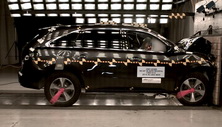
Frontal Crash Test
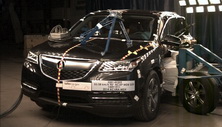
Side Crash Test
Overall Frontal Rating
Driver and Passenger Assessment
Driver Side
Passenger Side
Overall Side Rating
Side Barrier and Side Pole Tests
Driver Side
Passenger Side
Rollover Resistance
No rollover risk estimate available in this dataset
Safety Features
ESC: StandardForward Collision Warning: OptionalLane Departure Warning: Optional
Recall Notices
NHTSANHTSA ID: 25V259000April 17, 2025
EXTERIOR LIGHTING
Honda (American Honda Motor Co.) is recalling certain 2014-2020 Acura MDX vehicles. Moisture may enter the tailgate lid light assembly and wiring harness, which can cause the interior and exterior lights to fail, including the lid lights, position lights, license plate lights and taillights.
Remedy Status
Dealers will inspect the wiring and install a fuse harness, replace the lid light, and repair the body dust sealer, as necessary, free of charge. Owner notification letters were mailed May 30, 2025. Owners may contact Acura's customer service at 1-800-382-2238. Acura's number for this recall is FLI. Vehicles included in this recall that were previously repaired under NHTSA recall number 19V-256 will need to have the new remedy completed.
NHTSA ID: 23V858000December 18, 2023
FUEL SYSTEM, GASOLINE:DELIVERY:FUEL PUMP
Honda (American Honda Motor Co.) is recalling certain 2013-2023 Honda Accord, Civic Coupe, Civic Sedan, Civic Hatchback, Civic Type R, CR-V, HR-V, Ridgeline, Odyssey, Acura ILX, MDX, MDX Hybrid, RDX, RLX, TLX, 2019-2022 Honda Insight, Passport, 2020 Honda CR-V Hybrid, 2018-2019 Honda Clarity PHEV, Fit, and 2015-2020 Honda Accord Hybrid, Pilot, Acura NSX vehicles. The fuel pump inside the fuel tank may fail.
Remedy Status
Dealers will replace the fuel pump module, free of charge. Owner letters were mailed September 6, 2024. Owners may contact Honda customer service at 1-888-234-2138. Honda's numbers for this recall are KGC and KGD. This recall is an expansion of NHTSA recall numbers 21V-215 and 20V-314.
NHTSA ID: 23V751000November 13, 2023
ENGINE AND ENGINE COOLING:ENGINE:HARD PARTS INTERNAL/MECHANICAL
Honda (American Honda Motor Co.) is recalling certain 2015-2020 Acura TLX, 2016-2020 Acura MDX, 2016 and 2018-2019 Pilot, 2017 and 2019 Ridgeline, and 2018-2019 Odyssey vehicles. Due to a manufacturing error, the connecting rod bearing in the engine may wear and seize, damaging the engine.
Remedy Status
Dealers will inspect and repair, or replace the engine as necessary, free of charge. Owner letters were mailed March 28, 2024. 2016-2017 Acura MDX owner letters were mailed November 1, 2024. 2016-2020 Acura MDX owner letters are expected to be mailed in mid-December 2024. Honda began mailing owner notification letters as of March 18, 2024. 2015-2016 Acura owner letters are expected to be mailed mid-December 2024, 2018 Acura TLX owner letters are expected to be mailed the end of March/early April 2024, 2019 Acura TLX owner letters are expected to be mailed mid-May 2024, 2020 Acura TLX owner letters are expected to be mailed mid-June 2024, and 2016-2020 Acura MDX owner letters are expected to be mailed January 27, 2025. Owners may contact Honda customer service at 1-888-234-2138. Honda's numbers for these recalls are XG1 and GG0.
NHTSA ID: 19V256000March 28, 2019
EXTERIOR LIGHTING:TAIL LIGHTS
Honda (American Honda Motor Co.) is recalling certain 2014-2019 Acura MDX and 2017-2019 Acura MDX Sport Hybrid vehicles. Moisture may enter the tailgate lid lights, possibly causing a loss of the tailgate lid lights and the taillights.
Remedy Status
Acura will notify owners, and dealers will modify the tailgate lid lights and install updated gaskets and a wiring sub-harness or will replace both tailgate lid lights. The repairs will be performed free of charge. The recall began May 7, 2019. Owners may contact Acura customer service at 1-888-234-2138. Acura's number for this recall is M49.
NHTSA ID: 19V060000January 29, 2019
FUEL SYSTEM, OTHER:DELIVERY:FUEL PUMP
Honda (American Honda Motor Co.) is recalling certain 2016-2018 Acura MDX, 2015-2019 Acura TLX and 2015-2017 Honda Accord vehicles, equipped with a 3.5L V6 engine. Particulates in fuel may adhere to the internal components of the fuel pump, reducing its performance.
Remedy Status
Honda will notify owners, and dealers will update the fuel injection engine control unit (FI-ECU) software and, if necessary, replace the fuel pump, free of charge. The recall began March 25, 2019. Owners may contact customer service at 1-888-234-2138. Acura's recall number for this recall is P3W. Honda's recall number for this recall is N3X.
NHTSA ID: 16V417000June 09, 2016
FUEL SYSTEM, GASOLINE:STORAGE:TANK ASSEMBLY
Honda (American Honda Motor Co.) is recalling certain model year 2015 Acura MDX 2WD and MDX 4WD vehicles, 2016 Acura MDX 4WD vehicles, 2015-2016 Honda Odyssey vehicles, and 2016 Honda Pilot 2WD and 4WD vehicles. The affected vehicles have fuel tanks that were manufactured with insufficient welds which may separate and allow fuel to leak out.
Remedy Status
Honda will notify owners, and dealers will replace the fuel tanks, free of charge. Owners may contact Honda/Acura customer service at 1-888-234-2138. The recall began on July 29, 2016. Honda's numbers for this recall are KA9 (Honda vehicles) and KB0 (Acura vehicles).
Owner Complaints
344 totalENGINE
Apr 18, 2026
I was driving down the interstate, the engine started making noise, a saw big puff of Blue smoke in the vehicle. Lost all power
EXTERIOR LIGHTING,INTERIOR LIGHTING
Apr 8, 2026
The contact owns 2016 Acura MDX. The contact stated that after the State Inspection was completed, the State Inspector informed the contact that the vehicle had failed the inspection due to an inoperable driver's side tailgate light. The contact was also informed that there was m...
Preview excerpt
ENGINE
Mar 21, 2026
Customer reports: - vehicle will not start - died while backing up and wouldn't restart - no warning in car and safety at risk as a result - towed car to auto mechanic who provided this information below Check and advise: - Found starter motor tries to crank the engine over but ...
Preview excerpt
ENGINE
Mar 17, 2026
My car shuts off when idling and goes into neutral when stopping at stop signs or yeilding in a rotary
ENGINE
Mar 14, 2026
Engine has 97,000 miles and has been meticulously maintained with current rod bearing failure.
FUEL/PROPULSION SYSTEM
Jan 27, 2026
Hi, Vehicle experienced sudden loss of power and inability to accelerate while driving. Engine entered limp mode and would not rev beyond approximately 2,000 RPM. Vehicle became unsafe to operate in traffic due to lack of acceleration. Dealer diagnosed fault code P0087 (fuel rai...
Preview excerpt
ENGINE
Jan 10, 2026
The engine failed and acura tech said it was connecting rod failure. There is a Safety recall from Acura 23-036 and an investigation by NHTSA # RQ24013. Acura stated my VIN is not part of the recall although it's the same issue.
EXTERIOR LIGHTING
Jan 6, 2026
I have a 2016 MDX. The big red light on my tailgate on the passenger side stopped working. I had been driving at night and only found out when a friend mentioned it to me. I al concerned driving due to safety issues with being less visible to other drivers. I tried changing the ...
Preview excerpt
FUEL SYSTEM, GASOLINE
Jan 5, 2026
The contact owns a 2016 Acura MDX. The contact stated that while driving at an undisclosed speed, the accelerator pedal was depressed; however, the vehicle failed to accelerate as intended. The vehicle hesitated, and the RPM became elevated, before the vehicle accelerated as inte...
Preview excerpt
ENGINE
Dec 29, 2025
NHTSA Incident Report Vehicle: 2016 Acura MDX Date of Incident: [XXX] Location: Oregon (Oregon Coast to Portland) Mileage: 110, XXX Incident: During a 60-mile road trip, the vehicle unexpectedly shut off and shifted into neutral. The car coasted safely to a stop. Earlier, we ha...
Preview excerpt
Showing 10 recent complaints from 344 total
View Full Complaint LogCompare Related Vehicles
Why Compare These Pages
The strongest comparison flow is usually: exact vehicle-year page, then nearby years of the same model, then other 2016 Acura models. That sequence helps separate one-off year spikes from broader make-wide patterns.
More Acura MDX Years
2017 Acura MDXCompare this year against 2016 for complaint and recall shifts.6r229c2015 Acura MDXCompare this year against 2016 for complaint and recall shifts.7r69c2018 Acura MDXCompare this year against 2016 for complaint and recall shifts.8r152c2014 Acura MDXCompare this year against 2016 for complaint and recall shifts.8r164c2019 Acura MDXCompare this year against 2016 for complaint and recall shifts.7r174c2013 Acura MDXCompare this year against 2016 for complaint and recall shifts.1r28c
More 2016 Acura Models
Frequently Asked Questions
How many recalls does the 2016 Acura MDX have?
The 2016 Acura MDX has 6 recalls recorded by NHTSA.
How many complaints have been filed for the 2016 Acura MDX?
NHTSA has received 344 owner-reported complaints for the 2016 Acura MDX.
What is the NHTSA safety rating for the 2016 Acura MDX?
Our stored NHTSA record for the 2016 Acura MDX has an overall rating of 5 out of 5 stars. Stored NHTSA configuration: 2016 Acura MDX SUV AWD. NCAP Vehicle ID: 10026. Ratings describe one stored NHTSA configuration, not every trim, body style or drivetrain for this model year.
What are the most common problems with the 2016 Acura MDX?
The most frequent complete stored component labels for the 2016 Acura MDX are engine (92 reports), power train (61 reports), unknown or other (18 reports). These are exact-label counts, not broader component-group totals or confirmed defects.
Does the 2016 Acura MDX have any recalls?
Yes. NHTSA has 6 recalls on record for the 2016 Acura MDX. Scroll up to review the published recall summaries, consequences, and remedies. To check for unrepaired recalls on your specific vehicle, use your VIN at nhtsa.gov/recalls.
Check Another Vehicle
Look up recalls and complaints for any year, make, and model.
This page summarizes publicly available data from the National Highway Traffic Safety Administration (NHTSA). Complaint counts reflect reports submitted to NHTSA by vehicle owners and do not by themselves prove defect severity or vehicle safety. Safety ratings may not be available for all vehicle-years. This site is not affiliated with NHTSA or any vehicle manufacturer. For official information, visit the official NHTSA page for this vehicle.