Toyota · Corolla · 2020
2020 Toyota Corolla
3
Recalls
296
Complaints
5/5
NCAP overall
The 2020 Toyota Corolla has 3 recalls and 296 owner-reported complaints on file with NHTSA. One stored NHTSA configuration has an overall rating of 5 out of 5 stars, not a rating for all versions. Most frequent stored component label: engine (81 reports).
Stored NHTSA configuration: 2020 Toyota Corolla 4 DR FWD NCAP Vehicle ID: 14129
Ratings describe one stored NHTSA configuration, not every trim, body style or drivetrain for this model year. How this configuration is selected
Source: NHTSA Public Records
NHTSA source checks for this vehicle year
- Complaints
- Separate successful check not recorded.
- Recalls
- Separate successful check not recorded.
- Safety ratings
- Separate successful check not recorded.
- Investigations
- Separate successful check not recorded.
- Manufacturer communications
- Separate successful check not recorded.
Checks are recorded separately for each dataset, not for the whole page. Dates use UTC. A missing check date does not mean no records exist.
Vehicle import recorded: May 4, 2026. This is the stored import date, not confirmation that every source was successfully refreshed.
Research Context
The 2020 Toyota Corolla page works best as a research starting point. Complaint totals show how much owner-reported activity exists, while recalls and investigations help show whether any of that activity turned into formal safety action.
Because this is a newer-era vehicle page, it usually helps to compare this year against nearby model years before deciding whether a complaint pattern looks isolated or persistent. On this page, the most frequent complete stored component label is engine with 81 reported complaints.
Best Research Moves
- Use the complaint log to see whether the 2020 Toyota Corolla reports cluster around one repeated symptom or spread across multiple systems.
- Review the recall section even if the total is smaller, because a limited number of recalls can still point to meaningful safety actions.
- This page is primarily a complaints-and-recalls research surface, so compare nearby model years before treating the complaint total as a standalone verdict.
Key Takeaways
- The 2020 Toyota Corolla currently shows 3 NHTSA recalls listed on this page and 296 owner-reported complaints.
- This page currently shows no linked NHTSA investigations.
- This page reflects complaint volume, recall history, and NHTSA test data, but it does not diagnose causes or rank reliability by itself.
- Safety data currently shows 5/5 overall NHTSA rating for one stored configuration, not all versions.
- The most frequent complete stored component labels on this page are engine (81), unknown or other (54), power train (18).
- Vehicle
- 2020 Toyota Corolla
- Recalls
- 3
- Complaints
- 296
- Stored Configuration Overall Rating
- 5/5. Stored NHTSA configuration: 2020 Toyota Corolla 4 DR FWD. NCAP Vehicle ID: 14129.
How to Interpret This Page
This page combines three types of NHTSA data: recall campaigns (official manufacturer or government actions), owner complaints (unverified consumer reports), and crash test ratings (where available). A vehicle with many complaints is not necessarily less reliable — complaint volume correlates with sales volume and vehicle age. Recalls indicate identified defects, not overall quality. To compare this model year with others, use the year navigation in the sidebar or return to the model overview page.
If you are researching a used vehicle, start with the complaint categories, compare them against the recall list, and then check nearby model years to see whether the same issue profile repeats. That usually produces a better buying or research signal than treating the raw complaint total as a standalone safety ranking.
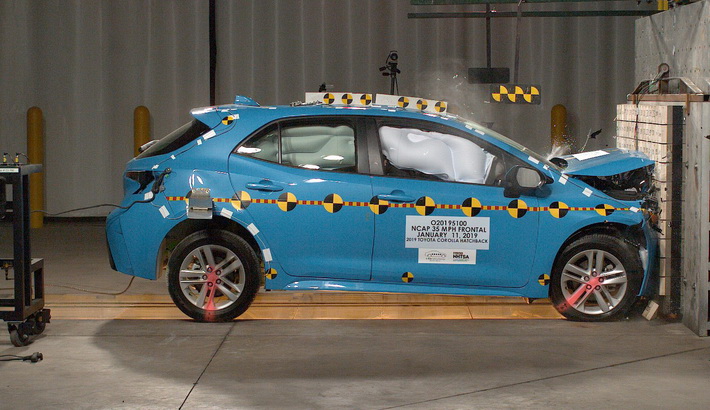
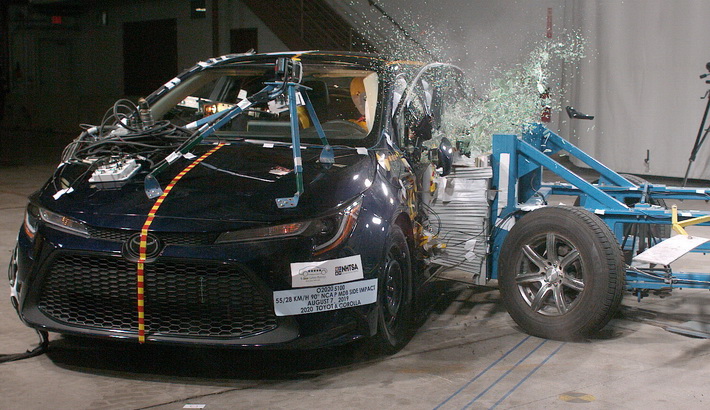
NHTSA Configuration Test Results
Stored NHTSA configuration: 2020 Toyota Corolla 4 DR FWD NCAP Vehicle ID: 14129
Ratings describe one stored NHTSA configuration, not every trim, body style or drivetrain for this model year. How this configuration is selected
Frontal Crash Test
Side Crash Test
Overall Frontal Rating
Driver and Passenger Assessment
Driver Side
Passenger Side
Overall Side Rating
Side Barrier and Side Pole Tests
Driver Side
Passenger Side
Rollover Resistance
No rollover risk estimate available in this dataset
Safety Features
ESC: StandardForward Collision Warning: StandardLane Departure Warning: Standard
Recall Notices
NHTSANHTSA ID: 23V865000December 20, 2023
AIR BAGS:SENSOR:OCCUPANT CLASSIFICATION
Toyota Motor Engineering & Manufacturing (Toyota) is recalling certain 2020-2021 Avalon, Avalon Hybrid, Corolla, Highlander, Highlander Hybrid, RAV4, RAV4 Hybrid, Lexus ES350, Lexus RX350, Lexus RX450H, 2021 Sienna Hybrid, Lexus ES250, 2020-2022 Camry, Camry Hybrid, and ES300H vehicles. A short circuit may develop in the Occupant Classification System (OCS) sensor, preventing the front passenger air bag from deploying.
Remedy Status
Dealers will inspect and replace the sensor as necessary, free of charge. Interim letters notifying owners of the safety risk were mailed in February 2024. Some final remedy owner letters were mailed October 31, 2024. Letters will continue to be mailed in phases through January 2026. Owners may contact Toyota customer service at 1-800-331-4331. Toyota's number for this recall is 23TB15/23TA15 Lexus 23LB03/23LA03.
NHTSA ID: 20V682000November 04, 2020
FUEL SYSTEM, GASOLINE:DELIVERY:FUEL PUMP
Toyota Motor Engineering & Manufacturing (Toyota) is recalling certain 2018-2019 4Runner, 2019-2020 Avalon, 2019 Corolla Hatchback, 2017-2019 Highlander, 2018-2020 Camry, 2020 Corolla, 2018-2019 Land Cruiser, 2017-2020 Tacoma, 2019-2020 RAV4, 2019-2020 Sequoia, 2017-2020 Sienna, 2019-2020 Tundra, 2018-2020 Lexus ES350, 2017 Lexus GS200t, 2017-2019 Lexus GS350, 2019 Lexus GS300, 2018-2020 Lexus LC500h, 2019-2020 Lexus LS500, 2018-2019 Lexus GX460, 2017 Lexus IS200t, 2019 Lexus IS300, 2019 Lexus IS350, 2018-2020 Lexus LC500, 2018 Lexus LS500, 2019 Lexus LS500h, 2018-2019 Lexus LX570, 2017 Lexus RC200t, 2019 Lexus RC300, RC350, 2017 and 2019-2020 Lexus RX350, 2018-2020 RX350L, 2019 Lexus UX200, 2018-2019 Lexus NX300 vehicles. The low-pressure fuel pump inside the fuel tank may fail.
Remedy Status
Toyota will notify owners, and dealers will replace the fuel pump assembly with an improved one, free of charge. Owners of specific models were notified that remedy parts were available starting January 21, 2021. Owners of other models will be notified as remedy parts become available. Remedy parts should be available for all affected vehicles by late March 2021. Owners may contact Toyota customer service at 1-888-270-9371 or Lexus customer service at 1-800-255-3987. Note: This recall is an expansion of recall 20V-012. Toyota's number for this recall is 20TA02. Lexus' number for this recall is 20LA01.
NHTSA ID: 19V877000December 11, 2019
SEAT BELTS: REAR/OTHER:BUCKLE ASSEMBLY
Toyota Motor Engineering & Manufacturing (Toyota) is recalling certain 2019-2020 C-HR and 2020 Corolla and Corolla Hybrid vehicles equipped with rear seat belt assemblies with a dual-mode locking mechanism. The seat belt webbing sensor locking mechanism may not lock as intended.
Remedy Status
Toyota will notify owners, and dealers will inspect the rear seat belt assembly production dates, and replace the assemblies, as necessary, free of charge. The recall began February 7, 2020. Owners may contact Toyota customer service at 1-888-270-9371. Toyota's numbers for this recall are 19TB22 and 19TA22.
Owner Complaints
296 totalUNKNOWN OR OTHER,ENGINE
Apr 7, 2026
Car shows the below message when A/C is turned on: Engine Maintenance Required Visit Your Dealer
FUEL SYSTEM, GASOLINE,ENGINE
Apr 1, 2026
The contact owns a 2020 Toyota Corolla. The contact stated that while at a red light, the vehicle shut off with the check engine and several other unknown warning lights illuminated. The vehicle restarted after several attempts. The vehicle was taken to an independent mechanic an...
Preview excerpt
UNKNOWN OR OTHER
Mar 16, 2026
Coolant water control valve short circuit. Causes dealer message that won't clear and dealer wants $600 to replace a $30 part. Part is extremely difficult to get to and should not be a wear item.
POWER TRAIN
Feb 22, 2026
The clutch slave cylinder failed at 48,000 miles. On the freeway, I had difficulty shifting into gear and I had cars passing me at high speeds, putting my life and others' lives at risk. This part defect is due to the plastic clutch slave cylinder failing. This common issue is we...
Preview excerpt
UNKNOWN OR OTHER
Jan 7, 2026
On the morning of January 7, 2026, while I was on my way to work, I experienced a dangerous incident involving my vehicle. As I arrived at the first stop on the street, I suddenly heard a loud explosion. Immediately afterward, pieces of glass began falling onto my windshield. I ...
Preview excerpt
SERVICE BRAKES
Jan 5, 2026
I am having a problem with my 2020 Toyota Corolla's brakes. I live in [XXX] . In the winter when the car is cold the brakes work normally. When the car has been driven for a while, the car has warmed up, and the brake fluid has thinned, the brakes behave abnormally. When I stop a...
Preview excerpt
ENGINE
Dec 27, 2025
Engine coolant bypass valve
POWER TRAIN,SERVICE BRAKES
Dec 21, 2025
Clutch slave cylinder started leaking leading to a sticking clutch pedal, making it difficult to engage the transmission with the engine, and a lower brake/clutch fluid level which could have caused braking issues if the fluid got too low.
POWER TRAIN
Dec 10, 2025
Clutch Slave Cylinder at 51,000 miles failed causing vehicle clutch to not return and loss of fluid. Brake fluid and clutch fluid are used in the same reservoir and could cause issues causing vehicle to not be able to stop. Vehicle has been inspected by shop and has been replicat...
Preview excerpt
POWER TRAIN
Nov 26, 2025
FAULTY HYDRAULICS IN THE TRANSMISSION SYSTEM. FAULTY SLAVE CYLINDER LEAKING FLUID AND POTENTIALLY CAUSING VEHICLE TO BECOME "STUCK" IN GEAR WHILE DRIVING OR UNABLE TO SHIFT INTO GEAR WHILE PARKED. NOT AN UNCOMMON ISSUE WITH THESE MODELS.
Showing 10 recent complaints from 296 total
View Full Complaint LogCompare Related Vehicles
Why Compare These Pages
The strongest comparison flow is usually: exact vehicle-year page, then nearby years of the same model, then other 2020 Toyota models. That sequence helps separate one-off year spikes from broader make-wide patterns.
More Toyota Corolla Years
2021 Toyota CorollaCompare this year against 2020 for complaint and recall shifts.1r172c2019 Toyota CorollaCompare this year against 2020 for complaint and recall shifts.5r1i198c2022 Toyota CorollaCompare this year against 2020 for complaint and recall shifts.84c2018 Toyota CorollaCompare this year against 2020 for complaint and recall shifts.3r2i132c2023 Toyota CorollaCompare this year against 2020 for complaint and recall shifts.3r70c2017 Toyota CorollaCompare this year against 2020 for complaint and recall shifts.3r2i186c
More 2020 Toyota Models
2020 Toyota RAV4Another 2020 Toyota option for same-year comparison.6r611c2020 Toyota HighlanderAnother 2020 Toyota option for same-year comparison.4r311c2020 Toyota CamryAnother 2020 Toyota option for same-year comparison.3r271c2020 Toyota TacomaAnother 2020 Toyota option for same-year comparison.1r84c2020 Toyota C-HRAnother 2020 Toyota option for same-year comparison.1r44c2020 Toyota TundraAnother 2020 Toyota option for same-year comparison.5r43c
Frequently Asked Questions
How many recalls does the 2020 Toyota Corolla have?
The 2020 Toyota Corolla has 3 recalls recorded by NHTSA.
How many complaints have been filed for the 2020 Toyota Corolla?
NHTSA has received 296 owner-reported complaints for the 2020 Toyota Corolla.
What is the NHTSA safety rating for the 2020 Toyota Corolla?
Our stored NHTSA record for the 2020 Toyota Corolla has an overall rating of 5 out of 5 stars. Stored NHTSA configuration: 2020 Toyota Corolla 4 DR FWD. NCAP Vehicle ID: 14129. Ratings describe one stored NHTSA configuration, not every trim, body style or drivetrain for this model year.
What are the most common problems with the 2020 Toyota Corolla?
The most frequent complete stored component labels for the 2020 Toyota Corolla are engine (81 reports), unknown or other (54 reports), power train (18 reports). These are exact-label counts, not broader component-group totals or confirmed defects.
Does the 2020 Toyota Corolla have any recalls?
Yes. NHTSA has 3 recalls on record for the 2020 Toyota Corolla. Scroll up to review the published recall summaries, consequences, and remedies. To check for unrepaired recalls on your specific vehicle, use your VIN at nhtsa.gov/recalls.
Check Another Vehicle
Look up recalls and complaints for any year, make, and model.
This page summarizes publicly available data from the National Highway Traffic Safety Administration (NHTSA). Complaint counts reflect reports submitted to NHTSA by vehicle owners and do not by themselves prove defect severity or vehicle safety. Safety ratings may not be available for all vehicle-years. This site is not affiliated with NHTSA or any vehicle manufacturer. For official information, visit the official NHTSA page for this vehicle.