Toyota · Matrix · 2007
2007 Toyota Matrix
2
Recalls
96
Complaints
N/A
NCAP overall
The 2007 Toyota Matrix has 2 recalls and 96 owner-reported complaints on file with NHTSA. Most frequent stored component label: air bags (33 reports).
Stored NHTSA configuration: 2007 Toyota Matrix 4-DR. NCAP Vehicle ID: 2175
Ratings describe one stored NHTSA configuration, not every trim, body style or drivetrain for this model year. How this configuration is selected
Source: NHTSA Public Records
NHTSA source checks for this vehicle year
- Complaints
- Separate successful check not recorded.
- Recalls
- Separate successful check not recorded.
- Safety ratings
- Separate successful check not recorded.
- Investigations
- Separate successful check not recorded.
- Manufacturer communications
- Separate successful check not recorded.
Checks are recorded separately for each dataset, not for the whole page. Dates use UTC. A missing check date does not mean no records exist.
Vehicle import recorded: May 3, 2026. This is the stored import date, not confirmation that every source was successfully refreshed.
Research Context
The 2007 Toyota Matrix page works best as a research starting point. Complaint totals show how much owner-reported activity exists, while recalls and investigations help show whether any of that activity turned into formal safety action.
Because this is a newer-era vehicle page, it usually helps to compare this year against nearby model years before deciding whether a complaint pattern looks isolated or persistent. On this page, the most frequent complete stored component label is air bags with 33 reported complaints.
Best Research Moves
- Use the complaint log to understand what owners were actually reporting instead of relying only on the raw complaint total.
- Review the recall section even if the total is smaller, because a limited number of recalls can still point to meaningful safety actions.
- Check the linked investigations for extra ODI context if you want to see whether owner complaints escalated into formal defect review.
Key Takeaways
- The 2007 Toyota Matrix currently shows 2 NHTSA recalls listed on this page and 96 owner-reported complaints.
- This page currently shows 2 NHTSA investigations linked to this page.
- This page reflects complaint volume, recall history, and NHTSA test data, but it does not diagnose causes or rank reliability by itself.
- Safety data currently shows no overall NHTSA safety rating in our current dataset.
- The most frequent complete stored component labels on this page are air bags (33), engine and engine cooling (10), vehicle speed control (7).
- Vehicle
- 2007 Toyota Matrix
- Recalls
- 2
- Complaints
- 96
- Stored Configuration Overall Rating
- Not available in this dataset
How to Interpret This Page
This page combines three types of NHTSA data: recall campaigns (official manufacturer or government actions), owner complaints (unverified consumer reports), and crash test ratings (where available). A vehicle with many complaints is not necessarily less reliable — complaint volume correlates with sales volume and vehicle age. Recalls indicate identified defects, not overall quality. To compare this model year with others, use the year navigation in the sidebar or return to the model overview page.
If you are researching a used vehicle, start with the complaint categories, compare them against the recall list, and then check nearby model years to see whether the same issue profile repeats. That usually produces a better buying or research signal than treating the raw complaint total as a standalone safety ranking.
NHTSA Configuration Test Results
Stored NHTSA configuration: 2007 Toyota Matrix 4-DR. NCAP Vehicle ID: 2175
Ratings describe one stored NHTSA configuration, not every trim, body style or drivetrain for this model year. How this configuration is selected
No overall score is available in our current dataset. The individual results below are not a combined safety rating; compare vehicles within the same test program and model year.
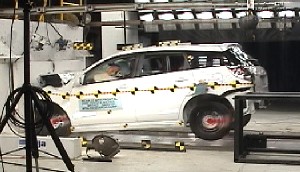
Frontal Crash Test
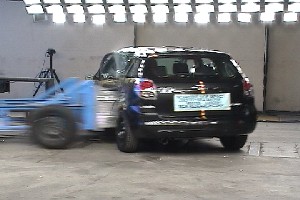
Side Crash Test
Overall Frontal Rating
Driver and Passenger Assessment
Driver Side
Passenger Side
Overall Side Rating
Side Barrier and Side Pole Tests
Driver Side
Passenger Side
Rollover Resistance
No rollover risk estimate available in this dataset
Safety Features
ESC: OptionalForward Collision Warning: NoLane Departure Warning: No
Recall Notices
NHTSANHTSA ID: 10V384000August 26, 2010
ENGINE AND ENGINE COOLING
TOYOTA IS RECALLING CERTAIN MODEL YEAR 2005-2008 COROLLA AND COROLLA MATRIX VEHICLES. THE ENGINE CONTROL MODULE (ECM) FOR THE SUBJECT MODELS EQUIPPED WITH THE 1ZZ-FE ENGINE AND TWO-WHEEL DRIVE MAY HAVE BEEN IMPROPERLY MANUFACTURED. THERE IS A POSSIBILITY THAT A CRACK MAY DEVELOP AT CERTAIN SOLDER POINTS OR ON VARISTORS ON THE CIRCUIT BOARD.
Remedy Status
DEALERS WILL INSPECT THE PRODUCTION NUMBER OF THE ECM AND REPLACE THE ECM IF NECESSARY. THIS SERVICE WILL BE PERFORMED FREE OF CHARGE. TOYOTA WILL MAIL AN INTERIM OWNER NOTIFICATION THE MIDDLE OF SEPTEMBER 2010 TO ADVISE OWNERS OF THIS DEFECT AND RECALL. THIS INTERIM NOTIFICATION WILL INFORM OWNERS THAT THEY WILL RECEIVE A FUTURE NOTIFICATION WHEN PARTS BECOME AVAILABLE TO HAVE THE FREE REMEDY PERFORMED ON THEIR VEHICLE. THE SAFETY RECALL BEGAN ON NOVEMBER 29, 2010. OWNERS MAY CONTACT TOYOTA AT 1-800-331-4331.
NHTSA ID: 10V035000February 03, 2010
EQUIPMENT:OTHER:LABELS
GULF STATES TOYOTA IS RECALLING CERTAIN MODEL YEAR 2005-2010 VEHICLES FOR FAILING TO COMPLY WITH THE REQUIREMENTS OF FEDERAL MOTOR VEHICLE SAFETY STANDARD NO. 110, "TIRE SELECTION AND RIMS." THESE VEHICLES WERE SOLD BETWEEN SEPTEMBER 1, 2005 AND JUNE 2, 2008 WITHOUT THE REQUISITE LOAD CARRYING CAPACITY MODIFICATION LABELS.
Remedy Status
DEALERS WILL MAIL TO CONSUMERS THE CORRECTED LABEL OR THE CUSTOMER WILL HAVE THE OPTION FOR DEALERS TO INSTALL THE LABEL FREE OF CHARGE. DEALERS WILL ALSO CORRECT THE OWNER'S MANUAL. THE SAFETY RECALL BEGAN ON MAY 27, 2010. OWNERS MAY CONTACT GULF STATES TOYOTA AT 713-580-3300.
Investigations
2 totalFrom 2000 through 2017, Takata produced millions of air bag inflators using two types of phase-stabilized ammonium nitrate ("PSAN") propellant -- propellant 2004 and propellant 2004L. After prolonged exposure to high temperature cycles and humidity, inflators using propellant 2004 can degrade, causing the propellant to burn too quickly when ignited. The rapid burning can cause the inflator to rupture during deployment, potentially causing serious or even fatal injury to vehicle occupants. See 2016 Blomquist Report at www.nhtsa.gov/sites/nhtsa.gov/files/documents/expert_report-hrblomquist.pdf.Consequently, all frontal inflators using propellant 2004 that do not contain a "desiccant" (a substance that traps and holds moisture) in US vehicles are under recall. These "non-desiccated" inflators either have been or are required to be replaced.In some cases, the remedy part for these recalled inflators was, or will be, an inflator using either propellant 2004 or 2004L that does contain a desiccant. None of these "desiccated" remedy parts (which were installed in older model year vehicles) are currently under recall for a degradation concern. Certain subsets of desiccated PSAN inflators using propellant 2004 for use as original equipment, however, have been recalled for a degradation concern. All Takata inflators produced with propellant 2004L contain desiccant, and none of these desiccated inflators using propellant 2004L are under recall for a degradation concern. There have been no reported field ruptures in any non-recalled desiccated PSAN inflators.It is understood that desiccants fully saturate at some threshold, at which point any additional moisture will not be captured. This means the degradation process observed in non-desiccated inflators using propellant 2004 may also occur in non-recalled desiccated inflators using propellant 2004, assuming additional moisture enters the inflator and high temperature cycling occurs. Based on available information, desiccant saturation can occur within the first five years in the worst environments, and the time required for full saturation is affected by multiple factors. While no present safety risk has been identified, further work is needed to evaluate the future risk of non-recalled desiccated inflators using propellant 2004.Three entities -- Takata (now known as TK Global), the Independent Testing Coalition, and Exponent -- have been studying the long-term behavior of Takata desiccated PSAN inflators using propellant 2004L (as well as 2004) in the presence of moisture and temperature cycling. The research efforts, which include development of predictive modeling techniques and field sample analysis, are ongoing. To date, none of the researchers have identified field evidence showing that propellant 2004L is undergoing a degradation process that leads to aggressive deployment and potential rupture. However, the time in service of such inflators remains short compared to that of the inflators using propellant 2004. Further study is needed to assess the long-term safety of desiccated inflators using propellant 2004L.The Office of Defects Investigation is opening this investigation to examine whether a safety defect related to propellant degradation exists in non-recalled desiccated PSAN frontal inflators manufactured by Takata. This investigation will require extensive information on Takata production processes and surveys of inflators in the field. Lists of recall actions that may have used desiccated PSAN inflators as remedy parts, as well as the makes and models originally manufactured with them, is available with the downloadable version of this document (see nhtsa.gov/recalls?nhtsaId=EA21002 -- note this information is subject to change/revision as the investigation proceeds). This investigation does not supersede EA15-001, which remains open.
Component: AIR BAGS:FRONTAL:DRIVER SIDE:INFLATOR MODULEOpened: Sep 17, 2021
EAClosed
On August 26, 2010, Toyota submitted a Defect Information Report to the National Highway Traffic Safety Administration (NHTSA) regarding problems with Engine Control Modules that could result in engine stall while driving in certain model year (MY) 2005 through 2008 Toyota Corolla, Corolla Matrix and Pontiac Vibe vehicles equipped with the 1ZZ-FE engine and two-wheel drive and manufactured between April 19, 2004 and January 2, 2008.Toyota's report indicated that cracks may develop at certain solder point or on varistors on the ECMs.According to Toyota, such cracks generally resulted in engine warning lamp illumination, harsh shifting or engine no-start.In some cases, if the cracking occurs on particular solder points or varistors, the engine could stop while the vehicle is being driven.Toyota will notify owners of subject vehicles that they should return their vehicles to a Toyota or Pontiac dealer.Dealers will be instructed to inspect the production number of the ECM for each vehicle and replace the ECM if necessary.On November 30, 2009, the Office of Defects Investigation (ODI) opened a Preliminary Evaluation (PE09-054) to investigate alleged engine stall while driving in model year (MY) 2006 Toyota Corolla and Corolla Matrix vehicles.In its response to ODI's information request, submitted on March 2, 2010, Toyota indicated that it had identified two possible conditions with ECMs used in MY 2005 through 2007 Toyota Corolla and Matrix vehicles:1) cracks forming between the IC and the board caused by an improperly cured conformal coating applied to the circuit boards after the soldering process is completed; and 2) cracks occurring in a variable resistor (varistor) due to overheating.During the manufacturing process a glass coating is created on the surface of the varistor.Between March and August 2010, Toyota began collecting ECMs from the field to further investigate failure modes that may result in engine stall.Toyota also conducted durability testing on ECMs collected from in-use vehicles to assess whether the problems may be a continuing trend. In addition, they conducted durability testing in order to assess whether this problem was a continuing trend.Toyota found that 4 of 32 collected ECMs malfunctioned after thermal shock testing.Toyota also confirmed that cracking could develop at solder points on the ECM circuit board that could lead to engine stall while driving and that this trend was likely to continue.The manufacturer failure data in this resume is limited to MY 2005 through 2007 Toyota Corolla and Corolla Matrix vehicles.Based on Toyota's recall, this Engineering analysis has been closed.
Component: ENGINE AND ENGINE COOLINGOpened: Aug 18, 2010Closed: Sep 16, 2010Related recall: 10V384000
Owner Complaints
96 totalENGINE
Dec 6, 2024
The contact owns a 2007 Toyota Matrix. The contact stated that while driving at an undisclosed speed, there was an engine misfire, with the check engine warning light illuminated. The vehicle was restarted; however, the failure recurred. The dealer was not contacted. The vehicle ...
Preview excerpt
AIR BAGS
Aug 1, 2018
TL* THE CONTACT OWNS A 2007 TOYOTA MATRIX. THE CONTACT STATED THAT WHILE OPERATING THE VEHICLE, THE PASSENGER'S SIDE AIR BAG SENSOR LIGHT REMAINED ILLUMINATED. THE VEHICLE WAS TAKEN TO THE LOCAL DEALER TOYOTA WHITTIER LOCATED AT 14577 E, WHITTIER BLVD, WHITTIER, CA 90605, WHO DIA...
Preview excerpt
TIRES
Jul 28, 2017
2007 TOYOTA MATRIX. CONSUMER WRITES IN REGARDS TO DEFECTIVE ROADMASTER TIRES ON VEHICLE. *LD THE CONSUMER STATED IN A SPAN OF 2 MONTHS THE VEHICLE EXPERIENCED 3 FLAT TIRES. *JS
AIR BAGS
Jun 7, 2017
I HAVE CALLED TOYOTA 355 3 TIMES. THEY SAY THE WAIT LIST IS VER Y LONG. THEY NEVER CALL ME BACK.
STRUCTURE
1 injuryJun 1, 2017
TL* THE CONTACT OWNS A 2007 TOYOTA MATRIX. WHILE ATTEMPTING TO OPEN THE REAR DRIVER'S DOOR, THE EXTERIOR DOOR HANDLE DETACHED. THE VEHICLE WAS TAKEN TO MILTON RUBEN AUTO GROUP (3514 WASHINGTON RD, AUGUSTA, GA 30907) WHERE IT WAS DIAGNOSED THAT THE HANDLE NEEDED TO BE REPLACED. TH...
Preview excerpt
AIR BAGS
CRASHMay 5, 2017
MY DAUGHTER TOTALED THIS VEHICLE WITH A FRONT END COLLISION. THE AIR BAG DID NOT DEPLOY.
AIR BAGS,VEHICLE SPEED CONTROL
CRASH1 injuryJan 11, 2017
TL* THE CONTACT OWNS A 2007 TOYOTA MATRIX. WHILE THE VEHICLE WAS EXITING A PARKING GARAGE AND WAITING AT A TOLL BOOTH, IT SUDDENLY ACCELERATED OUT OF CONTROL AND CRASHED INTO ANOTHER VEHICLE AND A RETAINING WALL. THE AIR BAGS DID NOT DEPLOY. A POLICE REPORT WAS FILED. THERE WERE ...
Preview excerpt
VEHICLE SPEED CONTROL,UNKNOWN OR OTHER
CRASH1 injuryDec 16, 2016
ON THE MORNING OF 12/16/2016, WHILE IN THE PARKING GARAGE WHERE MY WIFE WORKS, SHE STOPPED TO BACK INTO A PARKING SPOT AND THE CAR SUDDENLY ACCELERATED FORWARD AND WOULD NOT RESPOND TO VIGOROUS BRAKING NOR THE EMERGENCY BRAKE. THE CAR HIT A CONCRETE WALL, THE AIR BAG DEPLOYED, AN...
Preview excerpt
AIR BAGS
Dec 15, 2016
TL* TAKATA RECALL. THE CONTACT OWNS A 2007 TOYOTA MATRIX. THE CONTACT RECEIVED NOTIFICATION OF NHTSA CAMPAIGN NUMBER: 15V285000 (AIR BAGS); HOWEVER, THE PART FOR THE REPAIR WAS UNAVAILABLE. THE CONTACT STATED THAT THE MANUFACTURER EXCEEDED A REASONABLE AMOUNT OF TIME FOR THE RECA...
Preview excerpt
AIR BAGS
Apr 9, 2016
TL* TAKATA RECALL. THE CONTACT OWNS A 2007 TOYOTA MATRIX. THE CONTACT RECEIVED NOTIFICATION OF NHTSA CAMPAIGN NUMBER: 15V285000 (AIR BAGS); HOWEVER, THE PART TO DO THE REPAIR WAS UNAVAILABLE. THE CONTACT STATED THAT THE MANUFACTURER EXCEEDED A REASONABLE AMOUNT OF TIME FOR THE RE...
Preview excerpt
Showing 10 recent complaints from 96 total
View Full Complaint LogCompare Related Vehicles
Why Compare These Pages
The strongest comparison flow is usually: exact vehicle-year page, then nearby years of the same model, then other 2007 Toyota models. That sequence helps separate one-off year spikes from broader make-wide patterns.
More Toyota Matrix Years
2008 Toyota MatrixCompare this year against 2007 for complaint and recall shifts.2r2i38c2006 Toyota MatrixCompare this year against 2007 for complaint and recall shifts.4r3i170c2009 Toyota MatrixCompare this year against 2007 for complaint and recall shifts.3r2i192c2005 Toyota MatrixCompare this year against 2007 for complaint and recall shifts.2r4i213c2010 Toyota MatrixCompare this year against 2007 for complaint and recall shifts.4r2i45c2004 Toyota MatrixCompare this year against 2007 for complaint and recall shifts.3r4i138c
More 2007 Toyota Models
2007 Toyota CamryAnother 2007 Toyota option for same-year comparison.10r3i3,613c2007 Toyota PriusAnother 2007 Toyota option for same-year comparison.4r3i2,003c2007 Toyota RAV4Another 2007 Toyota option for same-year comparison.14r4i1,003c2007 Toyota CorollaAnother 2007 Toyota option for same-year comparison.6r3i883c2007 Toyota FJ CruiserAnother 2007 Toyota option for same-year comparison.9r591c2007 Toyota TacomaAnother 2007 Toyota option for same-year comparison.10r1i540c
Frequently Asked Questions
How many recalls does the 2007 Toyota Matrix have?
The 2007 Toyota Matrix has 2 recalls recorded by NHTSA.
How many complaints have been filed for the 2007 Toyota Matrix?
NHTSA has received 96 owner-reported complaints for the 2007 Toyota Matrix.
What is the NHTSA safety rating for the 2007 Toyota Matrix?
An overall NHTSA safety rating is not available in our current dataset for the 2007 Toyota Matrix. Individual crash-test results may still be available.
What are the most common problems with the 2007 Toyota Matrix?
The most frequent complete stored component labels for the 2007 Toyota Matrix are air bags (33 reports), engine and engine cooling (10 reports), vehicle speed control (7 reports). These are exact-label counts, not broader component-group totals or confirmed defects.
Does the 2007 Toyota Matrix have any recalls?
Yes. NHTSA has 2 recalls on record for the 2007 Toyota Matrix. Scroll up to review the published recall summaries, consequences, and remedies. To check for unrepaired recalls on your specific vehicle, use your VIN at nhtsa.gov/recalls.
Check Another Vehicle
Look up recalls and complaints for any year, make, and model.
This page summarizes publicly available data from the National Highway Traffic Safety Administration (NHTSA). Complaint counts reflect reports submitted to NHTSA by vehicle owners and do not by themselves prove defect severity or vehicle safety. Safety ratings may not be available for all vehicle-years. This site is not affiliated with NHTSA or any vehicle manufacturer. For official information, visit the official NHTSA page for this vehicle.