Honda · Accord · 2006
2006 Honda Accord
17
Recalls
430
Complaints
N/A
NCAP overall
The 2006 Honda Accord has 17 recalls and 430 owner-reported complaints on file with NHTSA. Most frequent stored component label: air bags (108 reports).
Stored NHTSA configuration: 2006 Honda Accord 2-DR. w/SAB NCAP Vehicle ID: 1840
Ratings describe one stored NHTSA configuration, not every trim, body style or drivetrain for this model year. How this configuration is selected
Source: NHTSA Public Records
NHTSA source checks for this vehicle year
- Complaints
- Separate successful check not recorded.
- Recalls
- Separate successful check not recorded.
- Safety ratings
- Separate successful check not recorded.
- Investigations
- Separate successful check not recorded.
- Manufacturer communications
- Separate successful check not recorded.
Checks are recorded separately for each dataset, not for the whole page. Dates use UTC. A missing check date does not mean no records exist.
Vehicle import recorded: May 4, 2026. This is the stored import date, not confirmation that every source was successfully refreshed.
Research Context
The 2006 Honda Accord page works best as a research starting point. Complaint totals show how much owner-reported activity exists, while recalls and investigations help show whether any of that activity turned into formal safety action.
Because this is a newer-era vehicle page, it usually helps to compare this year against nearby model years before deciding whether a complaint pattern looks isolated or persistent. On this page, the most frequent complete stored component label is air bags with 108 reported complaints.
Best Research Moves
- Use the complaint log to see whether the 2006 Honda Accord reports cluster around one repeated symptom or spread across multiple systems.
- Compare the recall list with the complaint mix to see whether the most reported issues overlap with formal NHTSA safety campaigns.
- Check the linked investigations for extra ODI context if you want to see whether owner complaints escalated into formal defect review.
Key Takeaways
- The 2006 Honda Accord currently shows 17 NHTSA recalls listed on this page and 430 owner-reported complaints.
- This page currently shows 4 NHTSA investigations linked to this page.
- This page reflects complaint volume, recall history, and NHTSA test data, but it does not diagnose causes or rank reliability by itself.
- Safety data currently shows no overall NHTSA safety rating in our current dataset.
- The most frequent complete stored component labels on this page are air bags (108), steering (34), service brakes, hydraulic (31).
- Vehicle
- 2006 Honda Accord
- Recalls
- 17
- Complaints
- 430
- Stored Configuration Overall Rating
- Not available in this dataset
How to Interpret This Page
This page combines three types of NHTSA data: recall campaigns (official manufacturer or government actions), owner complaints (unverified consumer reports), and crash test ratings (where available). A vehicle with many complaints is not necessarily less reliable — complaint volume correlates with sales volume and vehicle age. Recalls indicate identified defects, not overall quality. To compare this model year with others, use the year navigation in the sidebar or return to the model overview page.
If you are researching a used vehicle, start with the complaint categories, compare them against the recall list, and then check nearby model years to see whether the same issue profile repeats. That usually produces a better buying or research signal than treating the raw complaint total as a standalone safety ranking.
NHTSA Configuration Test Results
Stored NHTSA configuration: 2006 Honda Accord 2-DR. w/SAB NCAP Vehicle ID: 1840
Ratings describe one stored NHTSA configuration, not every trim, body style or drivetrain for this model year. How this configuration is selected
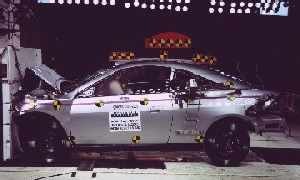
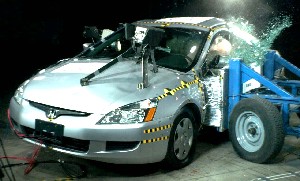
No overall score is available in our current dataset. The individual results below are not a combined safety rating; compare vehicles within the same test program and model year.
Frontal Crash Test
Side Crash Test
Overall Frontal Rating
Driver and Passenger Assessment
Driver Side
Passenger Side
Overall Side Rating
Side Barrier and Side Pole Tests
Driver Side
Passenger Side
Rollover Resistance
No rollover risk estimate available in this dataset
Safety Features
ESC: OptionalForward Collision Warning: NoLane Departure Warning: No
Recall Notices
NHTSANHTSA ID: 19E068000October 10, 2019
VEHICLE SPEED CONTROL:ACCELERATOR PEDAL
Dorman Products, Inc. (Dorman) is recalling certain Accelerator Pedal Assemblies part numbers 699-114 and 825-5029-1, sold as replacement parts for 2003-2006 Acura MDX, 2004-2008 Acura TL and TSX, 2003-2007 Honda Accord, 2005-2006 Honda CR-V, 2007-2011 Honda Element, 2005-2008 Honda Pilot and 2006-2014 Honda Ridgeline vehicles. The rotating portion of the accelerator pedal assembly may bind. As such, these vehicles fail to comply with the requirements of Federal Motor Vehicle Safety Standard (FMVSS) number 124, "Accelerator Control Systems."
Remedy Status
Dorman will notify owners, and qualified service facilities will replace the affected accelerator pedal assemblies, free of charge. The recall began December 9, 2019. Owners may contact Dorman customer service at 1-800-523-2492, using option 5. Dorman's number for this recall is AS1019XXXX.
NHTSA ID: 19V499000June 27, 2019
AIR BAGS:FRONTAL:DRIVER SIDE:INFLATOR MODULE
Honda (American Honda Motor Co.) is recalling certain 2003 Acura 3.2CL, 2002-2003 3.2TL, 2003-2006 MDX, 2001-2007 Honda Accord, 2001-2005 Civic, 2003-2005 Civic Hybrid, 2001-2005 Civic GX NGV, 2002-2006 CR-V, 2003-2011 Element, 2002-2004 Odyssey, 2003-2008 Pilot and 2006 Ridgeline vehicles. These vehicles are equipped with driver frontal air bag inflators assembled as a recall remedy part or replacement service part, that may explode due to propellant degradation occurring after long-term exposure to high absolute humidity, temperature and temperature cycling.
Remedy Status
Honda will notify owners, and dealers will replace the driver frontal air bag inflator, free of charge. The recall began August 12, 2019. Owners may contact Honda customer service at 1-888-234-2138. Honda's numbers for this recall are Q5A and Y58.
NHTSA ID: 19V501000June 27, 2019
AIR BAGS:FRONTAL:PASSENGER SIDE:INFLATOR MODULE
Honda (American Honda Motor Co.) is recalling certain 2003-2006 Acura MDX, 2005-2012 RL, 2003-2007 Honda Accord, 2001-2005 Civic, 2003-2005 Civic Hybrid, 2001-2005 Civic GX NGV, 2002-2006 CR-V, 2003-2011 Element, 2007-2008 Fit, 2002-2004 Odyssey, 2003-2008 Pilot, and 2006-2014 Ridgeline vehicles. The vehicles are equipped with passenger frontal air bag inflators assembled as a recall remedy part or replacement service part, that may explode due to propellant degradation occurring after long-term exposure to high absolute humidity, temperature and temperature cycling.
Remedy Status
Honda will notify owners, and dealers will replace the passenger frontal airbag inflator, free of charge. The recall began August 12, 2019. Owners may contact Honda customer service at 1-888-234-2138. Honda's numbers for this recall are E5D and X5C.
NHTSA ID: 19V182000March 06, 2019
AIR BAGS:FRONTAL:DRIVER SIDE:INFLATOR MODULE
Honda (American Honda Motor Co.) is recalling specific 2003 Acura 3.2CL, 2013-2016 ILX, 2013-2014 ILX Hybrid, 2003-2006 MDX, 2007-2016 RDX, 2002-2003 3.2TL, 2004-2006, and 2009-2014 TL, 2010-2013 ZDX and 2001-2007 and 2009 Honda Accord, 2001-2005 Civic, 2003-2005 Civic Hybrid, 2001-2005 Civic GX NGV, 2002-2007 and 2010-2011 CR-V, 2003-2011 Element, 2007 Fit, 2002-2004 Odyssey, 2003-2008 Pilot, and 2006-2014 Ridgeline vehicles. The affected vehicles received a replacement driver air bag inflator as part of a previous Takata inflator recall remedy or a replacement driver air bag module containing the same inflator type as a service part. Due to a manufacturing error, in the event of a crash necessitating deployment of the driver frontal air bag, these inflators may explode.
Remedy Status
Honda will notify owners, and dealers will replace the driver's air bag inflator with an alternate inflator, free of charge. The recall began April 10, 2019. Honda owners may contact customer service at 1-888-234-2138. Honda's number for this recall is O41. Acura owners may contact customer service at 1-888-234-2138. Acura's number for this recall is U40.
NHTSA ID: 18V268000April 26, 2018
AIR BAGS:FRONTAL:PASSENGER SIDE:INFLATOR MODULE
Honda (American Honda Motor Co.) is recalling certain 2003-2012 Honda Accord and Pilot, 2010 Accord Crosstour, 2001-2011 Civic, 2002-2011 CR-V, 2003-2004, 2006-2008 and 2011 Element, 2007 and 2009-2013 Fit, 2010-2012 Insight, 2002-2004 Odyssey, and 2012 Ridgeline vehicles. The front passenger air bag may have been installed incorrectly during replacement.
Remedy Status
Honda will notify owners, and dealers will inspect and, if necessary, replace the passenger frontal air bag module assembly, free of charge. The recall began June 22, 2018. Owners may contact Honda customer service at 1-888-234-2138. Honda's numbers for this recall are K1P, and M1O.
NHTSA ID: 16V178000March 30, 2016
AIR BAGS:FRONTAL:PASSENGER SIDE:INFLATOR MODULE
Honda (American Honda Motor Co.) is recalling certain model year 2004-2007 Accord vehicles manufactured October 1, 2003, to August 17, 2007. The affected vehicles may have been assembled with an incorrect passenger frontal air bag module that does not comply with the advanced air bag requirements. As such, these vehicles fail to comply with the requirements of Federal Motor Vehicle Safety Standard (FMVSS) number 208, "Occupant Crash Protection."
Remedy Status
Honda will notify owners, and dealers will inspect and replace the air bag module as necessary, free of charge. The recall began on May 2, 2016. Owners may contact Honda customer service at 1-800-999-1009. Honda's number for this recall is JZ3.
NHTSA ID: 15V370000June 15, 2015
AIR BAGS:FRONTAL:PASSENGER SIDE:INFLATOR MODULE
Honda (American Honda Motor Co.) is recalling certain model year 2001-2005 Honda Civic vehicles manufactured March 21, 2000, to January 20, 2005, 2001-2004 Honda Civic GX vehicles manufactured June 14, 2000, to August 19, 2004, 2003-2005 Honda Civic Hybrid vehicles manufactured February 24, 2002, to January 18, 2005, 2003-2007 Honda Accord vehicles manufactured February 21, 2002, to August 28, 2007, 2002-2004 Honda CR-V vehicles, 2002-2003 Honda Odyssey vehicles manufactured June 19, 2001, to July 12, 2003, 2003 Acura MDX vehicles manufactured September 19, 2002, to June 19, 2003, 2003 Honda Element vehicles manufactured June 25, 2002, to July 31, 2003, and 2003 Honda Pilot vehicles manufactured November 26, 2001, to August 21, 2003. The affected vehicles have a passenger side frontal air bag that may be susceptible to moisture intrusion which, over time, could cause the inflator to rupture upon its deployment.
Remedy Status
Honda will notify owners, and dealers will replace the passenger air bag inflator, free of charge. The recall began on July 1, 2015. Owners may contact Honda customer service at 1-888-234-2138. Honda's numbers for this recall are JU4, JU5, JU6, and JU7. Note: Vehicles that have already received a replacement passenger air bag inflator as part of the recall remedy for an earlier campaign such as 14V353 or 14V700 (Honda recall numbers S95, JH6, JH7, JH8, JH9, JJ0, JJ1, JJ2, JJ6, JM5 and JM6) are not included in this recall. However, this recall does supersede 13V132 and 14V349. Note: On December 18, 2015 Honda informed NHTSA of an expansion of this recall to include certain model year 2004 Honda CR-V vehicles in addition to additional model year 2003 CR-V vehicles.
NHTSA ID: 15V320000May 28, 2015
AIR BAGS:FRONTAL:DRIVER SIDE:INFLATOR MODULE
Honda (American Honda Motor Co.) is recalling certain model year 2001-2007 Accord, 2001-2005 Civic, 2001-2004 Honda Civic GX, 2003-2005 Honda Civic Hybrid, 2002-2006 CR-V, 2003-2011 Element, 2002-2004 Odyssey, 2003-2008 Pilot, 2006 Ridgeline, 2003 Acura 3.2CL, 2003-2006 Acura MDX, and 2002-2003 Acura 3.2TL vehicles. The affected vehicles are equipped with a dual-stage driver frontal air bag that may be susceptible to moisture intrusion and other factors, including manufacturing variability that, over time, could cause the inflator to rupture.
Remedy Status
Honda will notify owners, and dealers will replace the driver frontal air bag inflator, free of charge. The recall began on July 1, 2015. Owners may contact Honda customer service at 1-888-234-2138. Owners may contact Acura customer service at 1-800-382-2238, select option 4. Note: Vehicles that have had their driver frontal air bag replaced previously as part of a recall remedy prior to September 12, 2014 need to have their air bag replaced under this recall as well. Vehicles that, on or after September 12, 2014, received a remedy for a prior driver frontal air bag inflator recall already received an inflator of a different design, and therefore are not included in this recall and do not require additional servicing. Note: This recall fully supersedes recalls 08V-593, 09V-259, 10V-041, 11V-260, 14V-351 and 15V-153. Honda's numbers for this recall are JQ9, JR0, JR1, JR2, JR3, JR4, JR5, JR6, JR7, and JR8.
NHTSA ID: 12V222000May 17, 2012
STEERING:HYDRAULIC POWER ASSIST:HOSE, PIPING, AND CONNECTIONS
Honda is recalling certain model year 2007 and 2008 Acura TL and model year 2003-2007 Accord V6 vehicles. In May 2012, Honda filed a defect report to recall certain model year 2007 and 2008 Acura TL vehicles. In September 2012, Honda informed the agency that it was including an additional 573,147 vehicles including certain model year 2003 through 2007 Accord V6 vehicles. The total number of vehicles being recalled is now 625,762. Prolonged under-hood and power steering fluid temperatures may cause the power steering hose to deteriorate prematurely, resulting in cracks and power steering fluid leakage.
Remedy Status
Honda will notify owners, and dealers will install a new heat resistant power steering hose, free of charge. The original recall began in June 2012, and owners of those vehicles may obtain the free remedy. Sufficient parts are not yet available for owners of the vehicles covered by the September 2012 expansion, but are expected to be available in early 2013. Honda will notify owners of these vehicles beginning on October 26, 2012, and will notify these owners again when parts are available so those vehicles can be brought to dealers for applications of the free remedy. Owners may contact Honda customer service at 1-800-999-1009.
NHTSA ID: 11V395000August 04, 2011
POWER TRAIN:AUTOMATIC TRANSMISSION:CONTROL MODULE (TCM/PCM/TECM)
HONDA IS RECALLING CERTAIN MODEL YEAR 2005-2010 ACCORD, 2007-2010 CR-V, AND 2005-2008 ELEMENT PASSENGER CARS MANUFACTURED FROM JULY 1, 2004, THROUGH SEPTEMBER 3, 2010. THE OUTER RACE OF THE SECONDARY SHAFT BEARING MAY BE BROKEN DURING CERTAIN DRIVING STYLES. A BROKEN OUTER RACE MAY CAUSE ABNORMAL NOISE, THE MALFUNCTION INDICATOR LIGHT TO TURN ON, AND ALLOW CONTACT BETWEEN THE TRANSMISSION IDLE GEAR AND AN ELECTRONIC SENSOR HOUSING WITHIN THE TRANSMISSION.
Remedy Status
HONDA WILL NOTIFY OWNERS AND DEALERS WILL UPDATE THE AUTOMATIC TRANSMISSION CONTROL MODULE SOFTWARE FREE OF CHARGE. THE SAFETY RECALL BEGAN ON AUGUST 27, 2011. OWNERS MAY CONTACT HONDA AUTOMOBILE CUSTOMER SERVICE AT 1-800-999-1009.
NHTSA ID: 07E031000May 17, 2007
EXTERIOR LIGHTING:HEADLIGHTS
CERTAIN MAXZONE HEADLIGHT ASSEMBLIES, DEPO BRAND, P/NOS. 317-1131L-AS, 317-1131R-AS, 317-1131L-US, AND 317-1131R-US, SOLD FOR USE AS AFTERMARKET EQUIPMENT FOR THE ABOVE LISTED PASSENGER VEHICLES. DURING PRODUCTION A SLIGHT DISTORTION OF THE BEZEL CHANGED THE LUMINOUS INTENSITY OF THE TURN SIGNAL. THESE HEADLAMPS FAIL TO CONFORM TO THE REQUIREMENTS OF FEDERAL MOTOR VEHICLE SAFETY STANDARD NO. 108, LAMPS, REFLECTIVE DEVICES, AND ASSOCIATED EQUIPMENT.
Remedy Status
MAXZONE WILL NOTIFY OWNERS AND OFFER REIMBURSEMENT FOR ANY NONCOMPLIANT HEADLIGHTS. THE RECALL BEGAN ON MAY 17, 2007. OWNERS MAY CONTACT MAXZONE AT 909-822-3288.
NHTSA ID: 07E004000January 16, 2007
EXTERIOR LIGHTING:HEADLIGHTS
CERTAIN TYC HEADLAMP ASSEMBLIES P/NS 20-6361-00 AND 20-6362-00 SOLD AS AFTERMARKET EQUIPMENT FOR 2003-2006 HONDA ACCORD PASSENGER VEHICLES. THE PHOTMETRIC WERE MISALIGNED WHICH DOES NOT COMPLY WITH FEDERAL MOTOR VEHICLE SAFETY STANDARD NO. 108, LAMPS, REFLECTIVE DEVICES, AND ASSOCIATED EQUIPMENT.
Remedy Status
GENERA WILL NOTIFY OWNERS AND OFFER TO REPURCHASE THE NONCOMPLIANT LAMPS. THE RECALL BEGAN ON JANUARY 26, 2007. OWNERS CAN CONTACT GENERA AT 714-522-6688.
NHTSA ID: 06V270000July 26, 2006
EQUIPMENT:OTHER:OWNERS/SERVICE/OTHER MANUAL
ON CERTAIN PASSENGER VEHICLES AND MOTORCYCLES, THE OWNER'S MANUALS CONTAIN INCORRECT CONTACT INFORMATION FOR THE NATIONAL HIGHWAY TRAFFIC SAFETY ADMINISTRATION'S (NHTSA) VEHICLE SAFETY HOTLINE.
Remedy Status
HONDA WILL SEND A POSTCARD TO DEALERS AND OWNERS WITH THE CORRECT NHTSA VEHICLE SAFETY HOTLINE INFORMATION AND WITH INSTRUCTIONS TO INSERT THE CARD INTO THE "REPORTING SAFETY DEFECTS" SECTION OF THE OWNER'S MANUAL. THE RECALL BEGAN ON AUGUST 2, 2006. OWNERS MAY CONTACT HONDA AT 1-800-999-1009, ACURA AT 1-800-382-2238 OR HONDA MOTORCYCLES AT 1-866-784-1870.
NHTSA ID: 06E064000July 17, 2006
EXTERIOR LIGHTING
CERTAIN TRADESONIC COMBINATION LAMPS SOLD AS REPLACEMENT LAMPS FOR USE ON THE ABOVE LISTED PASSENGER VEHICLES. COMBINATION LAMPS NOT EQUIPPED WITH AMBER SIDE REFLECTORS FAIL TO CONFORM WITH THE REQUIREMENTS OF FEDERAL MOTOR VEHICLE SAFETY STANDARD NO. 108, LAMPS, REFLECTIVE DEVICES, AND ASSOCIATED EQUIPMENT.
Remedy Status
TRADESONIC WILL NOTIFY OWNERS AND REPLACE THE LAMPS FREE OF CHARGE. THE RECALL IS EXPECTED TO BEGIN DURING JULY 2006. OWNERS MAY CONTACT TRADESONIC AT 626-934-8884.
NHTSA ID: 06E023000March 13, 2006
EXTERIOR LIGHTING:HEADLIGHTS
CERTAIN ANZO COMBINATION HEADLAMP ASSEMBLIES SOLD AS REPLACEMENT LAMPS FOR USE ON CERTAIN PASSENGER VEHICLES. SOME COMBINATION LAMPS ARE NOT EQUIPPED WITH AMBER SIDE REFLECTORS WHICH FAIL TO CONFORM TO FEDERAL MOTOR VEHICLE SAFETY STANDARD NO. 108, "LAMPS, REFLECTIVE DEVICES, AND ASSOCIATED EQUIPMENT."
Remedy Status
ANZO WILL NOTIFY OWNERS AND REPLACE THE HEADLAMPS FREE OF CHARGE. THE RECALL BEGAN MAY 9, 2006. OWNERS MAY CONTACT ANZO USA AT 909-468-3688.
NHTSA ID: 05V536000November 28, 2005
TIRES:BEAD
ON CERTAIN PASSENGER VEHICLES, THE TIRES COULD HAVE BEEN DAMAGED WHEN THE TIRES WERE MOUNTED ON THE WHEELS. IN CERTAIN CIRCUMSTANCES, THE BEAD AREA OF THE TIRE MAY HAVE BEEN DAMAGED.
Remedy Status
DEALERS WILL REMOVE ALL FOUR TIRES AND INSPECT THEM FOR BEAD AREA DAMAGE. IF THERE IS DAMAGE, A NEW TIRE WILL BE INSTALLED FREE OF CHARGE. THE RECALL BEGAN ON DECEMBER 2, 2005. OWNERS MAY CONTACT HONDA AT 1-800-999-1009.
NHTSA ID: 05V510000November 03, 2005
AIR BAGS:FRONTAL
ON CERTAIN PASSENGER VEHICLES, ON THE FRONTAL AIRBAG SYSTEM WHERE THE TWO EXTERNAL IMPACT SENSORS IS MOUNTED, NEAR THE FRONT HEADLIGHTS THE FRONT IMPACT SENSOR BOLTS WERE NOT PROPERLY TORQUED.
Remedy Status
DEALERS WILL INSPECT AND REMOVE THE BUMPER AND RETORQUE THE LOOSE BOLTS. THE RECALL BEGAN ON NOVEMBER 7, 2005. OWNERS MAY CONTACT HONDA AT 1-800-999-1009 AND ACURA AT 1-800-382-2238.
Investigations
4 totalFrom 2000 through 2017, Takata produced millions of air bag inflators using two types of phase-stabilized ammonium nitrate ("PSAN") propellant -- propellant 2004 and propellant 2004L. After prolonged exposure to high temperature cycles and humidity, inflators using propellant 2004 can degrade, causing the propellant to burn too quickly when ignited. The rapid burning can cause the inflator to rupture during deployment, potentially causing serious or even fatal injury to vehicle occupants. See 2016 Blomquist Report at www.nhtsa.gov/sites/nhtsa.gov/files/documents/expert_report-hrblomquist.pdf.Consequently, all frontal inflators using propellant 2004 that do not contain a "desiccant" (a substance that traps and holds moisture) in US vehicles are under recall. These "non-desiccated" inflators either have been or are required to be replaced.In some cases, the remedy part for these recalled inflators was, or will be, an inflator using either propellant 2004 or 2004L that does contain a desiccant. None of these "desiccated" remedy parts (which were installed in older model year vehicles) are currently under recall for a degradation concern. Certain subsets of desiccated PSAN inflators using propellant 2004 for use as original equipment, however, have been recalled for a degradation concern. All Takata inflators produced with propellant 2004L contain desiccant, and none of these desiccated inflators using propellant 2004L are under recall for a degradation concern. There have been no reported field ruptures in any non-recalled desiccated PSAN inflators.It is understood that desiccants fully saturate at some threshold, at which point any additional moisture will not be captured. This means the degradation process observed in non-desiccated inflators using propellant 2004 may also occur in non-recalled desiccated inflators using propellant 2004, assuming additional moisture enters the inflator and high temperature cycling occurs. Based on available information, desiccant saturation can occur within the first five years in the worst environments, and the time required for full saturation is affected by multiple factors. While no present safety risk has been identified, further work is needed to evaluate the future risk of non-recalled desiccated inflators using propellant 2004.Three entities -- Takata (now known as TK Global), the Independent Testing Coalition, and Exponent -- have been studying the long-term behavior of Takata desiccated PSAN inflators using propellant 2004L (as well as 2004) in the presence of moisture and temperature cycling. The research efforts, which include development of predictive modeling techniques and field sample analysis, are ongoing. To date, none of the researchers have identified field evidence showing that propellant 2004L is undergoing a degradation process that leads to aggressive deployment and potential rupture. However, the time in service of such inflators remains short compared to that of the inflators using propellant 2004. Further study is needed to assess the long-term safety of desiccated inflators using propellant 2004L.The Office of Defects Investigation is opening this investigation to examine whether a safety defect related to propellant degradation exists in non-recalled desiccated PSAN frontal inflators manufactured by Takata. This investigation will require extensive information on Takata production processes and surveys of inflators in the field. Lists of recall actions that may have used desiccated PSAN inflators as remedy parts, as well as the makes and models originally manufactured with them, is available with the downloadable version of this document (see nhtsa.gov/recalls?nhtsaId=EA21002 -- note this information is subject to change/revision as the investigation proceeds). This investigation does not supersede EA15-001, which remains open.
Component: AIR BAGS:FRONTAL:DRIVER SIDE:INFLATOR MODULEOpened: Sep 17, 2021
The Office of Defects Investigation (ODI) opened PE14-016 in June 2014 based on six inflator rupture incidents involving consumer owned vehicles produced by five vehicle manufacturers.All six vehicles were operated in Florida or Puerto Rico at the time of the rupture and for the majority of their service life, and were equipped with inflators produced by Takata, a tier-one supplier of automotive air bag systems.During the course of PE14-016, ODI determined that five additional vehicle manufacturers used inflators of a similar design and vintage also supplied by Takata. No evidence of field failures was found in vehicles produced by these five additional manufacturers.Nonetheless, at ODI's insistence, all 10 vehicle manufacturers initiated a regional recall within approximately two weeks of the opening of the investigation.The regions recalled initially included Florida, Puerto Rico, Hawaii, and the U.S. Virgin Islands, areas with high absolute humidity and climatic conditions believed to be a significant factor in the inflator ruptures.As part of the recall actions, inflators removed from remedied vehicles are to be returned to Takata for testing.Takata's initial test results on passenger inflators from remedied vehicles indicated a much higher than anticipated rupture frequency for inflators returned from Florida.Accordingly ODI requested all 10 manufacturers expand the regional recalls for passenger inflators to include other geographic areas where high absolute humidity conditions exist, including the Gulf States and other coastal areas.Takata's testing of the passenger inflators to date continues to indicate this geographic area as having the highest risk, with no ruptures occurring from inflators returned from outside the expanded recall regions.During PE14-016 four additional passenger inflator field events occurred, all in vehicles from the same expanded geographic region.Also during PE14-016 four additional driver inflator field events occurred including two in vehicles from regions not known for high absolute humidity, specifically California and North Carolina.Accordingly, ODI requested all five of the affected vehicle manufacturers currently using the subject Takata driver inflators expand to nationwide recalls.Significantly, neither of the affected vehicle manufacturers or Takata provided any explanation to account for these two driver air bag inflator ruptures outside the area of high absolute humidity.Takata testing of returned driver inflators indicates a lower rupture frequency as compared to passenger inflator testing.All test ruptures reported by Takata to date have occurred on inflators returned from high absolute humidity areas.The investigation now includes all manufacturers and vehicles known to be affected at this time.ODI's investigation will focus on, among other things, root cause analysis, other potential defect consequences, identification of affected vehicles scope, and adequacy of the remedy.The five ODI reports cited above can be reviewed online at http://www-odi.nhtsa.dot.gov/owners/SearchNHTSAID under the following identification numbers: 10537899, 10568848, 10585224, 10605877, 10651492
PEClosed
The Office of Defects Investigation (ODI) opened PE14-016 in June 2014 based on six inflator rupture incidents involving consumer owned vehicles produced by five vehicle manufacturers.All six vehicles were operated in Florida or Puerto Rico at the time of the rupture and for the majority of their service life, and were equipped with inflators produced by Takata, a tier-one supplier of automotive air bag systems.During the course of PE14-016, ODI determined that five additional vehicle manufacturers used inflators of a similar design and vintage also supplied by Takata. No evidence of field failures was found in vehicles produced by these five additional manufacturers.Nonetheless, at ODI's insistence, all 10 vehicle manufacturers initiated a regional recall within approximately two weeks of the opening of the investigation.The regions recalled initially included Florida, Puerto Rico, Hawaii, and the U.S. Virgin Islands, areas with consistently high absolute humidity and climatic conditions believed to be a significant factor in the inflator ruptures.As part of the recall actions, inflators removed from remedied vehicles are to be returned to Takata for testing.Takata's initial test results on passenger inflators from remedied vehicles indicated a much higher than anticipated rupture frequency for inflators returned from Florida.Accordingly, ODI requested all 10 manufacturers expand the regional recalls for passenger inflators to include other geographic areas where high absolute humidity conditions exist, including the Gulf States and other coastal areas.Takata's testing of the passenger inflators to date continues to indicate this geographic area as having the highest risk, with no ruptures occurring from inflators returned from outside the expanded recall regions.During PE14-016, four additional passenger inflator field events occurred, all in vehicles from the same expanded geographic region.Also during PE14-016, four additional driver inflator field events occurred including two in vehicles from regions not known for high absolute humidity, specifically California and North Carolina.Accordingly, ODI requested all five of the affected vehicle manufacturers currently using the subject Takata driver inflators expand to nationwide recalls.Significantly, neither of the affected vehicle manufacturers or Takata provided any explanation to account for these two driver air bag inflator ruptures outside the area of high absolute humidity.Takata testing of returned driver inflators indicates a lower rupture frequency as compared to passenger inflator testing.All test ruptures reported by Takata to date have occurred on inflators returned from high absolute humidity areas.The PE is now closed/upgraded to an Engineering Evaluation (EA15-001) to include all manufacturersand vehicles known to be affected at this time.ODI's EA investigation will focus on, among other things, root cause analysis, other potential defect consequences, identification of affected vehicles scope, and adequacy of the remedy.The recalls related to this PE are: 14V343, 14V344, 14V348, 14V351, 14V353, 14V655, 14V700, 14V701, 14V752, 14V763, 14V770, 14V773, 14V787, 14V802 and 14V817.The number of vehicles affected are an estimate since some vehicles may have both the driver and passenger side inflators recalled. The five ODI reports cited above can be reviewed online at http://www-odi.nhtsa.dot.gov/owners/SearchNHTSAID under the following identification numbers: 10537899, 10568848, 10585224, 10605877, 10651492
Owner Complaints
430 totalELECTRICAL SYSTEM
Jun 25, 2025
After driving my Honda Accord for 135,000 miles, the ignition switch malfunctioned and I am unable to start the car, it seems like I need to replace the switch. After doing research I found out that many Hondas of the same model and years 2003-2009 experienced the same issues wh...
Preview excerpt
STEERING
Apr 9, 2025
The contact owns a 2006 Honda Accord. The contact stated that while driving 15-20 MPH, the contact became aware of an abnormal burning odor, and there was smoke coming from under the hood. The contact stated that the smoke increased while at a complete stop in traffic. There was ...
Preview excerpt
POWER TRAIN,SERVICE BRAKES
CRASHApr 5, 2025
NHTSA ID#89 THERE IS A LINE UP STOP & GO FOR PICK UP ITEM , SO IT SHIFT NUTRUAL AN D FROM TIME TO TIME AS LIKE ON LINE LOADING. ALL OF THE CERTAIN, THE CAR SPEED UP, I CAN NOT STOP IT BY APPLY THE BRAKE, IT HAPPEN 2 TIMES. IT WAS OUT OF MY CONTROL. "UNEXPECTED VEHICLE MOVEMENT I...
Preview excerpt
TIRES
Dec 29, 2024
It's wearing the tires down to the the wires on the back and the front
POWER TRAIN,ENGINE
Dec 18, 2024
The contact owns a 2006 Honda Accord. The contact stated while driving approximately 35 MPH, there was an abnormal metal-on-metal grinding sound coming from under the floorboards. The contact stated that the vehicle stalled. There was no warning light illuminated. The contact att...
Preview excerpt
POWER TRAIN,AIR BAGS,VISIBILITY/WIPER
Nov 1, 2024
The vehicle was taken to two Honda dealerships apon noticing the D light blinking on the dashboard after reaching highway speeds. Also started getting worse overtime, currently when starting up, and putting into drive, nothing happens, and after a few seconds it will plurge forwa...
Preview excerpt
SUSPENSION
Oct 18, 2024
Everything in the front end is bad and the back end
AIR BAGS
Sep 30, 2024
While driving down street, both curtain airbags deployed sporadically with absolutely no cause. I was not hit anywhere and I was not even using my brakes or slowing to a stop. My head got smashed in and my view was completely obstructed. I was able to pull off road to safety.
AIR BAGS
CRASHMar 8, 2024
I was ran off the road by another driver on March 8, 2024. I honked so that they would know I was there and then swerved as they continued to come towards me. As this happened, I lost control of my vehicle and it fishtailed on the highway, doing a complete 180° and going from 70 ...
Preview excerpt
AIR BAGS
Nov 15, 2023
The contact owns a 2006 Honda Accord. The contact stated while driving at an undisclosed speed, the air bag warning light was illuminated on the instrument panel. The vehicle was not taken to the dealer or an independent mechanic. The vehicle was not repaired. After investigating...
Preview excerpt
Showing 10 recent complaints from 430 total
View Full Complaint LogCompare Related Vehicles
Why Compare These Pages
The strongest comparison flow is usually: exact vehicle-year page, then nearby years of the same model, then other 2006 Honda models. That sequence helps separate one-off year spikes from broader make-wide patterns.
More Honda Accord Years
2007 Honda AccordCompare this year against 2006 for complaint and recall shifts.10r4i524c2005 Honda AccordCompare this year against 2006 for complaint and recall shifts.24r4i686c2008 Honda AccordCompare this year against 2006 for complaint and recall shifts.9r3i1,517c2004 Honda AccordCompare this year against 2006 for complaint and recall shifts.22r4i1,016c2009 Honda AccordCompare this year against 2006 for complaint and recall shifts.11r2i720c2003 Honda AccordCompare this year against 2006 for complaint and recall shifts.24r5i1,985c
More 2006 Honda Models
2006 Honda CivicAnother 2006 Honda option for same-year comparison.15r1,402c2006 Honda OdysseyAnother 2006 Honda option for same-year comparison.4r1i702c2006 Honda CR-VAnother 2006 Honda option for same-year comparison.13r5i398c2006 Honda PilotAnother 2006 Honda option for same-year comparison.10r3i266c2006 Honda RidgelineAnother 2006 Honda option for same-year comparison.14r4i240c2006 Honda ElementAnother 2006 Honda option for same-year comparison.11r3i121c
Frequently Asked Questions
How many recalls does the 2006 Honda Accord have?
The 2006 Honda Accord has 17 recalls recorded by NHTSA.
How many complaints have been filed for the 2006 Honda Accord?
NHTSA has received 430 owner-reported complaints for the 2006 Honda Accord.
What is the NHTSA safety rating for the 2006 Honda Accord?
An overall NHTSA safety rating is not available in our current dataset for the 2006 Honda Accord. Individual crash-test results may still be available.
What are the most common problems with the 2006 Honda Accord?
The most frequent complete stored component labels for the 2006 Honda Accord are air bags (108 reports), steering (34 reports), service brakes, hydraulic (31 reports). These are exact-label counts, not broader component-group totals or confirmed defects.
Does the 2006 Honda Accord have any recalls?
Yes. NHTSA has 17 recalls on record for the 2006 Honda Accord. Scroll up to review the published recall summaries, consequences, and remedies. To check for unrepaired recalls on your specific vehicle, use your VIN at nhtsa.gov/recalls.
Check Another Vehicle
Look up recalls and complaints for any year, make, and model.
This page summarizes publicly available data from the National Highway Traffic Safety Administration (NHTSA). Complaint counts reflect reports submitted to NHTSA by vehicle owners and do not by themselves prove defect severity or vehicle safety. Safety ratings may not be available for all vehicle-years. This site is not affiliated with NHTSA or any vehicle manufacturer. For official information, visit the official NHTSA page for this vehicle.