Honda · Accord · 2013
2013 Honda Accord
5
Recalls
1,407
Complaints
5/5
NCAP overall
The 2013 Honda Accord has 5 recalls and 1,407 owner-reported complaints on file with NHTSA. One stored NHTSA configuration has an overall rating of 5 out of 5 stars, not a rating for all versions. Most frequent stored component label: steering (402 reports).
Stored NHTSA configuration: 2013 Honda Accord 2 DR FWD NCAP Vehicle ID: 7522
Ratings describe one stored NHTSA configuration, not every trim, body style or drivetrain for this model year. How this configuration is selected
Source: NHTSA Public Records
NHTSA source checks for this vehicle year
- Complaints
- Separate successful check not recorded.
- Recalls
- Separate successful check not recorded.
- Safety ratings
- Separate successful check not recorded.
- Investigations
- Separate successful check not recorded.
- Manufacturer communications
- Separate successful check not recorded.
Checks are recorded separately for each dataset, not for the whole page. Dates use UTC. A missing check date does not mean no records exist.
Vehicle import recorded: May 4, 2026. This is the stored import date, not confirmation that every source was successfully refreshed.
Research Context
The 2013 Honda Accord page works best as a research starting point. Complaint totals show how much owner-reported activity exists, while recalls and investigations help show whether any of that activity turned into formal safety action.
Because this is a newer-era vehicle page, it usually helps to compare this year against nearby model years before deciding whether a complaint pattern looks isolated or persistent. On this page, the most frequent complete stored component label is steering with 402 reported complaints.
Best Research Moves
- Use the complaint log to see whether the 2013 Honda Accord reports cluster around one repeated symptom or spread across multiple systems.
- Compare the recall list with the complaint mix to see whether the most reported issues overlap with formal NHTSA safety campaigns.
- Check the linked investigations for extra ODI context if you want to see whether owner complaints escalated into formal defect review.
Key Takeaways
- The 2013 Honda Accord currently shows 5 NHTSA recalls listed on this page and 1,407 owner-reported complaints.
- This page currently shows 5 NHTSA investigations linked to this page.
- This page reflects complaint volume, recall history, and NHTSA test data, but it does not diagnose causes or rank reliability by itself.
- Safety data currently shows 5/5 overall NHTSA rating for one stored configuration, not all versions.
- The most frequent complete stored component labels on this page are steering (402), electrical system (232), engine (85).
- Vehicle
- 2013 Honda Accord
- Recalls
- 5
- Complaints
- 1407
- Stored Configuration Overall Rating
- 5/5. Stored NHTSA configuration: 2013 Honda Accord 2 DR FWD. NCAP Vehicle ID: 7522.
How to Interpret This Page
This page combines three types of NHTSA data: recall campaigns (official manufacturer or government actions), owner complaints (unverified consumer reports), and crash test ratings (where available). A vehicle with many complaints is not necessarily less reliable — complaint volume correlates with sales volume and vehicle age. Recalls indicate identified defects, not overall quality. To compare this model year with others, use the year navigation in the sidebar or return to the model overview page.
If you are researching a used vehicle, start with the complaint categories, compare them against the recall list, and then check nearby model years to see whether the same issue profile repeats. That usually produces a better buying or research signal than treating the raw complaint total as a standalone safety ranking.
NHTSA Configuration Test Results
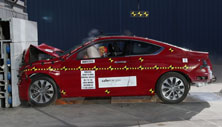
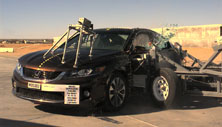
Stored NHTSA configuration: 2013 Honda Accord 2 DR FWD NCAP Vehicle ID: 7522
Ratings describe one stored NHTSA configuration, not every trim, body style or drivetrain for this model year. How this configuration is selected
Frontal Crash Test
Side Crash Test
Overall Frontal Rating
Driver and Passenger Assessment
Driver Side
Passenger Side
Overall Side Rating
Side Barrier and Side Pole Tests
Driver Side
Passenger Side
Rollover Resistance
No rollover risk estimate available in this dataset
Safety Features
ESC: StandardForward Collision Warning: OptionalLane Departure Warning: Optional
Recall Notices
NHTSANHTSA ID: 25V422000July 07, 2025
POWER TRAIN:DRIVELINE:DRIVESHAFT
Honda (American Honda Motor Co.) is recalling certain 2013 Honda Accord vehicles equipped with a 4-cylinder engine and a continuously-variable transmission. The affected vehicles were originally sold, or ever registered, in Connecticut, Delaware, District of Columbia, Illinois, Indiana, Iowa, Kentucky, Maine, Maryland, Massachusetts, Michigan, Minnesota, Missouri, New Hampshire, New Jersey, New York, Ohio, Pennsylvania, Rhode Island, Vermont, Virginia, West Virginia, and Wisconsin. The driveshaft may corrode and break, due to damage from road salt or other contaminants.
Remedy Status
Dealers will inspect and replace the driveshaft assemblies as necessary, free of charge. Owner notification letters were mailed August 11, 2025. Owners may contact Honda's customer service at 1-888-234-2138. Honda's number for this recall is OM2. This recall expands previous recall number 20V769.
NHTSA ID: 23V858000December 18, 2023
FUEL SYSTEM, GASOLINE:DELIVERY:FUEL PUMP
Honda (American Honda Motor Co.) is recalling certain 2013-2023 Honda Accord, Civic Coupe, Civic Sedan, Civic Hatchback, Civic Type R, CR-V, HR-V, Ridgeline, Odyssey, Acura ILX, MDX, MDX Hybrid, RDX, RLX, TLX, 2019-2022 Honda Insight, Passport, 2020 Honda CR-V Hybrid, 2018-2019 Honda Clarity PHEV, Fit, and 2015-2020 Honda Accord Hybrid, Pilot, Acura NSX vehicles. The fuel pump inside the fuel tank may fail.
Remedy Status
Dealers will replace the fuel pump module, free of charge. Owner letters were mailed September 6, 2024. Owners may contact Honda customer service at 1-888-234-2138. Honda's numbers for this recall are KGC and KGD. This recall is an expansion of NHTSA recall numbers 21V-215 and 20V-314.
NHTSA ID: 20V769000December 10, 2020
POWER TRAIN:DRIVELINE:DRIVESHAFT
Honda (American Honda Motor Co.) is recalling certain 2013-2015 Accord vehicles equipped with a 4-cylinder engine and a continuously-variable transmission that were originally sold, or ever registered, in Connecticut, Delaware, District of Columbia, Illinois, Indiana, Iowa, Kentucky, Maine, Maryland, Massachusetts, Michigan, Minnesota, Missouri, New Hampshire, New Jersey, New York, Ohio, Pennsylvania, Rhode Island, Vermont, Virginia, West Virginia, and Wisconsin. The drive shafts were assembled with a lubricant that may have degraded the drive shafts' protective coating, making it more susceptible to damage from road salt or other contaminants, and potentially cause it to break.
Remedy Status
Honda will notify owners, and dealers will inspect the drive shafts, replacing both the left and right drive shafts, if necessary, free of charge. The recall began February 4, 2021. Owners may contact Honda customer service at 1-888-234-2138.
NHTSA ID: 17V418000June 29, 2017
ELECTRICAL SYSTEM:12V/24V/48V BATTERY
Honda (American Honda Motor Co.) is recalling certain 2013-2016 Honda Accord vehicles. The case for the battery sensor, part of the battery management system, may allow water to get in, potentially causing an electrical short.
Remedy Status
Honda will notify owners, and dealers will replace the sensor, free of charge. Dealers will perform an interim remedy of applying adhesive to the case to prevent water intrusion. The recall began November 8, 2017. Owners may contact American Honda Customer Support Center at 1-888-234-2138. Honda's number for this recall is KG0.
NHTSA ID: 13V297000July 08, 2013
FUEL SYSTEM, GASOLINE
American Honda Motor Co., Inc. (Honda) is recalling certain model year 2013 Accord vehicles that are Low-Emission Vehicle (LEV) II rated that were manufactured January 15, 2013, through April 5, 2013. The fuel tank neck may be out of specification causing the fuel pump to not properly seal to the fuel tank.
Remedy Status
Honda will notify owners, and dealers will replace the fuel tank, nut and O-ring gasket free of charge. The recall began during August 2013. Honda's recall number is JA9. Owners may contact Honda at 1-310-783-2000.
Investigations
5 totalFrom 2000 through 2017, Takata produced millions of air bag inflators using two types of phase-stabilized ammonium nitrate ("PSAN") propellant -- propellant 2004 and propellant 2004L. After prolonged exposure to high temperature cycles and humidity, inflators using propellant 2004 can degrade, causing the propellant to burn too quickly when ignited. The rapid burning can cause the inflator to rupture during deployment, potentially causing serious or even fatal injury to vehicle occupants. See 2016 Blomquist Report at www.nhtsa.gov/sites/nhtsa.gov/files/documents/expert_report-hrblomquist.pdf.Consequently, all frontal inflators using propellant 2004 that do not contain a "desiccant" (a substance that traps and holds moisture) in US vehicles are under recall. These "non-desiccated" inflators either have been or are required to be replaced.In some cases, the remedy part for these recalled inflators was, or will be, an inflator using either propellant 2004 or 2004L that does contain a desiccant. None of these "desiccated" remedy parts (which were installed in older model year vehicles) are currently under recall for a degradation concern. Certain subsets of desiccated PSAN inflators using propellant 2004 for use as original equipment, however, have been recalled for a degradation concern. All Takata inflators produced with propellant 2004L contain desiccant, and none of these desiccated inflators using propellant 2004L are under recall for a degradation concern. There have been no reported field ruptures in any non-recalled desiccated PSAN inflators.It is understood that desiccants fully saturate at some threshold, at which point any additional moisture will not be captured. This means the degradation process observed in non-desiccated inflators using propellant 2004 may also occur in non-recalled desiccated inflators using propellant 2004, assuming additional moisture enters the inflator and high temperature cycling occurs. Based on available information, desiccant saturation can occur within the first five years in the worst environments, and the time required for full saturation is affected by multiple factors. While no present safety risk has been identified, further work is needed to evaluate the future risk of non-recalled desiccated inflators using propellant 2004.Three entities -- Takata (now known as TK Global), the Independent Testing Coalition, and Exponent -- have been studying the long-term behavior of Takata desiccated PSAN inflators using propellant 2004L (as well as 2004) in the presence of moisture and temperature cycling. The research efforts, which include development of predictive modeling techniques and field sample analysis, are ongoing. To date, none of the researchers have identified field evidence showing that propellant 2004L is undergoing a degradation process that leads to aggressive deployment and potential rupture. However, the time in service of such inflators remains short compared to that of the inflators using propellant 2004. Further study is needed to assess the long-term safety of desiccated inflators using propellant 2004L.The Office of Defects Investigation is opening this investigation to examine whether a safety defect related to propellant degradation exists in non-recalled desiccated PSAN frontal inflators manufactured by Takata. This investigation will require extensive information on Takata production processes and surveys of inflators in the field. Lists of recall actions that may have used desiccated PSAN inflators as remedy parts, as well as the makes and models originally manufactured with them, is available with the downloadable version of this document (see nhtsa.gov/recalls?nhtsaId=EA21002 -- note this information is subject to change/revision as the investigation proceeds). This investigation does not supersede EA15-001, which remains open.
Component: AIR BAGS:FRONTAL:DRIVER SIDE:INFLATOR MODULEOpened: Sep 17, 2021
EAClosed
On May 6, 2021, the Office of Defects Investigation (ODI) opened Engineering Analysis (EA21-001) to assess a sudden loss of steering control, in Model Year (MY) 2013-2015 Honda Accord vehicles. Consumers alleged while driving the steering wheel would pull to the left or the right independently. Steering pull may pose a risk of loss of directional control. Honda stated that they believed the inadvertent steering input was caused by a loose magnet located within the electronic power steering (EPS) system. Due to poor formulation of the adhesive, this magnet can become loose and move up to 2 degrees around the steering column. When the magnet moves, the torque sensor generates a signal that results in unwanted steering in either direction. Honda stated the steering force required to maintain directional control with a loose magnet is a maximum of 3-pound feet. The maximum force of the unwanted steering input can be overcome by the driver and is similar to driving on grooved pavement.The Vehicle Research Test Center (VRTC) sent over 4,000 questionnaires to 2013-2015 Honda Accord vehicle owners. Of the 637 responses, 58 consumers experienced unwanted steering. Consumers experiencing unwanted steering did not report difficulties maintaining directional control. There were no crashes or injuries reported to VRTC. Testing done by VRTC was not able to reproduce the allegations. Analysis of all relevant data indicates that the subject condition has a relatively low failure rate. The poor adhesive formulation was addressed by the supplier with three (3) counter measures in the manufacturing process.There has been a declining trend in consumer complaints to NHTSA which indicates possible exhaustion of parts prone to failure. In view of the low rate, declining complaint trend, the nature of failure, and resolution of the adhesive formulation, this Engineering Analysis is closed. The closing of this investigation does not constitute a finding by NHTSA that a safety-related defect does not exist. The agency reserves the right to take additional action if warranted by new circumstances.The ODI complaints cited above can be viewed at www.NHTSA.gov under the following ODI identification numbers: 11538714, 11528538, 11528008, 11522953, 11496557, 11495837, 11494328, 11478680, 11477167, 11476758, 11476263, 11471198, 11470001, 11467026, 11466561, 11466016, 11465626, 11464143, 11463558, 11462759, 11461500, 11460777, 11460191, 11455540, 11454334, 11452198, 11448114, 11447666, 11444888, 11444823, 11444172, 11443324, 11443243, 11443105, 11441374, 11439520, 11438345, 11437261, 11436824, 11436350, 11435994, 11435079, 11434969, 11434545, 11434442, 11434381, 11433824, 11433745, 11433555, 11433368, 11433176, 11431206, 11430465, 11430253, 11430009, 11429253, 11428301, 11427449, 11426841, 11426340, 11425928, 11425261, 11425230, 11423611, 11423245, 11422445, 11422395, 11422351, 11422220, 11422138, 11422069, 11421683, 11421589, 11421540, 11420573, 11419338, 11419270, 11418147, 11418143, 11417768, 11417742, 11417570, 11417437, 11416804, 11416699, 11416401, 11416378, 11416375, 11416155, 11416117, 11416084, 11416051, 11416032, 11416028, 11416024, 11416000, 11415933, 11415915, 11414105, 11406220, 11398736 ,11387075, 11387049, 11375580, 11364698, 11361125, 11351660, 11349961, 11327909, 11327170, 11301957, 11289067, 11282525, 11277659, 11258017, 11256914, 11218752, 11208077, 11196050, 11194358, 11189901, 11165075, 11163481, 11154891
Component: STEERINGOpened: May 6, 2021Closed: Aug 25, 2023
DPClosed
The Office of Defects Investigation (ODI) received a petition dated October 19, 2020 requesting an investigation of an alleged defect in the steering system in Model Year (MY) 2013 Honda Accord vehicles. The petitioner alleges that MY2013 Honda accord vehicles are experiencing a sudden loss of steering control as the vehicle veers from its intended path of travel. The petitioner further alleges that this deviation from the intended path of travel occurs without warning or driver input while operating the vehicle under normal driving conditions. The petition itself can be reviewed at NHTSA.gov under ODI Number 11349961.On November 23, 2020, ODI opened a Defect Petition (DP20-005) to evaluate whether to grant or deny the petition. ODI sent two Information Request (IR) letters to Honda requesting information on steering anomalies in MY2013 Honda Accord vehicles and later MY2014-2015 Honda Accord vehicles.ODI performed extensive analysis on the information obtained from Honda as well as information in NHTSA's database.Based on ODI's review of the applicable materials, including responses to the IR letters sent to Honda, Vehicle Owner Questionnaires (VOQ) and Early Warning Reporting data, NHTSA has decided to grant the petition. ODI has opened an Engineering Analysis (EA21-001) to assess the scope, frequency and potential safety related consequences of the alleged defect, a sudden loss of steering control.The ODI complaints cited above can be viewed at www.NHTSA.gov under the following ODI identification numbers:11414105, 11406220, 11398736, 11387462 ,11387075, 11387049, 11375580, 11364698 ,11361125, 11351660, 11349961, 11327909, 11327170, 11324181, 11306112, 11301957, 11289067, 11282525, 11278511, 11277659, 11258017, 11256914, 11218752, 11208077, 11196050, 11194358, 11189901, 11165075, 11163481, 11156378, 11154891, 11131050
Component: STEERINGOpened: Nov 23, 2020Closed: May 7, 2021
Owner Complaints
1407 totalELECTRICAL SYSTEM
Apr 22, 2026
Odometer Fraud. The contact purchased a 2013 Honda Accord. It was discovered that there was a mileage discrepancy. The vehicle was a private sale. At the time of purchase, the vehicle mileage was approximately 141,000, and at the time that the vehicle was brought in for inspectio...
Preview excerpt
AIR BAGS
Feb 27, 2026
While driving approximately 60mph on highway this morning. There was no potholes, debris, or collision. Driver curtain airbag and seat airbag deployed. The front steering wheel did not. There were no dash lights on or indications that something was wrong.
STEERING
Feb 19, 2026
While the vehicle is in motion. The steering wheel will turn by itself without input from the driver. As of right now, the steering is stiff while making a left turn, and will free wheel back to right turn Without input from driver. This will occur on and off while driving. If ...
Preview excerpt
SERVICE BRAKES,LANE DEPARTURE,FORWARD COLLISION AVOIDANCE
Feb 10, 2026
So I am just driving and all these lights come on my dashboard about front collision warning failing and land departure failing and no traction control or power steering. It caused my car to slip in the rain since there is no ABS without traction control. I skid for a bit till I ...
Preview excerpt
UNKNOWN OR OTHER
Jan 22, 2026
I was parking and my passenger side shaft broke
STEERING
Jan 22, 2026
Problem started when leaving parking lot. The car started pulling to right. Hard to turn to left. Then the problem stop car will drive normal for a little ways then all of a sudden it will pull to right. Just took it to Honda did the recall on battery and steering to day. Car st...
Preview excerpt
UNKNOWN OR OTHER,ENGINE
Jan 21, 2026
Starter grind and not starting
VEHICLE SPEED CONTROL
CRASHJan 20, 2026
The contact owns a 2013 Honda Accord. The contact stated that while slowly pulling into a parking spot at approximately 2 MPH, the vehicle unintentionally accelerated and crashed into the rear end of another parked and unoccupied vehicle. The contact stated that the vehicle susta...
Preview excerpt
ELECTRICAL SYSTEM
Dec 22, 2025
Odometer Fraud. The contact purchased a 2013 Honda Accord. The contact discovered that there was a mileage discrepancy after the purchase of the vehicle. The vehicle was a private sale. At the time of purchase, the vehicle mileage was 100,900. It was later discovered upon checkin...
Preview excerpt
POWER TRAIN
Dec 14, 2025
My driver side cv axle snapped in half as I was reversing my vehicle onto my parking pad, as a result of a failure from manufacturing, the roads were treated in my area from snow we had gotten a day prior. I have always lived in a salt belt state PA and this vehicle was originall...
Preview excerpt
Showing 10 recent complaints from 1,407 total
View Full Complaint LogCompare Related Vehicles
Why Compare These Pages
The strongest comparison flow is usually: exact vehicle-year page, then nearby years of the same model, then other 2013 Honda models. That sequence helps separate one-off year spikes from broader make-wide patterns.
More Honda Accord Years
2014 Honda AccordCompare this year against 2013 for complaint and recall shifts.4r2i964c2012 Honda AccordCompare this year against 2013 for complaint and recall shifts.8r1i377c2015 Honda AccordCompare this year against 2013 for complaint and recall shifts.5r2i586c2011 Honda AccordCompare this year against 2013 for complaint and recall shifts.9r295c2016 Honda AccordCompare this year against 2013 for complaint and recall shifts.3r573c2010 Honda AccordCompare this year against 2013 for complaint and recall shifts.13r1i579c
More 2013 Honda Models
2013 Honda CR-VAnother 2013 Honda option for same-year comparison.2r2i379c2013 Honda CivicAnother 2013 Honda option for same-year comparison.2i312c2013 Honda PilotAnother 2013 Honda option for same-year comparison.6r265c2013 Honda OdysseyAnother 2013 Honda option for same-year comparison.6r209c2013 Honda FitAnother 2013 Honda option for same-year comparison.10r1i173c2013 Honda CrosstourAnother 2013 Honda option for same-year comparison.3r48c
Frequently Asked Questions
How many recalls does the 2013 Honda Accord have?
The 2013 Honda Accord has 5 recalls recorded by NHTSA.
How many complaints have been filed for the 2013 Honda Accord?
NHTSA has received 1,407 owner-reported complaints for the 2013 Honda Accord.
What is the NHTSA safety rating for the 2013 Honda Accord?
Our stored NHTSA record for the 2013 Honda Accord has an overall rating of 5 out of 5 stars. Stored NHTSA configuration: 2013 Honda Accord 2 DR FWD. NCAP Vehicle ID: 7522. Ratings describe one stored NHTSA configuration, not every trim, body style or drivetrain for this model year.
What are the most common problems with the 2013 Honda Accord?
The most frequent complete stored component labels for the 2013 Honda Accord are steering (402 reports), electrical system (232 reports), engine (85 reports). These are exact-label counts, not broader component-group totals or confirmed defects.
Does the 2013 Honda Accord have any recalls?
Yes. NHTSA has 5 recalls on record for the 2013 Honda Accord. Scroll up to review the published recall summaries, consequences, and remedies. To check for unrepaired recalls on your specific vehicle, use your VIN at nhtsa.gov/recalls.
Check Another Vehicle
Look up recalls and complaints for any year, make, and model.
This page summarizes publicly available data from the National Highway Traffic Safety Administration (NHTSA). Complaint counts reflect reports submitted to NHTSA by vehicle owners and do not by themselves prove defect severity or vehicle safety. Safety ratings may not be available for all vehicle-years. This site is not affiliated with NHTSA or any vehicle manufacturer. For official information, visit the official NHTSA page for this vehicle.