Ford · Escape · 2022
2022 Ford Escape
19
Recalls
197
Complaints
5/5
NCAP overall
The 2022 Ford Escape has 19 recalls and 197 owner-reported complaints on file with NHTSA. One stored NHTSA configuration has an overall rating of 5 out of 5 stars, not a rating for all versions. Most frequent stored component label: fuel system, gasoline (47 reports).
Stored NHTSA configuration: 2022 Ford Escape SUV FWD NCAP Vehicle ID: 16335
Ratings describe one stored NHTSA configuration, not every trim, body style or drivetrain for this model year. How this configuration is selected
Source: NHTSA Public Records
NHTSA source checks for this vehicle year
- Complaints
- Separate successful check not recorded.
- Recalls
- Separate successful check not recorded.
- Safety ratings
- Separate successful check not recorded.
- Investigations
- Separate successful check not recorded.
- Manufacturer communications
- Separate successful check not recorded.
Checks are recorded separately for each dataset, not for the whole page. Dates use UTC. A missing check date does not mean no records exist.
Vehicle import recorded: Apr 29, 2026. This is the stored import date, not confirmation that every source was successfully refreshed.
Research Context
The 2022 Ford Escape page works best as a research starting point. Complaint totals show how much owner-reported activity exists, while recalls and investigations help show whether any of that activity turned into formal safety action.
Because this is a newer-era vehicle page, it usually helps to compare this year against nearby model years before deciding whether a complaint pattern looks isolated or persistent. On this page, the most frequent complete stored component label is fuel system, gasoline with 47 reported complaints.
Best Research Moves
- Use the complaint log to understand what owners were actually reporting instead of relying only on the raw complaint total.
- Compare the recall list with the complaint mix to see whether the most reported issues overlap with formal NHTSA safety campaigns.
- Check the linked investigations for extra ODI context if you want to see whether owner complaints escalated into formal defect review.
Key Takeaways
- The 2022 Ford Escape currently shows 19 NHTSA recalls listed on this page and 197 owner-reported complaints.
- This page currently shows 2 NHTSA investigations linked to this page.
- This page reflects complaint volume, recall history, and NHTSA test data, but it does not diagnose causes or rank reliability by itself.
- Safety data currently shows 5/5 overall NHTSA rating for one stored configuration, not all versions.
- The most frequent complete stored component labels on this page are fuel system, gasoline (47), service brakes (25), unknown or other (14).
- Vehicle
- 2022 Ford Escape
- Recalls
- 19
- Complaints
- 197
- Stored Configuration Overall Rating
- 5/5. Stored NHTSA configuration: 2022 Ford Escape SUV FWD. NCAP Vehicle ID: 16335.
How to Interpret This Page
This page combines three types of NHTSA data: recall campaigns (official manufacturer or government actions), owner complaints (unverified consumer reports), and crash test ratings (where available). A vehicle with many complaints is not necessarily less reliable — complaint volume correlates with sales volume and vehicle age. Recalls indicate identified defects, not overall quality. To compare this model year with others, use the year navigation in the sidebar or return to the model overview page.
If you are researching a used vehicle, start with the complaint categories, compare them against the recall list, and then check nearby model years to see whether the same issue profile repeats. That usually produces a better buying or research signal than treating the raw complaint total as a standalone safety ranking.
NHTSA Configuration Test Results
Stored NHTSA configuration: 2022 Ford Escape SUV FWD NCAP Vehicle ID: 16335
Ratings describe one stored NHTSA configuration, not every trim, body style or drivetrain for this model year. How this configuration is selected
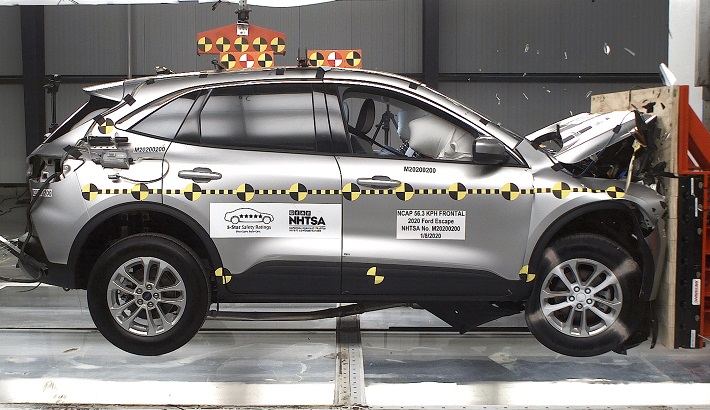
Frontal Crash Test
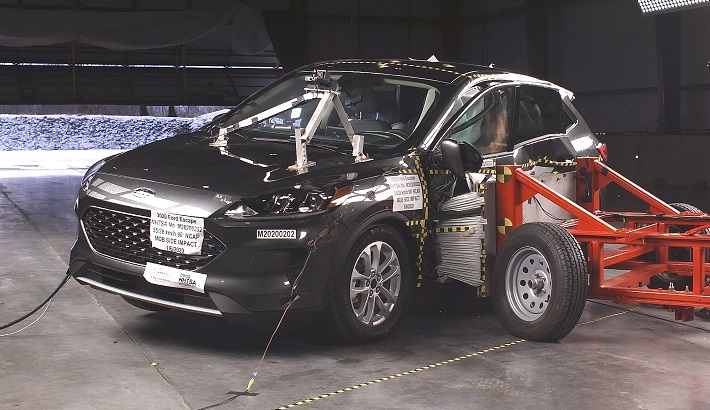
Side Crash Test
Overall Frontal Rating
Driver and Passenger Assessment
Driver Side
Passenger Side
Overall Side Rating
Side Barrier and Side Pole Tests
Driver Side
Passenger Side
Rollover Resistance
No rollover risk estimate available in this dataset
Safety Features
ESC: StandardForward Collision Warning: StandardLane Departure Warning: Standard
Recall Notices
NHTSANHTSA ID: 26V117000March 03, 2026
VISIBILITY:WINDSHIELD WIPER/WASHER:MOTOR
Ford Motor Company (Ford) is recalling certain 2020-2022 Explorer, Escape, Lincoln Aviator, and Lincoln Corsair vehicles. The windshield wiper motor may fail and prevent the windshield wipers from operating properly.
Remedy Status
Dealers will inspect and replace the front wiper motors as necessary, free of charge. Interim letters, notifying owners of the safety risk, were mailed April 2, 2026. Additional letters will be sent once the final remedy is available, anticipated in May 2026. Owners may contact Ford customer service at 1-866-436-7332. Ford's number for this recall is 26S14. Vehicle Identification Numbers (VINs) involved in this recall became searchable on NHTSA.gov on March 4, 2026.
NHTSA ID: 26V123000March 03, 2026
BACK OVER PREVENTION:SOFTWARE
Ford Motor Company (Ford) is recalling certain 2020-2022 Escape, Lincoln Corsair, 2020-2024 Lincoln Aviator, and Explorer vehicles. The image on the center display may flip or invert, resulting in an incorrectly displayed rearview image when the vehicle is placed in reverse. As such, these vehicles fail to comply with the requirements of Federal Motor Vehicle Safety Standard number 111, "Rear Visibility."
Remedy Status
The remedy is currently under development. Interim letters, notifying owners of the safety risk, were mailed April 6, 2026. Additional letters will be sent once the final remedy is available, anticipated second quarter of 2026. Owners may contact Ford customer service at 1-866-436-7332. Ford's number for this recall is 26C11. Vehicle Identification Numbers (VINs) involved in this recall became searchable on NHTSA.gov on March 5, 2026.
NHTSA ID: 25V829000December 01, 2025
STRUCTURE:BODY:HATCHBACK/LIFTGATE:HINGE AND ATTACHMENTS
Ford Motor Company (Ford) is recalling certain 2020-2022 Escape and 2025 Escape vehicles. The liftgate hinge covers may not be properly secured and detach from the vehicle.
Remedy Status
Dealers will inspect and reinstall, or replace any missing liftgate hinge covers as necessary, free of charge. Interim letters, notifying owners of the safety risk were mailed January 19, 2026. Additional letters will be sent once the final remedy is available. Owners may contact Ford customer service at 1-866-436-7332. Ford's number for this recall is 25SD6. Vehicle Identification Numbers (VINs) involved in this recall became searchable on NHTSA.gov on December 3, 2025.
NHTSA ID: 25V685000October 10, 2025
EQUIPMENT:ELECTRICAL:ENGINE BLOCK HEATER
Ford Motor Company (Ford) is recalling certain 2016-2019 Lincoln MKC, 2016-2023 Explorer, 2019-2020 Fusion, 2019-2024 Ranger, 2020-2022 Lincoln Corsair, Escape, 2021-2024 Bronco, Bronco Sport, and 2022-2024 Maverick vehicles. The engine block heater may crack and develop a coolant leak, causing it to short circuit when the block heater is plugged in.
Remedy Status
Owners are advised not to plug in their block heater until the vehicle is remedied. Dealers will replace the block heater, free of charge. Interim letters, notifying owners of the safety risk, were mailed December 3, 2025. Additional letters will be sent once the final remedy is available, anticipated September 2026. Owners may contact Ford customer service at 1-866-436-7332. Ford's number for this recall is 25SA4. Vehicle Identification Numbers (VINs) involved in this recall became searchable on NHTSA.gov on October 15, 2025.
NHTSA ID: 25V467000July 11, 2025
FUEL SYSTEM, GASOLINE:FUEL INJECTION SYSTEM
Ford Motor Company (Ford) is recalling certain 2021-2024 Bronco Sport and 2020-2022 Escape vehicles equipped with 1.5L engines. A fuel injector may crack and leak fuel inside the engine compartment.
Remedy Status
Dealers will update the engine control software. and replace the high pressure fuel rail assembly and the fuel injector ,free of charge. As an interim repair, dealers will update the engine control software, free of charge. Interim owner notification letters notifying owners of the safety risk were mailed August 29, 2025. Second letters will be sent once the final remedy is available, anticipated in July 2026. Owners may contact Ford customer service at 1-866-436-7332. Ford's number for this recall is 25S76. This recall expands and replaces previous recall numbers 22V-859, 24V187, and 25V165. Vehicles previously remedied under 22V-859, 24V187, and 25V165 will need to have the new final remedy performed once it is available.
NHTSA ID: 25V442000June 27, 2025
BACK OVER PREVENTION:SOFTWARE
Ford Motor Company (Ford) is recalling certain 2018-2022 Transit Connect, 2019-2020 MKZ, MKX, Edge, Continental, F-150, Nautilus, Fusion, 2019-2023 Ranger, Mustang, 2020-2021 EcoSport, Expedition, Navigator, 2020-2022 Escape, F-250 SD, Corsair, 2020-2023 Aviator, Transit, 2020-2024 Explorer, 2021-2024 Bronco Sport, and 2022-2024 Maverick vehicles. A software error may cause the rearview camera to display a blank image, or the image may remain on the display after the backing event has ended.
Remedy Status
Dealers will update the rearview camera software, free of charge. Owner notification letters were mailed September 4, 2025. Owners may contact Ford customer service at 1-866-436-7332. Ford's number for this recall is 25S72.
NHTSA ID: 25V345000June 06, 2025
ENGINE
Ford Motor Company (Ford) is recalling certain 2020-2023 Escape, 2021-2023 Corsair, and 2022-2023 Maverick vehicles equipped with 2.5L HEV or PHEV engines that were repaired incorrectly under recall 23V380. In the event of an engine failure, engine oil and fuel vapor may be released into the engine compartment and accumulate near ignition sources such as hot engine or exhaust components, possibly resulting in an engine compartment fire.
Remedy Status
Owners are advised to park and shut off the engine as quickly as possible if they hear unexpected engine noises, notice a reduction in vehicle power, or see smoke. Dealers will update the powertrain control module software, free of charge. Owner notification letters were mailed June 27, 2025. Owners may contact Ford customer service at 1-866-436-7332. Ford's number for this recall is 25S54.
NHTSA ID: 25V165000March 14, 2025
FUEL SYSTEM, GASOLINE:FUEL INJECTION SYSTEM
Ford Motor Company (Ford) is recalling certain 2020-2022 Escape and 2021-2023 Bronco Sport vehicles previously repaired incorrectly under recall numbers 22V-859 or 24V-187. A fuel injector may crack and leak fuel inside the engine compartment.
Remedy Status
Dealers will update the powertrain control module (PCM) software, free of charge. Owner notification letters were mailed April 22, 2025. Owners may contact Ford customer service at 1-866-436-7332. Ford's number for this recall is 25S21.
NHTSA ID: 25V133000February 28, 2025
POWER TRAIN:AUTOMATIC TRANSMISSION:CONTROL MODULE (TCM/PCM/TECM)
Ford Motor Company (Ford) is recalling certain 2022-2024 Maverick, 2022 Escape, and 2021-2022 Lincoln Corsair vehicles previously repaired incorrectly under recall number 24V-330. The Hybrid Powertrain Control Module (HPCM) software may cause the vehicle to shift into neutral unexpectedly, causing a loss of drive power.
Remedy Status
Dealers will update the HPCM software, free of charge. Owner notification letters were mailed April 11, 2025. Owners may contact Ford customer service at 1-866-436-7332. Ford's number for this recall is 25S16.
NHTSA ID: 24V954000December 20, 2024
ELECTRICAL SYSTEM:PROPULSION SYSTEM:TRACTION BATTERY:MANAGEMENT SYSTEM/ENERGY CONTROL MODULE (BMS/BECM)
Ford Motor Company (Ford) is recalling certain 2020-2024 Ford Escape, and 2021-2024 Lincoln Corsair vehicles. A manufacturing defect in one or more of the high voltage battery cells may result in an internal short circuit and battery failure.
Remedy Status
Owners are advised not to charge battery till the remedy has been completed. Dealers will perform a battery energy control module (BECM) software update, and replace the high voltage battery pack, as necessary, free of charge. Owner notification letters were mailed on May 30, 2025. Owners may contact Ford customer service at 1-866-436-7332. Ford's number for this recall is 24S79.
NHTSA ID: 24V852000November 08, 2024
EQUIPMENT:OTHER:LABELS
Ford Motor Company (Ford) is recalling certain 2020-2025 Explorer, Lincoln Aviator, 2020-2024 Escape, Lincoln Corsair, 2018-2024 F-150, Expedition and Lincoln Navigator vehicles. The air bag warning label may be missing from the dashboard. As such, these vehicles fail to comply with the requirement Federal Motor Vehicle Safety Standard number 208, "Occupant Crash Protection."
Remedy Status
Ford will mail owners the warning labels, free of charge. Owner notification letters were mailed December 19, 2024. Owners may call Ford customer service at 1-866-436-7332. Ford's number for this recall is 24C39.
NHTSA ID: 24V330000May 10, 2024
POWER TRAIN:AUTOMATIC TRANSMISSION:CONTROL MODULE (TCM/PCM/TECM)
Ford Motor Company (Ford) is recalling certain 2022-2024 Maverick, 2020-2022 Escape, and 2021-2022 Lincoln Corsair vehicles. The Hybrid Powertrain Control Module (HPCM) software may cause the vehicle to shift into neutral unexpectedly, causing a loss of drive power.
Remedy Status
Dealers will update the HPCM software, free of charge. Owner notification letters were mailed May 22, 2024. Owners may contact Ford customer service at 1-866-436-7332. Ford's number for this recall is 24S33.
NHTSA ID: 24V187000March 08, 2024
FUEL SYSTEM, GASOLINE:FUEL INJECTION SYSTEM
Ford Motor Company (Ford) is recalling certain 2022-2023 Bronco Sport and 2022 Escape vehicles equipped with 1.5L engines. A fuel injector may crack and leak fuel inside the engine compartment.
Remedy Status
Dealers will update the engine control software to include fuel injector leak detection and install a drain tube, free of charge. Owner notification letters were mailed on April 24, 2024. Owners may contact Ford customer service at 1-866-436-7332. Ford's number for this recall is 24S16. This recall is an expansion of previous recall number 22V-859.
NHTSA ID: 23V380000May 26, 2023
ENGINE
Ford Motor Company (Ford) is recalling certain 2020-2023 Escape, 2022-2023 Maverick, and 2021-2023 Corsair vehicles equipped with 2.5L HEV or PHEV engines. In the event of an engine failure, engine oil and fuel vapor may be released into the engine compartment and accumulate near ignition sources such as hot engine or exhaust components, possibly resulting in an engine compartment fire.
Remedy Status
Owners are advised to park and shut off the engine as quickly as possible if they hear unexpected engine noises, notice a reduction in vehicle power, or see smoke. Dealers will replace the engine long-block in 2023 Escape and Corsair vehicles. For the other vehicles, dealers will update the powertrain control module software. If a connecting rod bearing failure is detected, dealers will replace the engine long-block. All inspections and repairs will be performed free of charge. Owner notification letters were mailed on June 14, 2024. Owners may contact Ford customer service at 1-866-436-7332. Ford's number for this recall is 23S27. This recall expands and replaces recall number 22V-484. Vehicles previously repaired under 22V-484 will need to have the new remedy completed. Vehicles previously repaired under 22V-484 will need to have the new remedy completed.
NHTSA ID: 22V859000November 18, 2022
FUEL SYSTEM, GASOLINE:FUEL INJECTION SYSTEM
Ford Motor Company (Ford) is recalling certain 2020-2023 Escape and 2021-2023 Bronco Sport vehicles equipped with 1.5L engines. A fuel injector may crack and leak fuel inside the engine compartment.
Remedy Status
Dealers will update the engine control software to include fuel injector leak detection and install a drain tube, free of charge. Interim owner notification letters informing owners of the safety risk were mailed January 9, 2023. Remedy parts are expected to be available in 1st Quarter of 2023. Owner notification letters were mailed February 28, 2023. Owners may contact Ford customer service at 1-866-436-7332. Ford's number for this recall is 22S73. This recall includes all vehicles previously recalled under 22V-191. Vehicles previously remedied under 22V-191 will need to have the new remedy performed.
NHTSA ID: 22V484000July 07, 2022
ENGINE AND ENGINE COOLING
Ford Motor Company (Ford) is recalling certain 2020-2022 Escape, 2021-2022 Lincoln Corsair, and 2022 Maverick vehicles equipped with 2.5L HEV or PHEV engines. In the event of an engine failure, engine oil and fuel vapor may be released into the engine compartment and accumulate near ignition sources such as hot engine or exhaust components, possibly resulting in an engine compartment fire.
Remedy Status
Owners are advised to park and shut off the engine as quickly as possible if they hear unexpected engine noises, notice a reduction in vehicle power, or see smoke. Dealers will modify the under engine shield and active grille shutter, free of charge. Owner notification letters were mailed August 19, 2022. Owners may contact Ford customer service at 1-866-436-7332. Ford's number for this recall is 22S47.
NHTSA ID: 22V191000March 25, 2022
ENGINE AND ENGINE COOLING:ENGINE:OIL/LUBRICATION
Ford Motor Company (Ford) is recalling certain 2020-2022 Escape and 2021-2022 Bronco Sport vehicles equipped with 1.5L engines. The engine oil separator housing may crack and develop an oil leak.
Remedy Status
Dealers will inspect the oil separator for damage or oil leaks, and replace the oil separator and seals, as necessary, free of charge. Owner notification letters were mailed April 18, 2022. Owners may contact Ford customer service at 1-866-436-7332. Ford's number for this recall is 22S21.
NHTSA ID: 22V149000March 11, 2022
ELECTRICAL SYSTEM:PROPULSION SYSTEM:TRACTION BATTERY
Ford Motor Company (Ford) is recalling certain 2022 Corsair and 2021-2022 Escape vehicles equipped with a 2.5L Hybrid powertrain. The high voltage battery may fail, resulting in a sudden loss of drive power.
Remedy Status
Dealers will replace the high voltage battery, free of charge. Owner notification letters were mailed March 28, 2022. Owners may contact Ford customer service at 1-866-436-7332. Ford's number for this recall is 21S48.
NHTSA ID: 21V922000November 23, 2021
SERVICE BRAKES, HYDRAULIC:FOUNDATION COMPONENTS:DISC:CALIPER
Ford Motor Company (Ford) is recalling certain 2021-2022 Bronco Sport and Escape vehicles. The rear brake linings may have been manufactured incorrectly, which can affect braking performance. As such, these vehicles fail to comply with the requirements of Federal Motor Vehicle Safety Standard number 135, "Light Vehicle Brake Systems."
Remedy Status
Dealers will replace the front brake pads, free of charge. Owner notification letters were mailed August 17, 2022. Owners may contact Ford customer service at 1-866-436-7332. Ford's number for this recall is 21C31.
Investigations
2 totalOn April 11, 2024, NHTSA’s Office of Defects Investigation (“ODI”) opened this Recall Query (“RQ”) to investigate the adequacy of, including various safety concerns associated with, the remedy program in recalls 22V-859 (filed Nov. 18, 2022) and 24V-187 (filed Mar. 8, 2024). The vehicle population associated with these recalls includes certain MY 2020-2022 Ford Escape vehicles and MY 2021-2023 Ford Bronco Sport vehicles equipped with 1.5L engines. The safety defect in each recall involves high-pressure fuel injectors that are susceptible to cracking, allowing liquid fuel and fuel vapor to migrate onto hot surfaces within the engine compartment potentially resulting in underhood vehicle fires. The remedy programs described in recalls 22V-859 and 24V-187 are identical and involve both a software component and a hardware component. Specifically, Ford developed an updated engine control software designed to detect a pressure drop in the high-pressure fuel rail, provide instrument cluster messaging to the driver, invoke a strategy to disable the high-pressure fuel pump, derate the engine output, and lower the temperatures of possible ignition sources within the engine compartment. Additionally, Ford would install a tube into the engine’s cylinder head drain hole to shunt spilled liquid fuel past the various hot surfaces within the engine compartment and ultimately discard the spilled liquid fuel onto the roadway. ODI identified various safety concerns with this remedy program, which, among other things, notably did not include repairing or replacing the defective part and potentially did include the introduction of new safety defects (like fuel spilling near the spark plugs and fuel spilling onto the public roadway). NHTSA opened this investigation to evaluate these concerns with the remedy program, including whether the vehicles were still susceptible to underhood fires even post-remedy. As described in more detail in the Additional Summary posted simultaneously with this resume, ODI conducted a thorough investigation that included analyzing data and other materials received in response to two Information Requests, as well as inspections of post-remedy vehicles that experienced an underhood fire. ODI and Ford worked to identify and locate vehicles that experienced post-remedy fires and conduct joint vehicle inspections. ODI’s investigation also prompted Ford to initiate a more in-depth evaluation of the defect, including Ford’s conducting component level testing of high-pressure fuel injectors. ODI met with Ford on several occasions throughout this investigation to jointly conduct certain of these described tasks and to discuss test results. A collateral issue surfaced as a result of this investigation: in March 2025, Ford realized that despite relevant repairs having been recorded as successfully completed, approximately 33,576 vehicles subject to recalls 22V-859 and 24V-187 did not have the software component of the remedy program installed correctly. Thus, on March 27, 2025, Ford filed a new related recall (25V-165) for these vehicles, notifying NHTSA and the public that they were still at risk of experiencing an underhood vehicle fire due to cracked fuel injectors despite the consumer having had their vehicle remedied pursuant to one of the two earlier recalls. In June 2025, Ford committed to implementing a new remedy program to repair the vehicles. On July 11, 2025, Ford documented this commitment in a new recall filing (25V-467), which explains that Ford’s upcoming remedy program will involve proactive replacement of all high-pressure fuel injectors within the recall population. In view of the recall action taken by Ford, ODI is closing this Recall Query, which was opened given NHTSA’s concerns that the initial remedy programs of the software to detect the pressure drop plus installation of the drain tube did not constitute an adequate repair. The agency reserves the right to take additional action if warranted by future circumstances.
Component: FUEL SYSTEM, GASOLINE:FUEL INJECTION SYSTEM:INJECTORSOpened: Apr 11, 2024Closed: Oct 30, 2025
On July 7, 2023, the Office of Defects Investigation (ODI) opened PE23-013 to investigate instances of check arm bracket failure in the front doors in model year (MY) 2020-2021 Ford Escape vehicles. At the time of opening, ODI received 118 Vehicle Owner Questionnaires (VOQs) alleging this failure. To date, ODI has received 593 VOQs alleging this failure, with a variety of reported failure conditions. The most common reported failure condition was reduced door functionality (e.g. door was more difficult to open or close) and the least common was inadvertent door opening. Other reported failure conditions include inability to latch and inability to open. Three VOQs reported injuries, one of which requiring medical attention. ODI conducted a consumer survey which yielded an additional 44 injuries (although the VOQs did not indicate any injury), none of which requiring medical attention. All these injuries were bumps/bruises from the door closing on occupants’ arms and legs while entering and exiting the vehicle. The function of the check arm system is to provide hold-open assist at specific angles and to assist with door closing energy. It does not provide vertical support of the door and is independent of the latching mechanism. This failure is progressive and detectable by vehicle occupants. Consumers commonly report hearing a popping or snapping noise when opening and closing the door. This noise is caused by some of the welds between the bracket and door structure failing and detaching. There may also be visible damage present to the welds in the door structure. Continued use of the door may result in all welds separating and the bracket fully detaching from the door structure, which could lead to increased resistance in closing and opening the door, restrained window operation, and the door freely rotating when open. ODI inspected 3 consumer vehicles in the field, and 2 test vehicles at Ford’s testing facility. The test vehicles were retrofitted with the failed component. ODI observed an increased door closing resistance, however, was unable to reproduce an inadvertent open while parked or driving, or a failure to latch or open condition. Testing also verified this failure did not affect the door ajar warning system. This system provides an audible and visual warning in the event a door did not achieve primary latch position. Ford has provided details on a one-time-repair customer satisfaction program (23B56), stating that they will provide customers with a letter, currently targeted for March 2024, to bring their vehicle to a Ford dealership for a proactive repair. Dealers will inspect the door check arm welds for damage and will either provide a rivet plate to reinforce the existing door check arm or will provide a replacement door, depending on the level of damage present. Customers will be eligible for reimbursement if they previously paid to repair this issue. In view of the high detectability of failure, low potential hazard to drivers, and Ford’s customer satisfaction program to provide a proactive repair, this Preliminary Evaluation (PE) is closed. The closing of this investigation does not constitute a finding by NHTSA that a safety-related defect does not exist. The Agency reserves the right to take additional action if warranted by future circumstances. To review the ODI reports cited in the Closing Resume ODI Report Identification Number document, go to NHTSA.gov.
Component: STRUCTURE:BODY:DOOROpened: Jul 7, 2023Closed: Jan 24, 2024
Owner Complaints
197 totalENGINE,FUEL/PROPULSION SYSTEM
Apr 25, 2026
There is fluid accumulation under the engine air filter assembly.
BACK OVER PREVENTION
Apr 14, 2026
The contact owned a 2022 Ford Escape. The contact received notification of NHTSA Campaign Number: 26V123000 (BACK OVER PREVENTION); and requested to be removed from the recall distribution list. The local dealer and manufacturer were contacted.
FUEL SYSTEM, GASOLINE,BACK OVER PREVENTION
Apr 9, 2026
The contact owns a 2022 Ford Escape. The contact received notifications of NHTSA Campaign Numbers: 25V467000 (Fuel System, Gasoline) and 26V123000 (Back Over Prevention); however, the parts to do the recall repairs were not yet available. The dealer was not contacted, but the veh...
Preview excerpt
FUEL SYSTEM, GASOLINE
Apr 8, 2026
The contact owns a 2022 Ford Escape. The contact received notification of NHTSA Campaign Number: 25V467000 (Fuel System, Gasoline); however, the part to do the recall repair was not yet available. The local dealer was contacted. The contact stated that the manufacturer had exceed...
Preview excerpt
SERVICE BRAKES
Apr 7, 2026
Warning message appeared on dash as I was braking. Reduced braking power. I had pushed on brake pedal almost to the floor & missed turning at a corner. My car also makes noise upon backing up each day.
FUEL SYSTEM, GASOLINE,BACK OVER PREVENTION
Apr 1, 2026
The contact owns a 2022 Ford Escape. The contact received notifications of NHTSA Campaign Numbers: 25V467000 (Fuel System, Gasoline) and 26V123000 (Back Over Prevention); however, the parts to do recall repairs were unavailable. The contact stated that the manufacturer had exceed...
Preview excerpt
ENGINE
Mar 31, 2026
On March 31st, 2026, while traveling at approximately 60 mph on a major highway, the vehicle suffered a catastrophic engine failure without prior warning. The "Check Engine" and "Powertrain Malfunction" (Wrench) lights illuminated, and the vehicle experienced an immediate and tot...
Preview excerpt
POWER TRAIN
Mar 26, 2026
The contact owns a 2022 Ford Escape. The contact stated that while driving at an undisclosed speed, the transmission slipped out of gear while attempting to accelerate. There was no warning light illuminated. The vehicle was taken to the dealer; however, the vehicle was not diagn...
Preview excerpt
UNKNOWN OR OTHER
Mar 5, 2026
Just after 36 month warranty expired, ceiling sunscreen came off track hanging down into car obstructing view through rear view mirror.
FUEL SYSTEM, GASOLINE
Feb 13, 2026
The contact owns a 2022 Ford Escape. The contact stated that while driving at an undisclosed speed, the check engine warning light illuminated. The vehicle was taken to the dealer, where it was diagnosed with fuel injector failure. The contact was informed that the fuel injector ...
Preview excerpt
Showing 10 recent complaints from 197 total
View Full Complaint LogCompare Related Vehicles
Why Compare These Pages
The strongest comparison flow is usually: exact vehicle-year page, then nearby years of the same model, then other 2022 Ford models. That sequence helps separate one-off year spikes from broader make-wide patterns.
More Ford Escape Years
2023 Ford EscapeCompare this year against 2022 for complaint and recall shifts.11r82c2021 Ford EscapeCompare this year against 2022 for complaint and recall shifts.19r2i287c2024 Ford EscapeCompare this year against 2022 for complaint and recall shifts.8r71c2020 Ford EscapeCompare this year against 2022 for complaint and recall shifts.23r2i1,487c2025 Ford EscapeCompare this year against 2022 for complaint and recall shifts.9r16c2019 Ford EscapeCompare this year against 2022 for complaint and recall shifts.3r517c
More 2022 Ford Models
2022 Ford F-150Another 2022 Ford option for same-year comparison.22r3i513c2022 Ford BroncoAnother 2022 Ford option for same-year comparison.20r2i313c2022 Ford Bronco SportAnother 2022 Ford option for same-year comparison.14r3i305c2022 Ford ExplorerAnother 2022 Ford option for same-year comparison.23r2i226c2022 Ford MaverickAnother 2022 Ford option for same-year comparison.27r1i137c2022 Ford Mustang Mach-EAnother 2022 Ford option for same-year comparison.8r121c
Frequently Asked Questions
How many recalls does the 2022 Ford Escape have?
The 2022 Ford Escape has 19 recalls recorded by NHTSA.
How many complaints have been filed for the 2022 Ford Escape?
NHTSA has received 197 owner-reported complaints for the 2022 Ford Escape.
What is the NHTSA safety rating for the 2022 Ford Escape?
Our stored NHTSA record for the 2022 Ford Escape has an overall rating of 5 out of 5 stars. Stored NHTSA configuration: 2022 Ford Escape SUV FWD. NCAP Vehicle ID: 16335. Ratings describe one stored NHTSA configuration, not every trim, body style or drivetrain for this model year.
What are the most common problems with the 2022 Ford Escape?
The most frequent complete stored component labels for the 2022 Ford Escape are fuel system, gasoline (47 reports), service brakes (25 reports), unknown or other (14 reports). These are exact-label counts, not broader component-group totals or confirmed defects.
Does the 2022 Ford Escape have any recalls?
Yes. NHTSA has 19 recalls on record for the 2022 Ford Escape. Scroll up to review the published recall summaries, consequences, and remedies. To check for unrepaired recalls on your specific vehicle, use your VIN at nhtsa.gov/recalls.
Check Another Vehicle
Look up recalls and complaints for any year, make, and model.
This page summarizes publicly available data from the National Highway Traffic Safety Administration (NHTSA). Complaint counts reflect reports submitted to NHTSA by vehicle owners and do not by themselves prove defect severity or vehicle safety. Safety ratings may not be available for all vehicle-years. This site is not affiliated with NHTSA or any vehicle manufacturer. For official information, visit the official NHTSA page for this vehicle.