Honda · Pilot · 2016
2016 Honda Pilot
7
Recalls
1,623
Complaints
5/5
NCAP overall
The 2016 Honda Pilot has 7 recalls and 1,623 owner-reported complaints on file with NHTSA. One stored NHTSA configuration has an overall rating of 5 out of 5 stars, not a rating for all versions. Most frequent stored component label: engine (402 reports).
Stored NHTSA configuration: 2016 Honda Pilot SUV FWD NCAP Vehicle ID: 10563
Ratings describe one stored NHTSA configuration, not every trim, body style or drivetrain for this model year. How this configuration is selected
Source: NHTSA Public Records
NHTSA source checks for this vehicle year
- Complaints
- Separate successful check not recorded.
- Recalls
- Separate successful check not recorded.
- Safety ratings
- Separate successful check not recorded.
- Investigations
- Separate successful check not recorded.
- Manufacturer communications
- Separate successful check not recorded.
Checks are recorded separately for each dataset, not for the whole page. Dates use UTC. A missing check date does not mean no records exist.
Vehicle import recorded: Apr 28, 2026. This is the stored import date, not confirmation that every source was successfully refreshed.
Research Context
The 2016 Honda Pilot page works best as a research starting point. Complaint totals show how much owner-reported activity exists, while recalls and investigations help show whether any of that activity turned into formal safety action.
Because this is a newer-era vehicle page, it usually helps to compare this year against nearby model years before deciding whether a complaint pattern looks isolated or persistent. On this page, the most frequent complete stored component label is engine with 402 reported complaints.
Best Research Moves
- Use the complaint log to see whether the 2016 Honda Pilot reports cluster around one repeated symptom or spread across multiple systems.
- Compare the recall list with the complaint mix to see whether the most reported issues overlap with formal NHTSA safety campaigns.
- Check the linked investigations for extra ODI context if you want to see whether owner complaints escalated into formal defect review.
Key Takeaways
- The 2016 Honda Pilot currently shows 7 NHTSA recalls listed on this page and 1,623 owner-reported complaints.
- This page currently shows 4 NHTSA investigations linked to this page.
- This page reflects complaint volume, recall history, and NHTSA test data, but it does not diagnose causes or rank reliability by itself.
- Safety data currently shows 5/5 overall NHTSA rating for one stored configuration, not all versions.
- The most frequent complete stored component labels on this page are engine (402), electrical system (270), unknown or other (151).
- Vehicle
- 2016 Honda Pilot
- Recalls
- 7
- Complaints
- 1623
- Stored Configuration Overall Rating
- 5/5. Stored NHTSA configuration: 2016 Honda Pilot SUV FWD. NCAP Vehicle ID: 10563.
How to Interpret This Page
This page combines three types of NHTSA data: recall campaigns (official manufacturer or government actions), owner complaints (unverified consumer reports), and crash test ratings (where available). A vehicle with many complaints is not necessarily less reliable — complaint volume correlates with sales volume and vehicle age. Recalls indicate identified defects, not overall quality. To compare this model year with others, use the year navigation in the sidebar or return to the model overview page.
If you are researching a used vehicle, start with the complaint categories, compare them against the recall list, and then check nearby model years to see whether the same issue profile repeats. That usually produces a better buying or research signal than treating the raw complaint total as a standalone safety ranking.
NHTSA Configuration Test Results
Stored NHTSA configuration: 2016 Honda Pilot SUV FWD NCAP Vehicle ID: 10563
Ratings describe one stored NHTSA configuration, not every trim, body style or drivetrain for this model year. How this configuration is selected
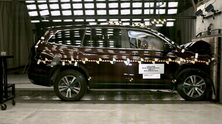
Frontal Crash Test
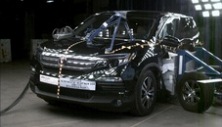
Side Crash Test
Overall Frontal Rating
Driver and Passenger Assessment
Driver Side
Passenger Side
Overall Side Rating
Side Barrier and Side Pole Tests
Driver Side
Passenger Side
Rollover Resistance
No rollover risk estimate available in this dataset
Safety Features
ESC: StandardForward Collision Warning: OptionalLane Departure Warning: Optional
Recall Notices
NHTSANHTSA ID: 23V858000December 18, 2023
FUEL SYSTEM, GASOLINE:DELIVERY:FUEL PUMP
Honda (American Honda Motor Co.) is recalling certain 2013-2023 Honda Accord, Civic Coupe, Civic Sedan, Civic Hatchback, Civic Type R, CR-V, HR-V, Ridgeline, Odyssey, Acura ILX, MDX, MDX Hybrid, RDX, RLX, TLX, 2019-2022 Honda Insight, Passport, 2020 Honda CR-V Hybrid, 2018-2019 Honda Clarity PHEV, Fit, and 2015-2020 Honda Accord Hybrid, Pilot, Acura NSX vehicles. The fuel pump inside the fuel tank may fail.
Remedy Status
Dealers will replace the fuel pump module, free of charge. Owner letters were mailed September 6, 2024. Owners may contact Honda customer service at 1-888-234-2138. Honda's numbers for this recall are KGC and KGD. This recall is an expansion of NHTSA recall numbers 21V-215 and 20V-314.
NHTSA ID: 23V751000November 13, 2023
ENGINE AND ENGINE COOLING:ENGINE:HARD PARTS INTERNAL/MECHANICAL
Honda (American Honda Motor Co.) is recalling certain 2015-2020 Acura TLX, 2016-2020 Acura MDX, 2016 and 2018-2019 Pilot, 2017 and 2019 Ridgeline, and 2018-2019 Odyssey vehicles. Due to a manufacturing error, the connecting rod bearing in the engine may wear and seize, damaging the engine.
Remedy Status
Dealers will inspect and repair, or replace the engine as necessary, free of charge. Owner letters were mailed March 28, 2024. 2016-2017 Acura MDX owner letters were mailed November 1, 2024. 2016-2020 Acura MDX owner letters are expected to be mailed in mid-December 2024. Honda began mailing owner notification letters as of March 18, 2024. 2015-2016 Acura owner letters are expected to be mailed mid-December 2024, 2018 Acura TLX owner letters are expected to be mailed the end of March/early April 2024, 2019 Acura TLX owner letters are expected to be mailed mid-May 2024, 2020 Acura TLX owner letters are expected to be mailed mid-June 2024, and 2016-2020 Acura MDX owner letters are expected to be mailed January 27, 2025. Owners may contact Honda customer service at 1-888-234-2138. Honda's numbers for these recalls are XG1 and GG0.
NHTSA ID: 21V932000November 29, 2021
STRUCTURE:BODY:HOOD
Honda (American Honda Motor Co.) is recalling certain 2019 Passport, 2016-2019 Pilot, and 2017-2020 Ridgeline vehicles. The hood latch striker may become damaged and separate from the hood, which can result in the hood opening while driving.
Remedy Status
Dealers will either repair the hood latch striker, or replace the hood if necessary, free of charge. Owner notification letters were mailed January 18, 2022. Owners may contact Honda customer service at 1-888-234-2138. Honda's number for this recall is PBV.
NHTSA ID: 17V219000March 30, 2017
FUEL SYSTEM, GASOLINE:STORAGE
Honda (American Honda Motor Co.) is recalling certain 2016 Honda Pilot 2WD and AWD vehicles. The affected vehicles have fuel tanks that may leak.
Remedy Status
Honda will notify owners, and dealers will replace the fuel tank, free of charge. Owners may contact Honda customer service at 1-888-234-2138. Honda's number for this recall is KE8.
NHTSA ID: 16V417000June 09, 2016
FUEL SYSTEM, GASOLINE:STORAGE:TANK ASSEMBLY
Honda (American Honda Motor Co.) is recalling certain model year 2015 Acura MDX 2WD and MDX 4WD vehicles, 2016 Acura MDX 4WD vehicles, 2015-2016 Honda Odyssey vehicles, and 2016 Honda Pilot 2WD and 4WD vehicles. The affected vehicles have fuel tanks that were manufactured with insufficient welds which may separate and allow fuel to leak out.
Remedy Status
Honda will notify owners, and dealers will replace the fuel tanks, free of charge. Owners may contact Honda/Acura customer service at 1-888-234-2138. The recall began on July 29, 2016. Honda's numbers for this recall are KA9 (Honda vehicles) and KB0 (Acura vehicles).
NHTSA ID: 15V668000October 16, 2015
ELECTRICAL SYSTEM: INSTRUMENT CLUSTER/PANEL
Honda (American Honda Motor Co.) is recalling certain model year 2016 Honda Pilot 2WD vehicles manufactured May 4, 2015, to September 8, 2015 and 2016 Pilot 4WD vehicles manufactured May 7, 2015 to September 4, 2015. In the affected vehicles, when one of the safety systems such as tire pressure monitoring, anti-lock braking or electronic stability control malfunctions, there is potential that the instrument panel will not illuminate the corresponding warning light, however the warning lamps will illuminate when the ignition is turned off and then turned back on. As such, these vehicles fail to comply with the requirements of Federal Motor Vehicle Safety Standard (FMVSS) number 126, "Electronic stability control systems", number 135, "Light vehicle brake systems" and number 138, "Tire pressure monitoring systems".
Remedy Status
Honda will notify owners, and dealers will update the instrument cluster software, free of charge. The recall began on December 11, 2015. Owners may contact Honda customer service at 1-888-234-2138. Honda's number for this recall is JV7.
NHTSA ID: 15V424000July 06, 2015
SEAT BELTS:REAR/OTHER
Honda (American Honda Motor Co.) is recalling certain model year 2016 Honda Pilot vehicles manufactured May 4, 2015, to June 5, 2015. Due to an assembly issue, the third row seatbelt may be trapped between the rear seat and the rear sideliner.
Remedy Status
Honda will notify owners, and dealers will inspect and repair the rear third row seat belt, free of charge. The recall began on August 6, 2015. Owners may contact Honda customer service at 1-310-783-2000. Honda's number for this recall is JS7.
Investigations
4 totalPEOpen
The Office of Defects Investigation (ODI) has received 414 reports of connecting rod bearing failures in the 3.5L V6 engine used in the following vehicles: Model Years (MY) 2018-2020 Acura TLX, MY2016-2020 Acura MDX, MY2016-2020 Honda Pilot, MY2018-2020 Honda Odyssey, and MY2017-2019 Honda Ridgeline. The subject engine failures were analyzed as part of a Recall Query (RQ24013). It was determined that these engine failures are outside the scope of Honda Recall 23V-751. Further, evidence gathered in conjunction with RQ24013 does not suggest this failure is caused by the same crankshaft manufacturing defect that is addressed by Honda in Recall 23V-751. Based on analysis of data from RQ24013, NHTSA has closed that investigation. The significant number of reports of engine failure in vehicles outside the scope of RQ24013 presents a potential safety risk that warrants further investigation. ODI is opening this Preliminary Evaluation (PE) to further evaluate the scope and severity of the potential problem and to fully assess the potential safety-related issues. To review the ODI reports cited in the Opening Resume ODI Report Identification Number document, go to NHTSA.gov.
Component: ENGINEOpened: Aug 20, 2025
On June 3, 2022, the Office of Defects Investigation (ODI) opened Preliminary Evaluation PE22005 after the agency received VOQs and several field reports concerning the Auto Idle Stop (AIS) feature on 2016-2019MY Honda Pilot vehicles. The complaints allege that the engine fails to restart on its own from a complete stop at a traffic light or road intersection with the AIS function engaged. The subject vehicles are equipped with a 3.5L engine with a 9-speed automatic transmission. On January 6, 2023, Honda released service bulletins 23-008 and 23-009. These service bulletins address the failure to restart issue in the 2016-2019MY Honda Pilot vehicles, as well as the 2015-2020 Acura TLX, 2016-2020 Acura MDX, 2019-2022 Honda Passport, and 2020-2023 Honda Ridgeline vehicles. The repair outlined in the service bulletins is a two-stage countermeasure to remedy the issue. The first stage is a Programmed Fuel Injection (“PGM-FI”) software update. The second stage is only deployed if the software update fails to remedy the issue. The second stage, depending on the model and model year, consists of replacement of the starter assembly, starter relays, and a valve adjustment. Additionally, Honda extended the warranty coverage to 10 years with unlimited mileage for vehicles requiring the second stage component replacement. ODI continues to receive complaints of the AIS failure to restart, with many complainants alleging the campaign countermeasures had been completed.NHTSA has reviewed Honda's Information Request Letter responses involving warranty claims, lawsuits, and consumer complaints in addition to ODI's own data. This Engineering Analysis is being opened to further consider the potential safety defect, including gathering additional data regarding Honda’s service campaign efficacy. ODI is additionally expanding the scope to encompass all vehicles addressed in Honda’s service bulletins 23-008 and 23-009 as well as newer model year vehicles, which are substantially similar to the vehicles covered by the service campaign. To review the ODI reports cited in the Opening Resume ODI Report Identification Number document, go to NHTSA.gov.
Component: ENGINE AND ENGINE COOLING:ENGINE:CRANK/CAMSHAFT POSITION SENSOROpened: Mar 26, 2025
RQClosed
On November 8, 2024, the Office of Defects Investigation (ODI) opened Recall Query RQ24013 to assess the scope of Honda recall 23V-751 after receiving complaints that alleged connecting rod bearing failures in vehicles that were not within the scope of recall 23V-751. In November 2023, Honda recalled 248,999 various Model Year (MY)2016–2020 Honda and Acura vehicles equipped with the 3.5L V6 engine. Honda recalled these vehicles due to a crankshaft manufacturing defect that caused premature connecting rod bearing wear and engine seizure. While the out-of-scope failures involved in these complaints appear to have a very similar failure mechanism as the recalled engines, a thorough analysis of all available data from Honda has not indicated that the same manufacturing defect exists in the out-of-scope engines as the engines recalled by 23V-751. Based on this analysis ODI has determined that Honda has properly defined the scope of recall 23V-751. Consequently, ODI will close this RQ investigation. NHTSA will continue to investigate these complaints of engine failure as part of a new Preliminary Evaluation Investigation (PE25008). The Agency reserves the right to take additional action if warranted by new circumstances.
Component: ENGINEOpened: Nov 8, 2024Closed: Aug 20, 2025
Owner Complaints
1623 totalENGINE
Apr 24, 2026
My engine of the 2016 Honda Pilot can suffer a thrown rod (catastrophic engine failure) due to a defect in the connecting rods, I was driving when I heard a noise—sort of a growl—and the engine shut off. I keep up with all the maintenance, including regular oil changes. It sou...
Preview excerpt
ENGINE
Apr 16, 2026
My vehicle has about 92000 miles on it. Recently I am hearing engine knocking noises. I hear the sound mostly when I start the car and drive. When the vehicle warms it the sounds goes away. I also noticed my torque converter is not shifting well. You heard grinding noises when sh...
Preview excerpt
ENGINE
Apr 15, 2026
My 2016 Honda Pilot has been diagnosed with engine failure caused by an issue known as "rod knock" by Hudson Automotive in Toledo, OH despite having been cared for quite well. This failure occurred outside the warranty window and there were NO relevant symptoms or warning lights ...
Preview excerpt
FUEL SYSTEM, GASOLINE
Apr 14, 2026
The contact owns a 2016 Honda Pilot. The contact stated that while accelerating from a stop and driving approximately 10-15 MPH, the vehicle shut off, but it was restarted. Several unknown warning lights were illuminated. The contact stated that DTC: P0087 was retrieved and assoc...
Preview excerpt
ENGINE AND ENGINE COOLING
Apr 8, 2026
The contact owns a 2016 Honda Pilot. The contact stated while driving at various speeds, there was an abnormal sound coming from under the hood. The check engine warning light was illuminated. The vehicle was towed to a local independent mechanic, where it was diagnosed with an i...
Preview excerpt
POWER TRAIN,ENGINE
Apr 2, 2026
Engine has rod bearing knock noise. Transmission has a torque converter issue, acts up once in a while when shifting from park to drive or reverse.
ELECTRICAL SYSTEM
Mar 30, 2026
Car fails to start and warning flashes, keyless start system problem.
ENGINE
Mar 30, 2026
My wife was driving our 2016 Honda Pilot and making a right turn when she lost most of the power on the vehicle. She noticed an immediate rattling/knocking sound and drove home with reduced power. We took it to the Honda dealership on the week of March 30 to have it evaluated and...
Preview excerpt
ENGINE
Mar 28, 2026
Based on everything we've documented, here's a tight, factual account written in the style NHTSA expects — first person, chronological, no fluff: "I own a 2016 Honda Pilot Touring AWD, VIN [XXX] , with 89,962 miles. The vehicle began producing a clunking noise from the engine. I...
Preview excerpt
ENGINE
Mar 25, 2026
The contact owns a 2016 Honda Pilot. The contact stated that while driving at approximately 60 MPH, the vehicle stalled and failed to return to normal functionality. Several unknown warning lights were illuminated. The vehicle was taken to the dealer where it was diagnosed and de...
Preview excerpt
Showing 10 recent complaints from 1,623 total
View Full Complaint LogCompare Related Vehicles
Why Compare These Pages
The strongest comparison flow is usually: exact vehicle-year page, then nearby years of the same model, then other 2016 Honda models. That sequence helps separate one-off year spikes from broader make-wide patterns.
More Honda Pilot Years
2017 Honda PilotCompare this year against 2016 for complaint and recall shifts.2r4i871c2015 Honda PilotCompare this year against 2016 for complaint and recall shifts.4r1i105c2018 Honda PilotCompare this year against 2016 for complaint and recall shifts.5r4i419c2014 Honda PilotCompare this year against 2016 for complaint and recall shifts.3r114c2019 Honda PilotCompare this year against 2016 for complaint and recall shifts.11r4i825c2013 Honda PilotCompare this year against 2016 for complaint and recall shifts.6r265c
More 2016 Honda Models
2016 Honda CivicAnother 2016 Honda option for same-year comparison.4r1,034c2016 Honda AccordAnother 2016 Honda option for same-year comparison.3r573c2016 Honda CR-VAnother 2016 Honda option for same-year comparison.3r1i386c2016 Honda OdysseyAnother 2016 Honda option for same-year comparison.6r251c2016 Honda HR-VAnother 2016 Honda option for same-year comparison.2r232c2016 Honda FitAnother 2016 Honda option for same-year comparison.1r1i116c
Frequently Asked Questions
How many recalls does the 2016 Honda Pilot have?
The 2016 Honda Pilot has 7 recalls recorded by NHTSA.
How many complaints have been filed for the 2016 Honda Pilot?
NHTSA has received 1,623 owner-reported complaints for the 2016 Honda Pilot.
What is the NHTSA safety rating for the 2016 Honda Pilot?
Our stored NHTSA record for the 2016 Honda Pilot has an overall rating of 5 out of 5 stars. Stored NHTSA configuration: 2016 Honda Pilot SUV FWD. NCAP Vehicle ID: 10563. Ratings describe one stored NHTSA configuration, not every trim, body style or drivetrain for this model year.
What are the most common problems with the 2016 Honda Pilot?
The most frequent complete stored component labels for the 2016 Honda Pilot are engine (402 reports), electrical system (270 reports), unknown or other (151 reports). These are exact-label counts, not broader component-group totals or confirmed defects.
Does the 2016 Honda Pilot have any recalls?
Yes. NHTSA has 7 recalls on record for the 2016 Honda Pilot. Scroll up to review the published recall summaries, consequences, and remedies. To check for unrepaired recalls on your specific vehicle, use your VIN at nhtsa.gov/recalls.
Check Another Vehicle
Look up recalls and complaints for any year, make, and model.
This page summarizes publicly available data from the National Highway Traffic Safety Administration (NHTSA). Complaint counts reflect reports submitted to NHTSA by vehicle owners and do not by themselves prove defect severity or vehicle safety. Safety ratings may not be available for all vehicle-years. This site is not affiliated with NHTSA or any vehicle manufacturer. For official information, visit the official NHTSA page for this vehicle.