Toyota · Tundra · 2006
2006 Toyota Tundra
13
Recalls
544
Complaints
N/A
NCAP overall
The 2006 Toyota Tundra has 13 recalls and 544 owner-reported complaints on file with NHTSA. Most frequent stored component label: structure (126 reports).
Stored NHTSA configuration: 2006 Toyota Tundra 4-DR. NCAP Vehicle ID: 1799
Ratings describe one stored NHTSA configuration, not every trim, body style or drivetrain for this model year. How this configuration is selected
Source: NHTSA Public Records
NHTSA source checks for this vehicle year
- Complaints
- Separate successful check not recorded.
- Recalls
- Separate successful check not recorded.
- Safety ratings
- Separate successful check not recorded.
- Investigations
- Separate successful check not recorded.
- Manufacturer communications
- Separate successful check not recorded.
Checks are recorded separately for each dataset, not for the whole page. Dates use UTC. A missing check date does not mean no records exist.
Vehicle import recorded: Apr 29, 2026. This is the stored import date, not confirmation that every source was successfully refreshed.
Research Context
The 2006 Toyota Tundra page works best as a research starting point. Complaint totals show how much owner-reported activity exists, while recalls and investigations help show whether any of that activity turned into formal safety action.
Because this is a newer-era vehicle page, it usually helps to compare this year against nearby model years before deciding whether a complaint pattern looks isolated or persistent. On this page, the most frequent complete stored component label is structure with 126 reported complaints.
Best Research Moves
- Use the complaint log to see whether the 2006 Toyota Tundra reports cluster around one repeated symptom or spread across multiple systems.
- Compare the recall list with the complaint mix to see whether the most reported issues overlap with formal NHTSA safety campaigns.
- Check the linked investigations for extra ODI context if you want to see whether owner complaints escalated into formal defect review.
Key Takeaways
- The 2006 Toyota Tundra currently shows 13 NHTSA recalls listed on this page and 544 owner-reported complaints.
- This page currently shows 3 NHTSA investigations linked to this page.
- This page reflects complaint volume, recall history, and NHTSA test data, but it does not diagnose causes or rank reliability by itself.
- Safety data currently shows no overall NHTSA safety rating in our current dataset.
- The most frequent complete stored component labels on this page are structure (126), air bags (126), suspension (46).
- Vehicle
- 2006 Toyota Tundra
- Recalls
- 13
- Complaints
- 544
- Stored Configuration Overall Rating
- Not available in this dataset
How to Interpret This Page
This page combines three types of NHTSA data: recall campaigns (official manufacturer or government actions), owner complaints (unverified consumer reports), and crash test ratings (where available). A vehicle with many complaints is not necessarily less reliable — complaint volume correlates with sales volume and vehicle age. Recalls indicate identified defects, not overall quality. To compare this model year with others, use the year navigation in the sidebar or return to the model overview page.
If you are researching a used vehicle, start with the complaint categories, compare them against the recall list, and then check nearby model years to see whether the same issue profile repeats. That usually produces a better buying or research signal than treating the raw complaint total as a standalone safety ranking.
NHTSA Configuration Test Results
Stored NHTSA configuration: 2006 Toyota Tundra 4-DR. NCAP Vehicle ID: 1799
Ratings describe one stored NHTSA configuration, not every trim, body style or drivetrain for this model year. How this configuration is selected
No overall score is available in our current dataset. The individual results below are not a combined safety rating; compare vehicles within the same test program and model year.
Frontal Crash Test
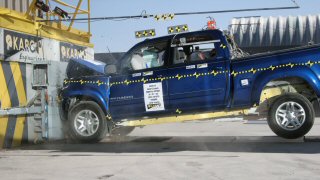
Overall Frontal Rating
Driver and Passenger Assessment
Driver Side
Passenger Side
Overall Side Rating
Side Barrier and Side Pole Tests
Rollover Resistance
No rollover risk estimate available in this dataset
Safety Features
ESC: OptionalForward Collision Warning: NoLane Departure Warning: No
Recall Notices
NHTSANHTSA ID: 22E002000January 14, 2022
SUSPENSION:FRONT:CONTROL ARM:LOWER BALL JOINT
Tenneco Automotive (DRiV) is recalling certain aftermarket ball joints for 2004-2007 Toyota Sequoia and 2004-2006 Toyota Tundra vehicles, MOOG part number K80521, K80522, NAPA part number NCP2601633, NCP2601634, ACDelco part number 45D2344, and 45D2345. The ball joint housing may have inadequate hardness, causing premature failure.
Remedy Status
DRiV will work with distributors to return unsold parts. Dealers will inspect and replace the ball joint as necessary, free of charge. Owner notification letters were mailed on March 17, 2022. Owners may contact DRiV customer service at 1-877-489-6659 or at RECALL.SUPPORT@DRIV.COM.
NHTSA ID: 19V741000October 17, 2019
AIR BAGS:FRONTAL:PASSENGER SIDE:INFLATOR MODULE
Toyota Motor Engineering & Manufacturing (Toyota) is recalling certain 2010-2016 4Runner, 2003-2006 Tundra, 2003-2013 Corolla, 2009-2010 Corolla Matrix, 2004-2005 RAV4, 2002-2007 Sequoia, 2011-2013 Sienna, 2008-2012 Scion xB, 2008-2009 Lexus IS-F, 2007-2012 Yaris and Lexus ES350, 2010-2017 Lexus GX460, 2002-2010 Lexus SC430, 2006-2012 Lexus IS250 and IS350 and 2010-2015 Lexus IS250C and IS350C vehicles. These vehicles had their driver or passenger frontal air bag inflators previously replaced under a prior recall using inflators of the same design. The inflators may explode due to propellant degradation occurring after long-term exposure to high absolute humidity, temperature and temperature cycling.
Remedy Status
Toyota will notify owners. Depending on the vehicle model, dealers will replace the front driver inflator, front passenger airbag inflator, the airbag assembly, or the front passenger airbag sub-assembly and inflator. The recall began November 20, 2019. Owners may contact Toyota customer service at 1-888-270-9371 or Lexus customer service at 1-800-255-3987. Toyota's numbers for this recall are J0A, J0B, and J0C. Lexus' numbers for this recall are JLI, JLJ, and JLK.
NHTSA ID: 16V396000June 02, 2016
SEATS:FRONT ASSEMBLY:SEAT HEATER/COOLER
Southeast Toyota Distributors, LLC (SET) is recalling certain 2005-2011 4Runner, Highlander, Sequoia, and Sienna, 2005-2010 Avalon and Tundra, 2006-2008 Camry Solara, 2006-2010 Highlander hybrid, 2006-2011 Rav4 and Tacoma, 2007-2010 FJ Cruiser, 2007-2011 Camry hybrid, 2009-2010 Venza, 2010-2012 Prius, 1988-1990 and 2005-2010 Camry, and 1989 and 2009-2010 Corolla vehicles equipped with aftermarket accessory seat heaters with a copper strand heating element. The electrical wiring in the seat heaters may be damaged when the seat cushion is compressed.
Remedy Status
SET will notify owners, and dealers will disconnect the seat heaters, free of charge, and refund the purchase price of the seat heater accessory. The recall began on July 14, 2016. Owners may contact SET customer service at 1-866-405-4226. SET number for this recall is SET16B.
NHTSA ID: 16V065000February 05, 2016
AIR BAGS:SIDE/WINDOW
Toyota Motor Engineering & Manufacturing (Toyota) is recalling certain model year 2003-2006 Toyota Land Cruiser and Lexus LX470, 2005-2006 Toyota Tundra and Sequoia, 2004-2006 Toyota 4Runner and Lexus GX470 vehicles equipped with side curtain-shield-air bags. The affected vehicles have an air bag control module that may be improperly programmed, causing the side curtain-shield-air bags to deploy inadvertently.
Remedy Status
Toyota will notify owners, and dealers will replace the air bag control module with one that has improved programming, free of charge. The recall began on December 1, 2016. Owners may contact Toyota customer service at 1-888-271-9371. Toyota's number for this recall is G0C and GLB.
NHTSA ID: 15V285000May 13, 2015
AIR BAGS
Toyota Motor Engineering & Manufacturing (Toyota) notified the agency on May 13, 2015 that they are recalling certain model year 2004 Sequoia vehicles manufactured August 18, 2003, to August 19, 2004, and 2003-2004 Tundra vehicles manufactured March 18, 2003, to August 25, 2004. On June 16, 2015, Toyota expanded the recall to include an additional 1,270,468 vehicles, including model year 2002-2003 and 2005-2007 Sequoia, 2005-2006 Tundra, 2003-2007 Corolla, 2003-2007 Corolla Matrix, 2003-2007 Pontiac Vibe and 2002-2007 Lexus SC vehicles. This is to address a safety defect in the passenger side frontal air bag inflator which may produce excessive internal pressure causing the inflator to rupture upon deployment of the air bag. This recall addresses both the passenger side frontal air bags that were originally installed in the vehicles, as well as replacement air bags that may have been installed as replacement service parts. A replacement air bag may have been installed, as one example, if a vehicle had been in a crash necessitating the replacement of the passenger side frontal air bag.
Remedy Status
2003-2004 Corolla and Corolla Matrix vehicles that are recalled under both 15V-043 and 15V-285 are under a Do Not Drive advisory. Owners of these vehicles are advised not to drive their vehicles until the recall remedy has been completed. Toyota will notify their owners. Pontiac Vibe owners will be notified by GM. Dealers will replace the front passenger air bag. The recall began on July 13, 2015. Toyota owners may contact Toyota customer service at 1-800-331-4331. Pontiac owners may call 1-800-762-2737. NOTE: This recall supersedes recall 14V-312 in its entirety.
NHTSA ID: 15V286000May 13, 2015
AIR BAGS
Toyota Motor Engineering & Manufacturing (Toyota) notified the agency on May 13, 2015, that they are recalling 2005-2007 Lexus SC, Toyota Corolla, Corolla Matrix, Sequoia, and Pontiac Vibe, and 2005-2006 Toyota Tundra vehicles that were originally sold, or ever registered, in Florida, along the Gulf Coast, Puerto Rico, Hawaii, the U.S. Virgin Islands, Guam, Saipan and American Samoa. On June 16, 2015 Toyota expanded the recall to cover an additional 769,055 vehicles, including certain model year 2002-2004 Lexus SC, Toyota Sequoia, 2003-2004 Toyota Corolla Matrix, Toyota Corolla, Pontiac Vibe, and Toyota Tundra vehicles, as well the vehicles covered by the May 13, 2015 notification in the portions of Georgia, Alabama, Louisiana, Mississippi and Texas that were not previously included. The inflators in the front passenger air bags are susceptible to rupture in the event of a crash necessitating the deployment of the front passenger air bag.
Remedy Status
2003-2004 Corolla and Corolla Matrix vehicles that are recalled under both 15V-043 and 15V-286 are under a Do Not Drive advisory. Owners of these vehicles are advised not to drive their vehicles until the recall remedy has been completed. Toyota will notify their owners. Pontiac Vibe owners will be notified by GM. Dealers will replace the passenger side front air bag, free of charge. Owners may contact Toyota customer service at 1-800-331-4331. Toyota began the recall on July 13, 2015. Pontiac Vibe owners may contact GM at 1-800-762-2737. GM began the recall on June 29, 2015. NOTE: This recacll supersedes recall 14V-655 in its entirety. For vehicles located in the U.S. states not listed above, please see Toyota recall 15V-285 which covers all other U.S. states.
NHTSA ID: 14V743000November 19, 2014
SEATS:FRONT ASSEMBLY:SEAT HEATER/COOLER
Southeast Toyota Distributors, LLC (SET) is recalling certain model year 2010-2011 Prius and Corolla, 2009-2011 Venza, 2006-2010 Avalon, 2007-2010 FJ Cruiser, 2005-2011 Sienna and Sequoia, 2006-2011 Tacoma 4x2 and 4x4, Camry, Highlander, Tundra 4x2 and 4x4, and 2007-2011 Rav4 and 4Runner. The affected vehicles may experience compression of the seat cushion which may damage the seat heater wiring.
Remedy Status
SET will notify owners, and dealers will disconnect the heaters with copper strand heating elements and refund the purchase price of the seat heater accessory, free of charge. The recall is expected to began in January 2015. Owners may contact SET customer service at 1-866-405-4226.
NHTSA ID: 10V035000February 03, 2010
EQUIPMENT:OTHER:LABELS
GULF STATES TOYOTA IS RECALLING CERTAIN MODEL YEAR 2005-2010 VEHICLES FOR FAILING TO COMPLY WITH THE REQUIREMENTS OF FEDERAL MOTOR VEHICLE SAFETY STANDARD NO. 110, "TIRE SELECTION AND RIMS." THESE VEHICLES WERE SOLD BETWEEN SEPTEMBER 1, 2005 AND JUNE 2, 2008 WITHOUT THE REQUISITE LOAD CARRYING CAPACITY MODIFICATION LABELS.
Remedy Status
DEALERS WILL MAIL TO CONSUMERS THE CORRECTED LABEL OR THE CUSTOMER WILL HAVE THE OPTION FOR DEALERS TO INSTALL THE LABEL FREE OF CHARGE. DEALERS WILL ALSO CORRECT THE OWNER'S MANUAL. THE SAFETY RECALL BEGAN ON MAY 27, 2010. OWNERS MAY CONTACT GULF STATES TOYOTA AT 713-580-3300.
NHTSA ID: 10V036000February 03, 2010
EQUIPMENT:OTHER:LABELS
SOUTHEAST TOYOTA IS RECALLING CERTAIN MODEL YEAR 2005-2011 PASSENGER VEHICLES FOR FAILING TO COMPLY WITH THE REQUIREMENTS OF FEDERAL MOTOR VEHICLE SAFETY STANDARD NO. 110, "TIRE SELECTION AND RIMS." THESE VEHICLES WERE SOLD WITHOUT THE REQUISITE LOAD CARRYING CAPACITY MODIFICATION LABELS.
Remedy Status
DEALERS WILL MAIL TO CONSUMERS THE CORRECTED LABEL OR THE CUSTOMER WILL HAVE THE OPTION FOR DEALERS TO INSTALL THE LABEL FREE OF CHARGE. THE SAFETY RECALL BEGAN ON MAY 27, 2010. OWNERS MAY CONTACT SOUTHEAST TOYOTA AT 1-800-301-6859.
NHTSA ID: 09V223000June 15, 2009
EQUIPMENT:OTHER:LABELS
TOYOTA IS RECALLING 27,080 MODEL YEAR 2005 THROUGH 2010 PASSENGER CARS BUILT FROM SEPTEMBER 1, 2005 TO MAY 4, 2009. THESE VEHICLES WERE NOT EQUIPPED WITH LOAD CARRYING CAPACITY MODIFICATION LABELS WHICH FAILS TO CONFORM WITH THE REQUIREMENTS OF FEDERAL MOTOR VEHICLE SAFETY STANDARD NO. 110, "TIRE SELECTION AND RIMS."
Remedy Status
TOYOTA WILL NOTIFY OWNERS AND PROVIDE THEM WITH A NEW, ACCURATE LABEL TO BE INSTALLED OVER THE INACCURATE LABEL FREE OF CHARGE. THE SAFETY RECALL BEGAN ON AUGUST 18, 2009. OWNERS MAY CONTACT TOYOTA AT 1-888-270-9371.
NHTSA ID: 07E023000March 29, 2007
SERVICE BRAKES, HYDRAULIC:FOUNDATION COMPONENTS:MASTER CYLINDER
CERTAIN CARDONE MASTER CYLINDERS WITH PART NUMBERS 10-2925, 10-2987, 10-2987MZA, 10-3083, 11-3015, 11-3042, 11-3044, 11-3045, 11-3047, 11-3064, AND 11-3156, AND WITH DATE CODES LOWER THAN DCA7078 SOLD AS REPLACEMENT EQUIPMENT FOR USE ON THE VEHICLES LISTED ABOVE. THE SEAL ON MASTER CYLINDER CAN FAIL AND LEAK BRAKE FLUID.
Remedy Status
CARDONE WILL NOTIFY OWNERS AND OFFER TO REPURCHASE ANY DEFECTIVE MASTER CYLINDERS. THE RECALL BEGAN DURING APRIL 2007. OWNERS CAN CONTACT CARDONE AT 1-800-777-4780.
NHTSA ID: 07V013000January 19, 2007
SUSPENSION:FRONT:CONTROL ARM:LOWER BALL JOINT
ON CERTAIN TRUCKS AND MINI VANS, DUE TO POSSIBLE IMPROPER FINISHING OF THE FRONT SUSPENSION LOWER BALL JOINT, SOME BALL JOINTS MAY EXPERIENCE AN INCIDENTAL DETERIORATION OF THE INTERNAL LUBRICATION. THIS MAY CAUSE THE BALL JOINT TO WEAR AND LOOSEN PREMATURELY, WHICH COULD RESULT IN INCREASED STEERING EFFORT, REDUCED VEHICLE SELF-CENTERING, AND NOISE IN THE FRONT SUSPENSION.
Remedy Status
DEALERS WILL REPLACE THE FRONT SUSPENSION LOWER BALL JOINTS. THE RECALL BEGAN ON FEBRUARY 28, 2007. OWNERS MAY CONTACT TOYOTA AT 1-800-331-4331.
NHTSA ID: 06E049000May 24, 2006
EXTERIOR LIGHTING
CERTAIN CK MOTORSPORTS COMBINATION HEADLIGHTS, CLEAR CORNER, BUMPER, AND SIDE MARKER LIGHTS SOLD AS REPLACEMENT LAMPS FOR USE ON THE PASSENGER VEHICLES LISTED ABOVE. SOME COMBINATION LAMPS THAT ARE NOT EQUIPPED WITH AMBER SIDE REFLECTORS FAIL TO CONFORM TO FEDERAL MOTOR VEHICLE SAFETY STANDARD NO. 108, LAMPS, REFLECTIVE DEVICES, AND ASSOCIATED EQUIPMENT.
Remedy Status
CK MOTORSPORT WILL NOTIFY OWNERS AND REPLACE THE NONCOMPLIANT LAMPS FREE OF CHARGE. THE RECALL BEGAN ON JULY 1, 2006. OWNERS MAY CONTACT CK MOTORSPORT AT 1-909-610-7211.
Investigations
3 totalFrom 2000 through 2017, Takata produced millions of air bag inflators using two types of phase-stabilized ammonium nitrate ("PSAN") propellant -- propellant 2004 and propellant 2004L. After prolonged exposure to high temperature cycles and humidity, inflators using propellant 2004 can degrade, causing the propellant to burn too quickly when ignited. The rapid burning can cause the inflator to rupture during deployment, potentially causing serious or even fatal injury to vehicle occupants. See 2016 Blomquist Report at www.nhtsa.gov/sites/nhtsa.gov/files/documents/expert_report-hrblomquist.pdf.Consequently, all frontal inflators using propellant 2004 that do not contain a "desiccant" (a substance that traps and holds moisture) in US vehicles are under recall. These "non-desiccated" inflators either have been or are required to be replaced.In some cases, the remedy part for these recalled inflators was, or will be, an inflator using either propellant 2004 or 2004L that does contain a desiccant. None of these "desiccated" remedy parts (which were installed in older model year vehicles) are currently under recall for a degradation concern. Certain subsets of desiccated PSAN inflators using propellant 2004 for use as original equipment, however, have been recalled for a degradation concern. All Takata inflators produced with propellant 2004L contain desiccant, and none of these desiccated inflators using propellant 2004L are under recall for a degradation concern. There have been no reported field ruptures in any non-recalled desiccated PSAN inflators.It is understood that desiccants fully saturate at some threshold, at which point any additional moisture will not be captured. This means the degradation process observed in non-desiccated inflators using propellant 2004 may also occur in non-recalled desiccated inflators using propellant 2004, assuming additional moisture enters the inflator and high temperature cycling occurs. Based on available information, desiccant saturation can occur within the first five years in the worst environments, and the time required for full saturation is affected by multiple factors. While no present safety risk has been identified, further work is needed to evaluate the future risk of non-recalled desiccated inflators using propellant 2004.Three entities -- Takata (now known as TK Global), the Independent Testing Coalition, and Exponent -- have been studying the long-term behavior of Takata desiccated PSAN inflators using propellant 2004L (as well as 2004) in the presence of moisture and temperature cycling. The research efforts, which include development of predictive modeling techniques and field sample analysis, are ongoing. To date, none of the researchers have identified field evidence showing that propellant 2004L is undergoing a degradation process that leads to aggressive deployment and potential rupture. However, the time in service of such inflators remains short compared to that of the inflators using propellant 2004. Further study is needed to assess the long-term safety of desiccated inflators using propellant 2004L.The Office of Defects Investigation is opening this investigation to examine whether a safety defect related to propellant degradation exists in non-recalled desiccated PSAN frontal inflators manufactured by Takata. This investigation will require extensive information on Takata production processes and surveys of inflators in the field. Lists of recall actions that may have used desiccated PSAN inflators as remedy parts, as well as the makes and models originally manufactured with them, is available with the downloadable version of this document (see nhtsa.gov/recalls?nhtsaId=EA21002 -- note this information is subject to change/revision as the investigation proceeds). This investigation does not supersede EA15-001, which remains open.
Component: AIR BAGS:FRONTAL:DRIVER SIDE:INFLATOR MODULEOpened: Sep 17, 2021
PEClosed
THIS INVESTIGATION WAS OPENED BASED ON 20 REPORTS OF MODEL YEAR (MY) 2000 AND 2001 VEHICLES EXPERIENCING SEVERE CORROSION OF THE FRAME, RESULTING IN EITHER UNDER-BODY MOUNTED SPARE TIRE SEPARATION OR REAR BRAKE FAILURE.THE FAILURE REPORT COUNTS SHOWN ABOVE ARE FOR MY 2000 AND 2001 VEHICLES ONLY.BY LETTER OF NOVEMBER 16, 2009 TOYOTA HAS NOTIFIED THE AGENCY THAT IT WILL CONDUCT A SAFETY RECALL (09V-444) OF APPROXIMATELY 110,000 MODEL YEAR (MY) 2000 THROUGH 2003 TUNDRA VEHICLES.THE AFFECTED RECALLED VEHICLES WERE SOLD OR ARE CURRENTLY REGISTERED IN THE DISTRICT OF COLUMBIA AND THE STATES OF CT, DE, IL, IN, KY, MA, MD, ME, MI, MN, NH, NJ, NY, OH, PA, RI, VA, VT, WI, WV.TOYOTA ALLEGES HIGH AMOUNTS OF ROAD SALTS ARE USED IN THESE AREAS AND EXCESSIVE CORROSION OF THE REAR CROSS-MEMBER (TO WHICH THE SPARE TIRE IS MOUNTED) CAN OCCUR AND CAUSE THE SPARE TIRE TO SEPARATE FROM THE VEHICLE AND CAN ALSO LEAD TO REAR BRAKE FAILURE.TOYOTA STATED: TOYOTA HAS TENTATIVELY CONCLUDED THAT THE ROOT CAUSE IS A COMBINATION OF FACTORS, INCLUDING USAGE IN AREAS WHERE ROAD SALT IS APPLIED, INADEQUATE VEHICLE MAINTENANCE (I.E., NOT FOLLOWING THE RECOMMENDATIONS IN THE OWNER'S MANUAL), THE DESIGN OF THE REAR CROSS-MEMBER, AND MANUFACTURING ISSUES.THE DESIGN OF THE REAR CROSS-MEMBER IS SUCH THAT IT IS OPEN ON THE TOP SIDE AND SUSCEPTIBLE TO ACCUMULATION OF DIRT, WATER AND ROAD SALT.MANUFACTURING ISSUES OF THE REAR CROSS-MEMBER RELATED TO THE COATING PROCESS ALSO AFFECT ITS CORROSION RESISTANCE.TOYOTA ALSO STATES THAT OWNERS OF MY 2000 THROUGH 2003 VEHICLES IN STATES NOT COVERED BY THE RECALL WILL BE NOTIFIED ON HOW TO OBTAIN THE SAME INSPECTION AND REPAIR AS THE RECALLED VEHICLES, FREE OF CHARGE.FURTHER TOYOTA STATES: PLEASE NOTE THAT WHILE TOYOTA HAS NOT DETERMINED A DEFECT EXISTS IN 2004 THROUGH 2006 MY TUNDRA VEHICLES, TOYOTA PLANS ON INITIATING A FIELD ACTION IN THE NEAR FUTURE TO PREVENT FUTURE CORROSION ON THOSE VEHICLES ORIGINALLY SOLD OR CURRENTLY REGISTERED IN THE AFFECTED REGION AT NO COST TO THE OWNER.BY LETTER OF JANUARY 8, 2010 TOYOTA HAS NOTIFIED THE AGENCY THAT IT AMENDED ITS DEFECT INFORMATION REPORT FOR SAFETY RECALL 09V-444 TO INCLUDE THE FUEL TANK MOUNTING SYSTEM (I.E., FUEL TANK SUPPORT STRAPS AND FUEL TANK MOUNTING CROSS-MEMBERS) IN THE SAFETY RECALL.TOYOTA STATES: TOYOTA HAS NOT DECIDED THAT THE FUEL TANK MOUNTING SYSTEM IN THOSE VEHICLES CONTAINS A SAFETY-RELATED DEFECT WITHIN THE MEANING OF FEDERAL MOTOR VEHICLE SAFETY LAW.RATHER, TOYOTA IS TAKING THIS ACTION AT ODI'S REQUEST AND TO AVOID FUTURE DISAGREEMENT WITH ODI WITH RESPECT TO THIS ISSUE.MY 2007 AND NEWER TUNDRA VEHICLES ARE NOT INCLUDED IN ANY OF TOYOTA'S ACTIONS AS THE REAR CROSS-MEMBER IN THOSE VEHICLES HAVE BEEN REDESIGNED SO THAT IT IS OPEN ON THE BOTTOM.THE ACTIONS TAKEN BY TOYOTA ARE SUFFICIENT TO RESOLVE THE ISSUES RAISED BY THIS INVESTIGATION.ACCORDINGLY, THIS INVESTIGATION IS CLOSED.THE CLOSING OF THIS INVESTIGATION DOES NOT CONSTITUTE A FINDING BY NHTSA THAT A SAFETY-RELATED DEFECT DOES NOT EXIST IN THE SUBJECT VEHICLES.THE AGENCY WILL TAKE FURTHER ACTION IF WARRANTED BY THE CIRCUMSTANCES.
Component: FUEL SYSTEM, GASOLINE:STORAGE:TANK ASSEMBLY:MOUNTINGOpened: Oct 6, 2009Closed: Jan 26, 2010Related recall: 09V444000
EAClosed
IN A LETTER DATED JANUARY 18, 2007, TOYOTA NOTIFIED NHTSA OF A SAFETY DEFECT IN MODEL YEAR (MY) 2004 THROUGH 2006 TOYOTA TUNDRA AND MY 2004 THROUGH 2007 TOYOTA SEQUOIA VEHICLES PRODUCED BETWEEN SEPTEMBER 15, 2003 AND NOVEMBER 17, 2006 (NHTSA RECALL NO. 07V-013). ACCORDING TO TOYOTA, ?IN THE FRONT SUSPENSION LOWER BALL JOINT ON THE SUBJECT VEHICLES, DUE TO POSSIBLE IMPROPER FINISHING OF THE BALL JOINT, SUCH AS THE ASPECT OF THE BALL STUD SURFACE, SOME BALL JOINTS MAY EXPERIENCE AN INCIDENTAL DETERIORATION OF THE INTERNAL LUBRICATION. THIS MAY CAUSE THE BALL JOINT TO WEAR AND LOOSEN PREMATURELY, WHICH COULD RESULT IN INCREASED STEERING EFFORT, REDUCED VEHICLE SELF-CENTERING, AND NOISE IN THE FRONT SUSPENSION. IN EXTREME CASES, IF THE VEHICLE IS CONTINUOUSLY OPERATED IN THIS CONDITION, THE LOWER BALL JOINT MAY SEPARATE FROM THE KNUCKLE AND COULD CAUSE LOSS OF VEHICLE CONTROL.?TOYOTA WILL INSTRUCT OWNERS TO RETURN THEIR VEHICLES TO ANY TOYOTA DEALER FOR REPLACEMENT OF THE FRONT SUSPENSION LOWER BALL JOINTS. THIS ENGINEERING ANALYSIS HAS BEEN CLOSED, AS TOYOTA IS RECALLING THE AFFECTED VEHICLES.ODI WILL MONITOR THE EFFECTIVENESS OF THE REMEDY AND TAKE FURTHER ACTION IF WARRANTED.
Component: SUSPENSION:FRONT:CONTROL ARM:LOWER BALL JOINTOpened: Aug 2, 2006Closed: Feb 28, 2007Related recall: 07V013000
Owner Complaints
544 totalSTRUCTURE
Feb 16, 2026
My frame is rotting, with literal holes in it. I spoke with a dealership and they stated the recall had been fixed in 2015, prior to me owning it. I was told to contact the manufacturer and they said it would be an out of pocket expense. When I research the recall, the affected a...
Preview excerpt
STEERING,SUSPENSION,UNKNOWN OR OTHER
Dec 20, 2025
The frame has rusted so badly that the sway bar mount disengaged from the frame. Brought it to a Toyota dealership and confirmed that frame recalls were performed on earlier models with the same issue . However my year did not qualify.
TIRES
Oct 18, 2025
The contact’s father owns a 2006 Toyota Tundra equipped with Cooper Tires, Tire Line: Discoverer Rugged Trek, Tire Size: 265/70/R16, DOT Number: (N/A). While the contact’s father was driving at an undisclosed speed, the driver lost control of the vehicle. The contact’s father was...
Preview excerpt
SUSPENSION,STRUCTURE
Oct 6, 2025
Frame rust is so extreme that rear suspension mounts are completely disconnected from frame
SUSPENSION
Aug 4, 2025
The lower ball joint broke causing the upper ball joint to break and damage the strut rocked pion and the brake line. I contacted Toyota and they said it was fixed from a former recall
SUSPENSION,STRUCTURE,UNKNOWN OR OTHER
Jul 25, 2025
The frame on my 2006 Toyota Tundra SR5 has severe corrosion and multiple areas of rust perforation despite being treated under Toyota’s Limited Service Campaign D0D in 2015. During that campaign, the dealer removed the bed, documented active rust on the frame, cleaned it, and app...
Preview excerpt
SERVICE BRAKES, HYDRAULIC
Jul 25, 2025
The contact owns a 2006 Toyota Tundra. The contact stated that while driving 25 MPH, the brake pedal was depressed to prevent a crash with another vehicle that had pulled in front of the vehicle, but the vehicle failed to respond. The contact was able to veer into another lane sa...
Preview excerpt
UNKNOWN OR OTHER
Jul 9, 2025
I own a 2006 Toyota Tundra with severe frame corrosion and rot. The rust has eaten through major portions of the frame, especially around the rear crossmember and leaf spring mounts. It has compromised the vehicle’s safety and structural integrity. Toyota previously offered fram...
Preview excerpt
STRUCTURE
Jun 18, 2025
The contact owns a 2006 Toyota Tundra. The contact stated that while depressing the brake pedal, the steering wheel vibrated abnormally, and the steering wheel was difficult to hold steady. The contact stated that extra effort was needed to secure the steering wheel while depress...
Preview excerpt
UNKNOWN OR OTHER
May 28, 2025
I have a 2006 Tundra with 120k miles and I was told it wasn't one that was effected by the recall. However I'm have frame rot issues and just had to spend thousands of dollars to make it safe. This is the second time I've had to repair the frame in the 4/5 years I've owned it.
Showing 10 recent complaints from 544 total
View Full Complaint LogCompare Related Vehicles
Why Compare These Pages
The strongest comparison flow is usually: exact vehicle-year page, then nearby years of the same model, then other 2006 Toyota models. That sequence helps separate one-off year spikes from broader make-wide patterns.
More Toyota Tundra Years
2007 Toyota TundraCompare this year against 2006 for complaint and recall shifts.14r389c2005 Toyota TundraCompare this year against 2006 for complaint and recall shifts.14r5i374c2008 Toyota TundraCompare this year against 2006 for complaint and recall shifts.13r324c2004 Toyota TundraCompare this year against 2006 for complaint and recall shifts.13r6i464c2009 Toyota TundraCompare this year against 2006 for complaint and recall shifts.13r38c2003 Toyota TundraCompare this year against 2006 for complaint and recall shifts.10r4i398c
More 2006 Toyota Models
2006 Toyota PriusAnother 2006 Toyota option for same-year comparison.6r3i1,438c2006 Toyota SiennaAnother 2006 Toyota option for same-year comparison.11r3i1,016c2006 Toyota CorollaAnother 2006 Toyota option for same-year comparison.10r4i903c2006 Toyota TacomaAnother 2006 Toyota option for same-year comparison.11r1i782c2006 Toyota RAV4Another 2006 Toyota option for same-year comparison.11r2i704c2006 Toyota CamryAnother 2006 Toyota option for same-year comparison.5r1i428c
Frequently Asked Questions
How many recalls does the 2006 Toyota Tundra have?
The 2006 Toyota Tundra has 13 recalls recorded by NHTSA.
How many complaints have been filed for the 2006 Toyota Tundra?
NHTSA has received 544 owner-reported complaints for the 2006 Toyota Tundra.
What is the NHTSA safety rating for the 2006 Toyota Tundra?
An overall NHTSA safety rating is not available in our current dataset for the 2006 Toyota Tundra. Individual crash-test results may still be available.
What are the most common problems with the 2006 Toyota Tundra?
The most frequent complete stored component labels for the 2006 Toyota Tundra are structure (126 reports), air bags (126 reports), suspension (46 reports). These are exact-label counts, not broader component-group totals or confirmed defects.
Does the 2006 Toyota Tundra have any recalls?
Yes. NHTSA has 13 recalls on record for the 2006 Toyota Tundra. Scroll up to review the published recall summaries, consequences, and remedies. To check for unrepaired recalls on your specific vehicle, use your VIN at nhtsa.gov/recalls.
Check Another Vehicle
Look up recalls and complaints for any year, make, and model.
This page summarizes publicly available data from the National Highway Traffic Safety Administration (NHTSA). Complaint counts reflect reports submitted to NHTSA by vehicle owners and do not by themselves prove defect severity or vehicle safety. Safety ratings may not be available for all vehicle-years. This site is not affiliated with NHTSA or any vehicle manufacturer. For official information, visit the official NHTSA page for this vehicle.